What is Charbonnel Aqua Wash ink?
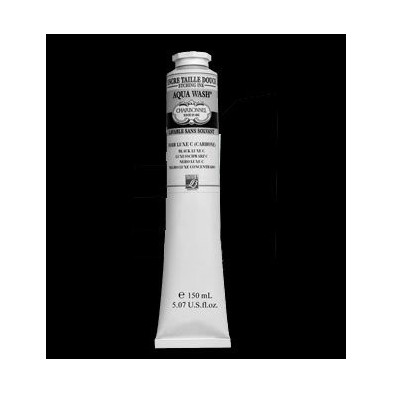
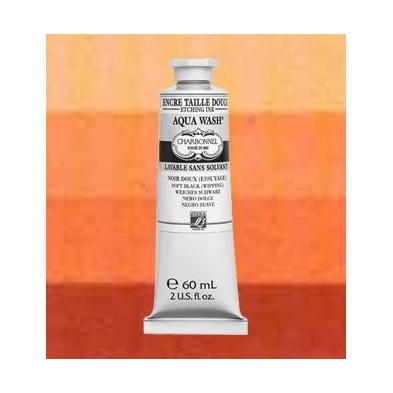
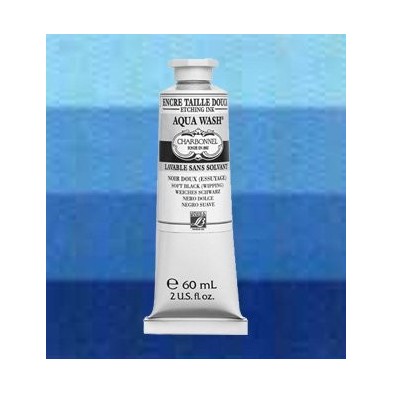
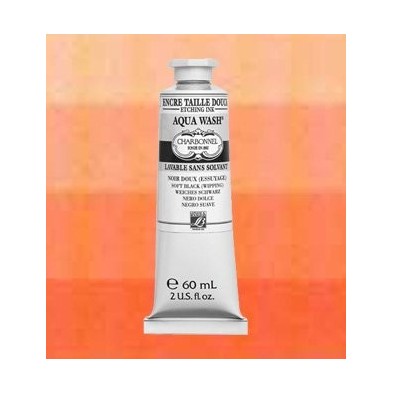
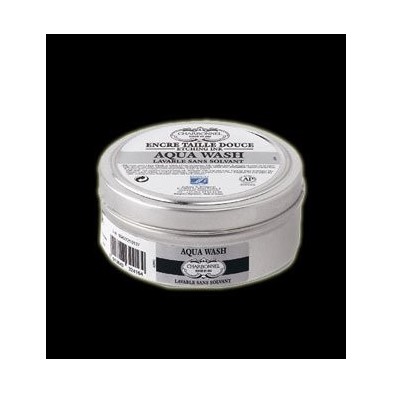
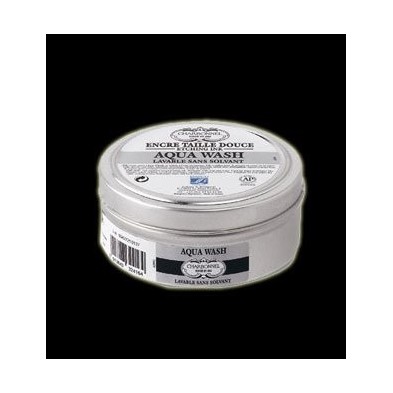
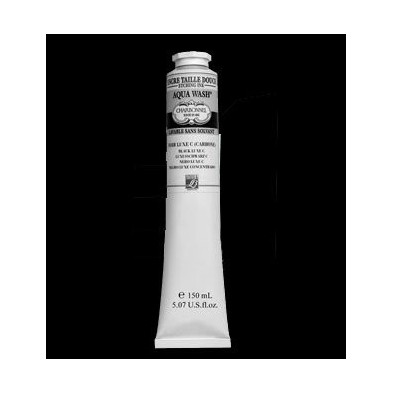
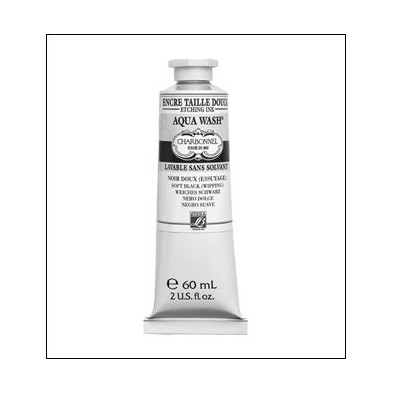
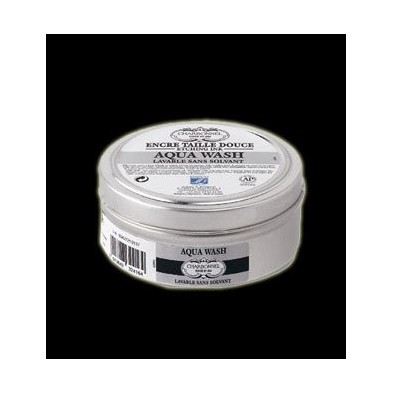
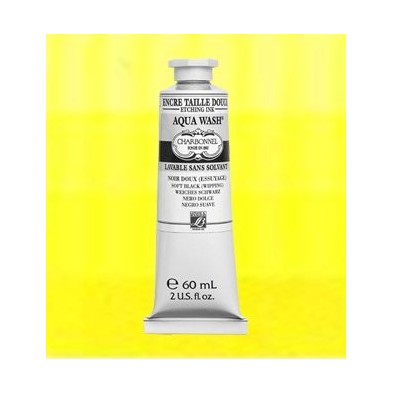
Aqua Wash is Charbonnel's range of water-washable etching inks, developed by the laboratory of Lefranc Bourgeois, the house that now owns the brand. Its binder is a blend of emulsified oils which, according to Lefranc Bourgeois, have the same tack, elasticity and yellowing as traditional oils: the only difference is that tools and hands clean up with water. On Charbonnel's current website the range is listed as ‘Encre lavable à l’eau’ (water-washable ink), while each ink keeps the name, spelt ‘Aquawash’ (for example, ‘Encre Aquawash - Noir 55981’).
It is an oil-based ink, not a water-based one. Because it contains no water, it does not rust plates or tools. Lefranc Bourgeois stresses that it should not be confused with inks based on water and resin (gum arabic or cellulose), such as gouache or lino inks of that type, which can be re-dissolved: once dry, Aqua Wash is indelible.
- Binder: emulsified water-soluble oils, no added water.
- Pigment: loading comparable to classic inks, with excellent lightfastness.
- Clean-up: hands and equipment, with soapy water.
- Drying: the same as classic inks; indelible once dry.
- Paper: printed on paper slightly less damp than with traditional ink.
- Techniques: intaglio (engraving, drypoint, mezzotint, etching and aquatint), monotype, linocut and woodcut.
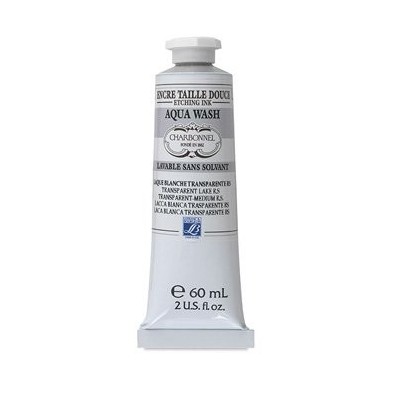
- Range: 24 inks in 60 ml tubes, 17 colours and 7 blacks, all intermixable.
At Totenart, a Valencia shop rooted in printmaking since 1999, you can compare it with other water-washable and oil-based inks in intaglio etching inks.
Which Aqua Wash black to choose
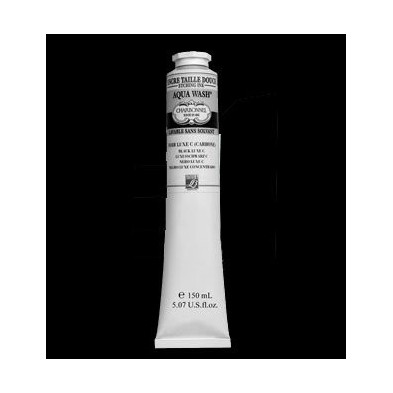
Black is the most widely used colour in intaglio, which is why the Aqua Wash range has seven. They differ in viscosity, which decides how well the ink holds in the lines, in texture and in tone. This is what the maker says about each one:
Charbonnel Aqua Wash blacks: viscosity, tone and use, according to Charbonnel and Lefranc Bourgeois
| Aqua Wash black | Body and wiping | Tone and use |
|---|
| 55981 | Very viscous, yet wipes more easily than 55985 | Medium intensity and supple; the range's all-purpose black, suited to deep burin lines |
| 55985 | The most viscous in the range; hard work to wipe | Cold, very deep and slightly bluish from Prussian blue; strengthens other blacks and grips deep lines and burr |
| RSR | Viscous yet supple; wipes easily | Powerful, compact and dense |
| F66 | Not very viscous; wipes easily | A medium-intensity black |
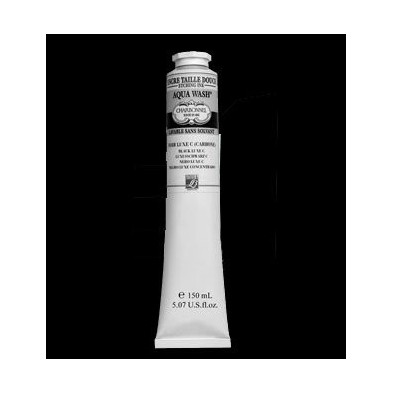
| Luxe C | Not very viscous; fairly supple | Slightly bluish from Prussian blue; strengthens other blacks |
| Carbon Black | Not very viscous; wipes very easily | Well suited to proofing |
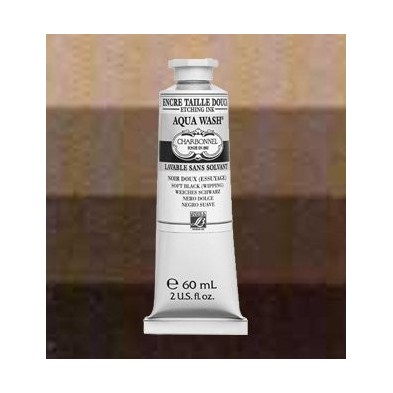
| Soft Black (Noir Doux) | Not very viscous and supple; wipes easily | Tones down a plate bitten or cut very deep; mixed with a stiff black, it softens it and eases wiping |
According to Lefranc Bourgeois, printers used to classic ink adapt easily, because Aqua Wash inks behave much the same in stiffness, tack and viscosity: the ink softens quickly as it is mixed and, once it turns creamy, grips every irregularity in the plate as you ink. If you are starting with just one black, 55981 is the one Charbonnel describes as all-purpose.
Aqua Wash colours
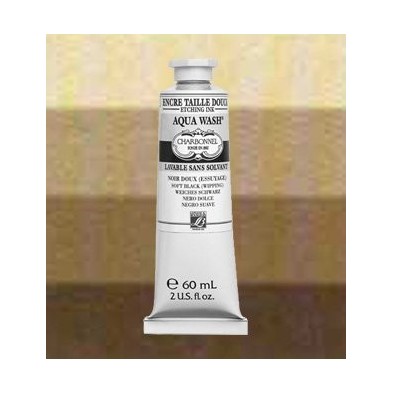
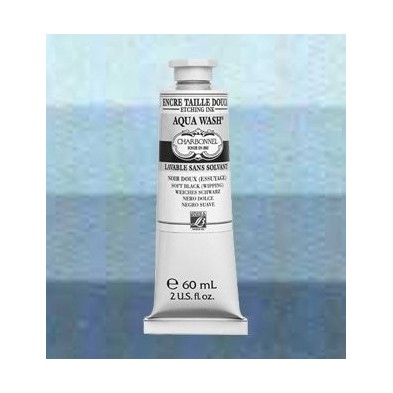
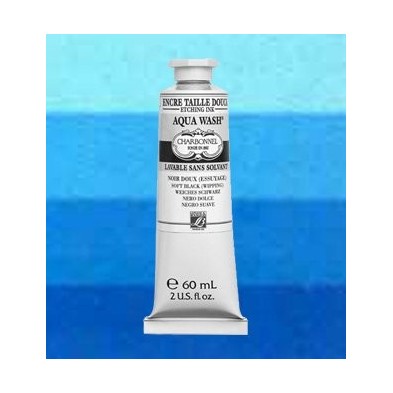
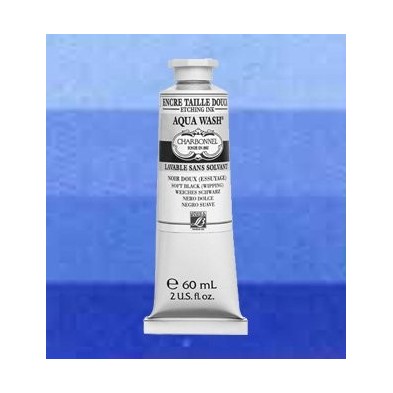
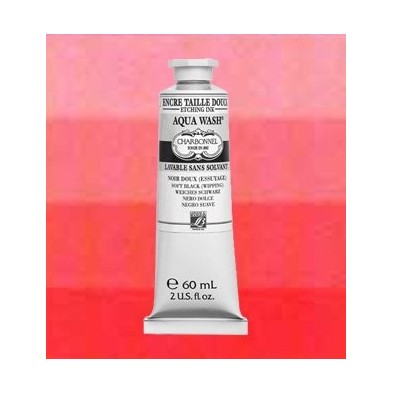
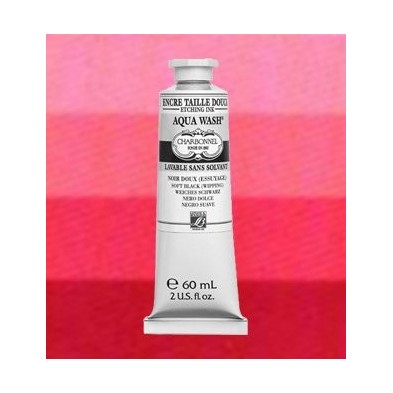
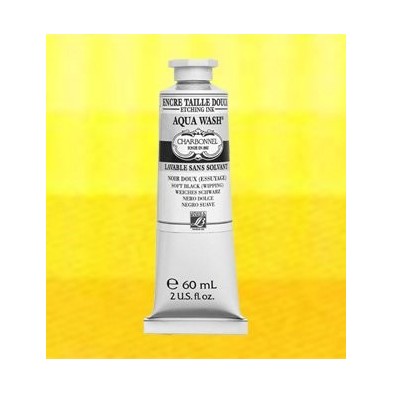
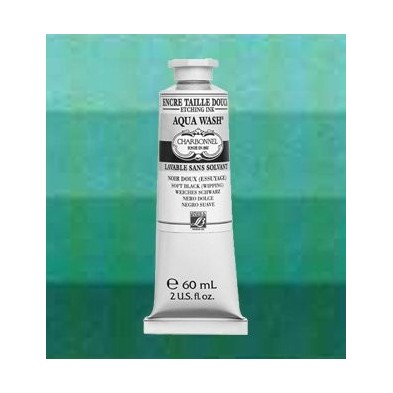
The 17 colours are Primrose Yellow, Deep Yellow, Yellow Ochre, Geranium Red, Cardinal Red, Vermilion, Sanguine, Ultramarine Blue, Prussian Blue, Ocean Blue, Emerald Green, Payne's Grey, Bistre, Coloured Sepia, Natural Sepia, Burnt Sienna and Titanium Snow White. All of them can be mixed with one another. Charbonnel describes Snow White as a pure titanium white with high covering power and recommends it for printing from plates that have not been steel-faced.
A note from the Lefranc Bourgeois technical sheet: Prussian Blue and Emerald Green tend to migrate more in damp paper and pass through it more easily, so it advises against using them for fine press and bibliophile books.
Printing with Aqua Wash: paper and blankets
Aqua Wash prints like any intaglio ink: ink the plate, wipe off the excess with scrim (tarlatan) and the palm of your hand, and run it through the etching press on dampened paper. What changes is how damp the paper is: according to Lefranc Bourgeois, it should feel barely damp to the touch, less than with traditional ink, just enough to stay soft. How long the paper needs to air cannot be fixed in advance: it depends on the paper and the humidity in the room.
- Too damp: the ink starts to show through on the back of the paper or goes right through it.
- Too dry: the deepest lines do not print.
- Once it is right: protect the rest of the edition's sheets, for example wrapped in cling film, so they do not keep drying out.
- On long runs: the press blankets (felts) build up moisture from the paper and give it back; if colours intensify or damp shows on the back, turn the blankets over or change them.
Aqua Wash medium and oil
The range has two dedicated auxiliaries, equivalent to those of Charbonnel's classic ink:
- Aqua Wash Transparent Thick Medium: the equivalent of the classic range's transparent white lake. It mixes with any colour and increases transparency without changing the texture or how the ink holds in the lines.
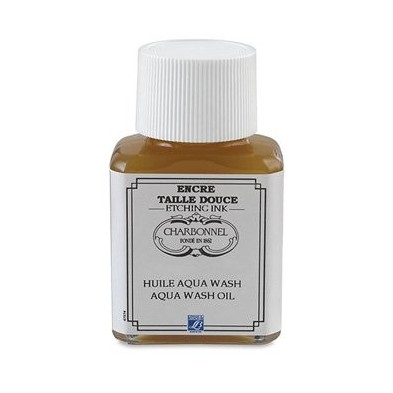
- Aqua Wash Oil: a colourless thinner, equivalent to the oils of the classic range. A few drops loosen a colour that is too stiff when inking or wiping the plate; in larger amounts, with or without water, it is used for monotype and photopolymer. It is the oil the range itself is ground in.
Charbonnel Aqua Wash FAQs
Is Charbonnel Aqua Wash a water-based ink?
No. Charbonnel formulates it with water-soluble oils and no added water, so it is an oil-based ink that prints like a traditional one; the only change is that it cleans up with soapy water. Lefranc Bourgeois warns that it should not be confused with inks based on water and resin, which can be re-dissolved: Aqua Wash is indelible once dry.
What is the difference between Charbonnel Aqua Wash and traditional Charbonnel ink?
Charbonnel's traditional ink is bound in linseed oil and cleaned up with oil or solvent; Aqua Wash uses water-soluble oils and cleans up with soapy water. According to the maker, Aqua Wash has a comparable pigment load, dries in the same way as the classic ink and prints on slightly less damp paper. The linseed-oil version is in Charbonnel traditional etching inks.
How do you clean up Aqua Wash ink?
With soap and water. Charbonnel says hands and equipment clean up with soapy water, and Lefranc Bourgeois adds that, because the ink contains no water, it does not rust plates or tools, although they should be dried well after washing. To clean out the deepest lines, alcohol can be effective if needed.
Do you need to dampen the paper with Aqua Wash ink?
Yes, but less than with traditional ink. Lefranc Bourgeois recommends paper that feels barely damp to the touch, just enough to stay soft. It is too damp if the ink starts to show through on the back, and too dry if the deepest lines do not print. On long runs, turn the blankets over or change them when they build up moisture.
How do you thin Aqua Wash ink or make it more transparent?
With the range's two auxiliaries. According to Lefranc Bourgeois, a few drops of Aqua Wash Oil, a colourless thinner, loosen a colour that is too stiff without reducing its tack, and larger amounts suit monotype. To add transparency without changing the texture, mix the colour with Aqua Wash Transparent Thick Medium.
Can Aqua Wash ink be used for linocut and woodcut?
Yes. Charbonnel says it is used like its traditional ink for intaglio, linocut, woodcut and monotype, and Lefranc Bourgeois presents it as an oil-based ink for all intaglio and relief techniques. If you only print in relief, you can compare other options in linocut and woodcut inks.