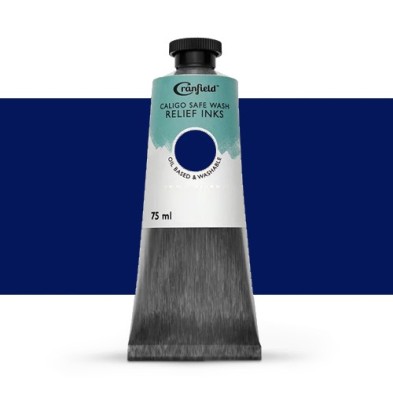
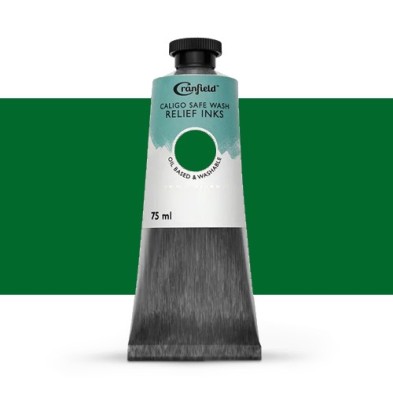
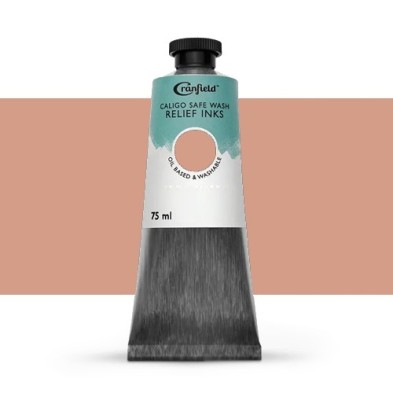
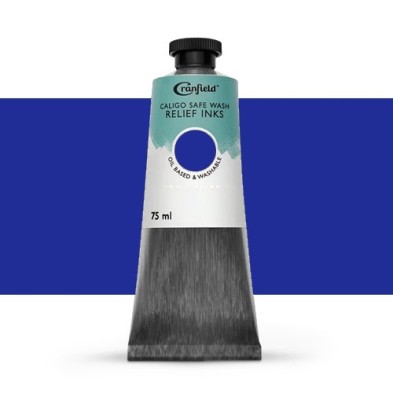
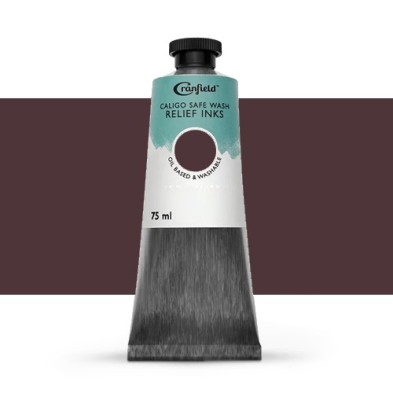
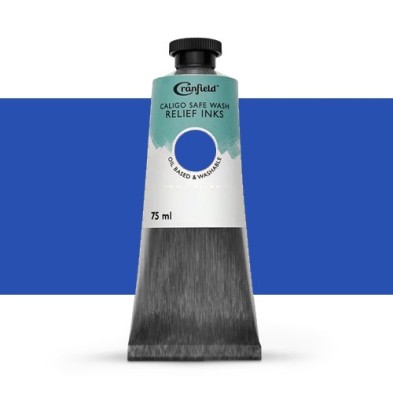
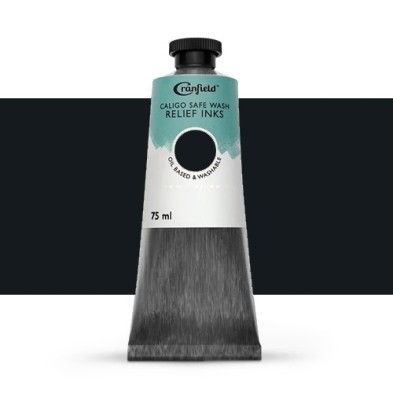
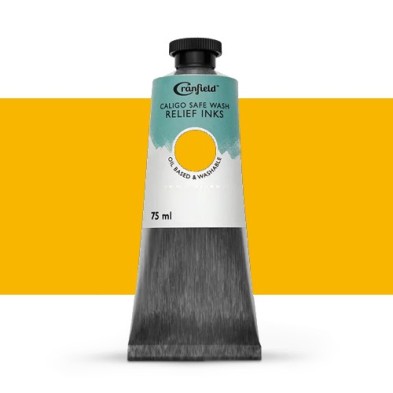
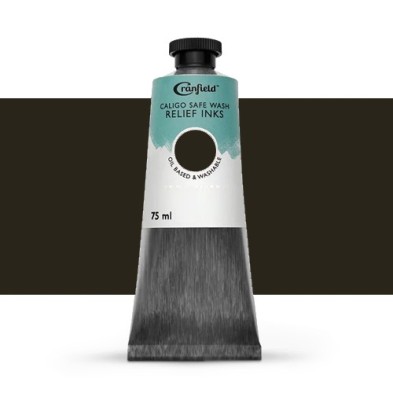
What are Caligo Safe Wash Relief inks?
Caligo Safe Wash Relief is the relief ink range from Cranfield Colours, a British maker of printmaking inks based in Cwmbran, Wales. The inks are made from pigments finely ground in linseed oil and handle and print like a traditional oil-based relief ink; what changes is the clean-up, with liquid soap and cold water and no solvents. Cranfield recommends them for all kinds of relief printing: linocut, woodcut, wood engraving, photopolymer and letterpress.
- Maker’s range: 26 colours and a transparent Extender, rated 6 or higher on the Blue Wool Scale.
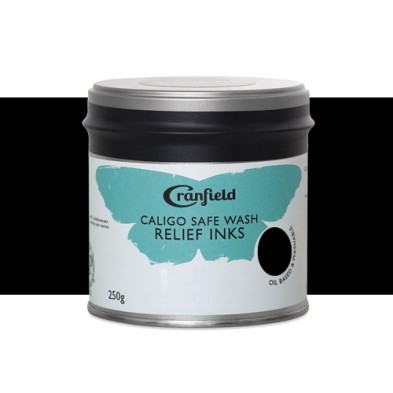
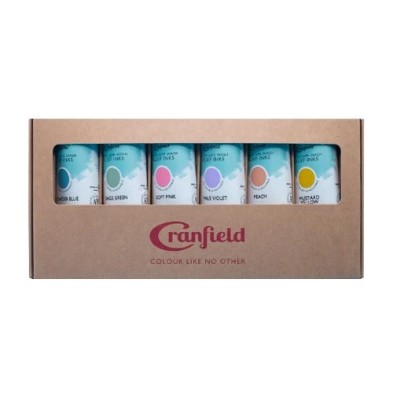
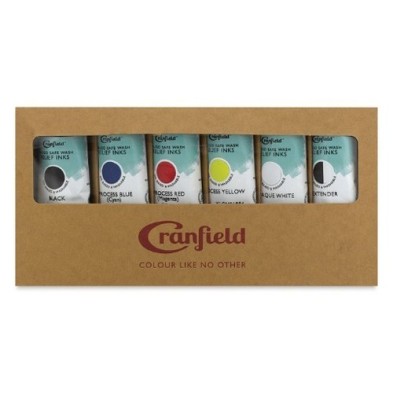
- Sizes at Totenart: 75 ml tubes (Black also in 250 g) and sets of six tubes in primaries and soft shades.
Cranfield sums the range up as ‘oil-based and washable’, for non-toxic printmaking and solvent-free cleaning. For metal plates, the same brand makes Caligo Safe Wash etching ink for intaglio, which the maker says can be mixed with this range. Other brands are in woodcut and linocut inks.
Caligo Safe Wash Relief colours
According to Cranfield, most of the colours are single-pigment, which makes them good bases for mixing. The three process colours (cyan, magenta and yellow) give blues, purples, greens, reds and oranges and, with black, make a CMYK set for multi-block prints.
Caligo Safe Wash Relief ink colours (selection) according to Cranfield Colours
| Colour | Pigments (Colour Index) | Opacity | Drying | Blue Wool |
|---|
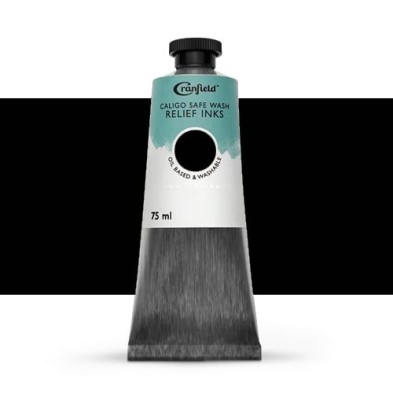
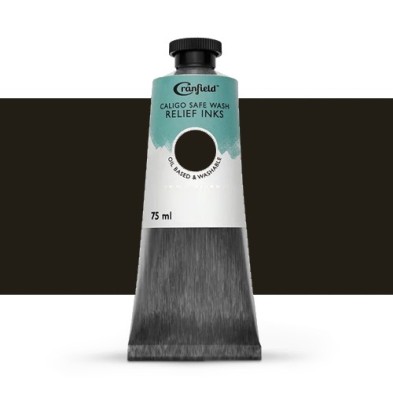
| Black | PBk7 | Semi-opaque | Average | 8 |
| Process Blue (Cyan) | PB15:3 + PW18 | Transparent | Average | 7 |
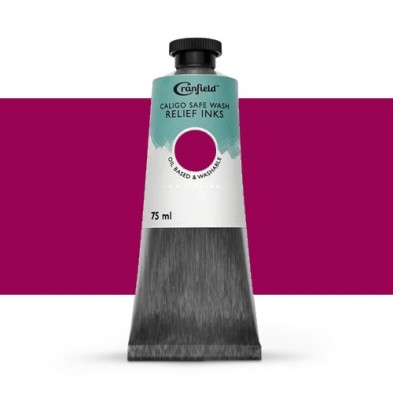
| Process Red (Magenta) | PV19 | Transparent | Average | 7-8 |
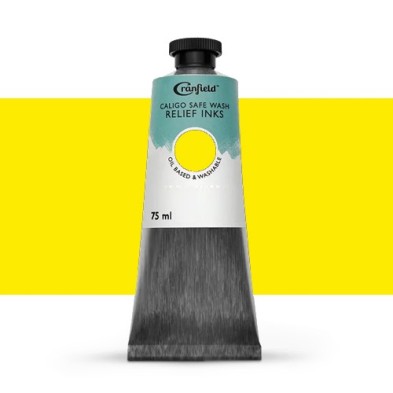
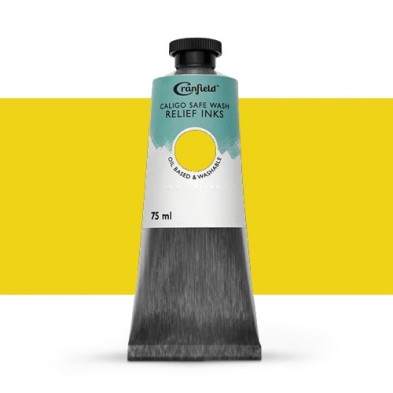
| Process Yellow | PY3 | Semi-transparent | Slow | 6-7 |
| Arylide Yellow | PY3 | Semi-transparent | Slow | 6-7 |
| Diarylide Yellow | PY13 | Transparent | Average | 6-7 |
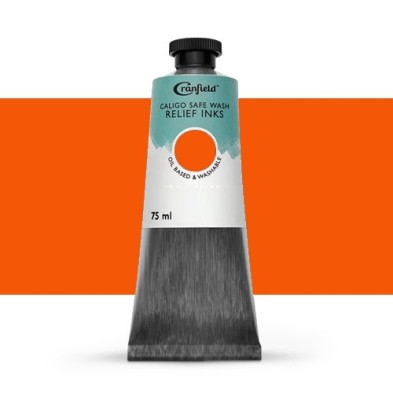
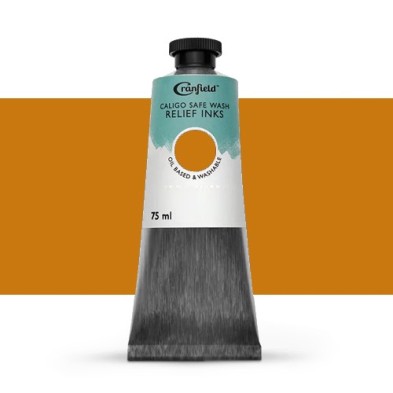
| Light Orange | PY43 + PY13 + PO34 | Semi-opaque | Fast | 6 |
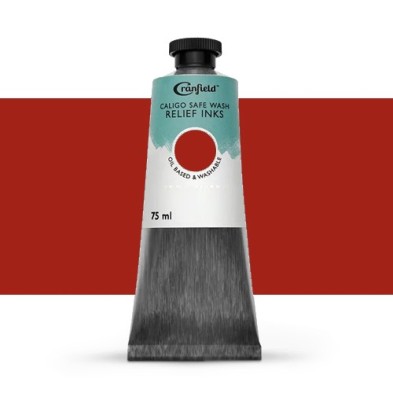
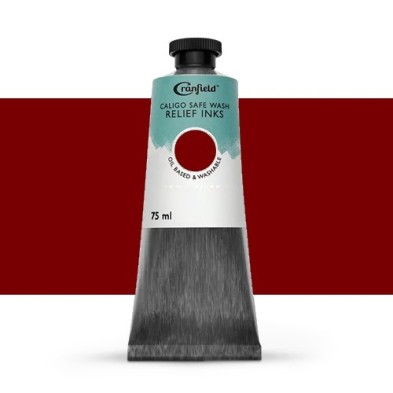
| Rubine Red | PR57:1 | Transparent | Average | 6 |
| Napthol Red | PR112 | Semi-transparent | Slow | 6 |
| Carbazole Violet | PV23 | Transparent | Slow | 7-8 |
| Prussian Blue | PB27 | Transparent | Fast | 7 |
| Phthalo Blue | PB15:3 | Transparent | Average | 7-8 |
| Phthalo Green | PG7 | Transparent | Average | 7-8 |
| Yellow Ochre | PY42 | Semi-opaque | Fast | 8 |
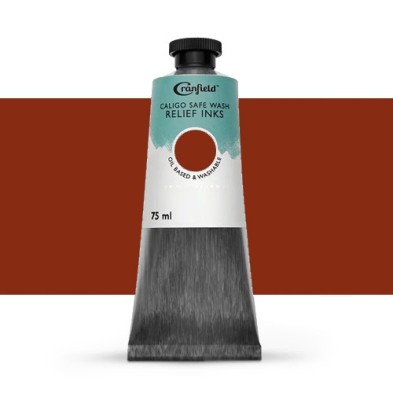
| Burnt Sienna | PR112 + PY3 + PBk7 | Semi-transparent | Slow | 6-7 |
| Raw Umber Hue | PBk7 + PR57:1 + PY13 + PY42 | Semi-opaque | Fast | 8 |
| Burnt Umber Hue | PBk7 + PR57:1 + PY13 | Semi-opaque | Fast | 8 |
| Opaque White | PW6 | Opaque | Average | 8 |
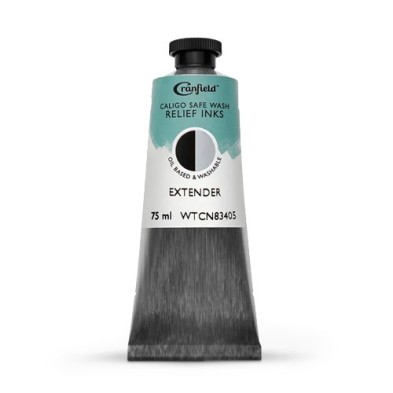
| Extender | PW18 | Transparent | Average | 8 |
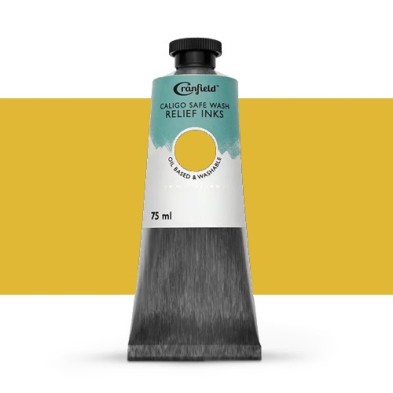
| Mustard Yellow | PBk7 + PW6 + PY3 + PY42 | — | — | — |
| Peach | PBk7 + PV19 + PW6 + PY3 | — | — | — |
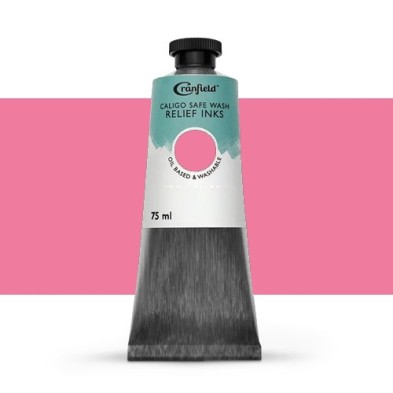
| Soft Pink | PBk7 + PR112 + PW6 | — | — | — |
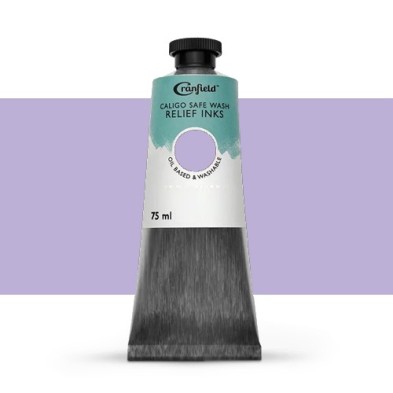
| Pale Violet | PV23 + PW6 | — | — | — |
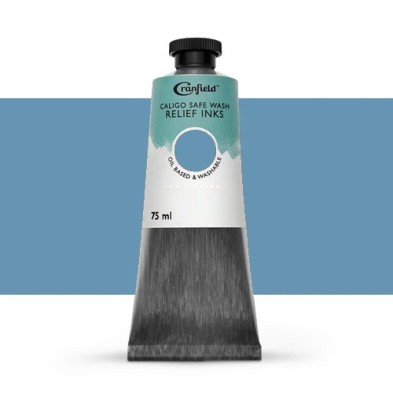
| Powder Blue | PBk7 + PB15:3 + PW6 | — | — | — |
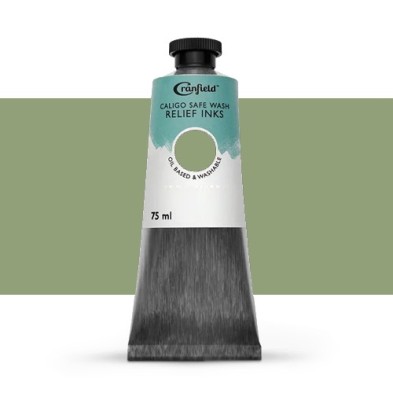
| Sage Green | PBk7 + PG7 + PW6 + PY3 + PY42 | — | — | — |
| Payne’s Grey | PBk7 + PB15:3 + PV19 | — | — | — |
For the colours marked with a dash, Cranfield only publishes the pigments.
Paper for linocut and woodcut with Caligo Relief
Cranfield recommends dedicated printmaking papers. Watercolour papers carry a size that makes them unabsorbent for an oil-based ink; some Japanese papers are slightly greasy and call for a wax drier; on coloured paper, and black above all, the ink dries very slowly and needs a drier, and highly recycled or acidic papers dry poorly. If solid areas print patchy, the maker suggests reducing tack with a little Safe Wash Oil or its Wiping Compound and Tack Reducer.
Extender, oil and driers
Because the ink is highly pigmented, a little goes a long way. The Extender (WTC 83405), an ink in the range made with a transparent pigment, reduces strength and adds transparency, and a little Caligo Safe Wash Oil (WTCI 83948) thins it. Cranfield warns that adding traditional oils, varnishes or oil-based inks alters its make-up and may stop it washing up easily with soap and water. Magnesium carbonate stiffens it; it also feels stiffer when cold, and working it with a palette knife loosens it.
Layers and drying
The ink already contains under 1% drier, according to Cranfield, and Printmaker’s Wax Drier (WTCN 84356) speeds drying and adds rub and scuff resistance. Print thin layers and, for more coverage, add a little Opaque White to light colours and a little Black to dark ones. Do not wait too long between blocks: a fully dry layer is almost impenetrable, so the next one may never dry. If a print will not dry, the maker suggests dusting it with talc, leaving it for 5 minutes and brushing it off with a very soft brush.
Cleaning up with soap and cold water
- Remove excess ink with a knife or a rag, and roll the block and roller out on newsprint.
- Squeeze liquid soap or washing-up liquid straight onto the ink and work it in with a brush or soft sponge until it emulsifies.
- Wipe the mixture away with a damp sponge or kitchen paper, and dry all surfaces carefully.
Always use cold water: according to Cranfield, hot water opens up the surface of rollers and lino and turns the emulsified ink into an unpleasant goo. For stubborn patches, more soap before more water.
Caligo Safe Wash Relief ink FAQs
What is the difference between Caligo Safe Wash Relief and Caligo Safe Wash etching ink?
Both are linseed oil-based inks by Cranfield Colours that clean up with liquid soap and cold water. Caligo Safe Wash Relief is made for relief printing (linocut, woodcut, wood engraving, photopolymer and letterpress), while Caligo Safe Wash Etching is for intaglio printing from metal plates. According to the maker, the two ranges can be mixed together.
Is Caligo Safe Wash Relief a water-based lino ink?
No. It is a linseed oil-based ink that, according to Cranfield, handles and prints like a traditional oil-based relief ink. What sets it apart is the clean-up: liquid soap emulsifies the ink and cold water rinses it away, with no solvents. Water alone may leave ink residue, which is why the maker’s rule is soap first, then water.
Do you need to damp the paper for Caligo Safe Wash Relief?
No. Cranfield says the ink suits dry or damp paper, but recommends keeping the paper fairly dry, with no surface water on the paper or block, because the ink is designed to emulsify in water. If you do damp it, simply wipe the back with a damp sponge or mist it, then blot it thoroughly so that no surface water is left.
How long does Caligo Safe Wash Relief ink take to dry?
Cranfield gives no fixed time: it dries like a traditional oil-based ink, depending on the paper, the thickness of the ink film, temperature and humidity. Thin layers dry faster with warm, dry, moving air, daylight and acid-free paper. With damp paper and a cold studio it takes longer, and on black paper much longer.
Can you print on fabric with Caligo Safe Wash Relief?
Yes, after testing. Cranfield explains that its inks are not specifically designed for fabric, but recommends the Relief range because it already contains driers. It advises pre-washing the fabric (40°C maximum), letting the print dry for several days and ironing the reverse without steam. Its guide shows tests on cotton, by press or by hand, but it cannot guarantee washfastness on every fabric.
Is Caligo Safe Wash Relief ink toxic?
According to Cranfield, Caligo Safe Wash inks have been reviewed by an independent toxicologist and are considered non-toxic in line with the AP (Approved Product) seal of the Art and Creative Materials Institute (ACMI). The Relief safety data sheet (2024) does not class it as hazardous and advises gloves for prolonged use or sensitive skin. The maker states that it does not test on animals or require it from suppliers.