The 4.5-5.5 mm broad tip: filling without losing the round stroke
The PC-7M is the widest bullet tip POSCA makes. It lays a 4.5 to 5.5 mm line depending on pressure, with the round profile of a bullet nib: the stroke stays the same width however you turn the pen, which is exactly what a chisel tip does not do. That is why the manufacturer presents it as the natural complement to the PC-8K.
It is the size you reach for when the PC-5M needs too many passes to cover and the PC-8K leaves a chisel edge you do not want: bold lettering with a clean outline, mid-sized fills, backgrounds and highlights on large formats.
The ink is water-based acrylic paint, opaque and solvent-free: it covers dark grounds, layers over dry colour without dragging it and needs no primer. How it sets depends on the surface, explained material by material in POSCA markers.
PC-7M against the other coverage sizes
PC-7M, PC-8K and PC-17K are the broad sizes of the range. The difference is the shape of the tip, not the paint:
| Range |
Tip |
Width |
Stroke |
What for |
| PC-5M |
Medium bullet, reversible |
1.8-2.5 mm |
Round, even |
The all-rounder: colouring mid-sized areas without losing the edge |
| PC-7M |
Broad bullet |
4.5-5.5 mm |
Round, even |
Mid-sized fills and bold lettering with a clean outline |
| PC-8K |
Chisel |
8 mm |
Variable: wide flat, thin on edge |
Large areas and calligraphy with varying stroke width |
| PC-17K |
Extra-wide chisel |
15 mm |
Variable, very wide |
Murals, backgrounds and large-format signwriting |
The usual question is PC-7M or PC-8K. If you are covering square metres, the PC-8K; if you need a thick line that always measures the same and does not depend on the angle of your hand, the PC-7M. Many people use both: the 8K for the background and the 7M for the shape on top.
Colours and colour chart
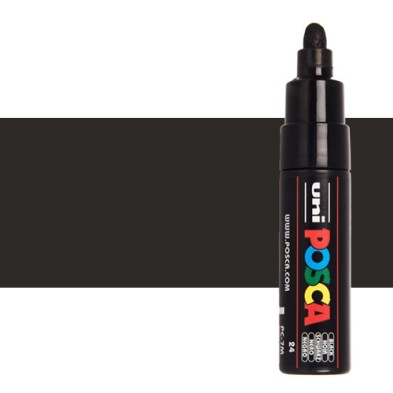
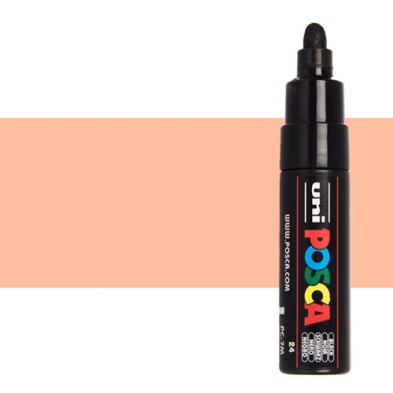
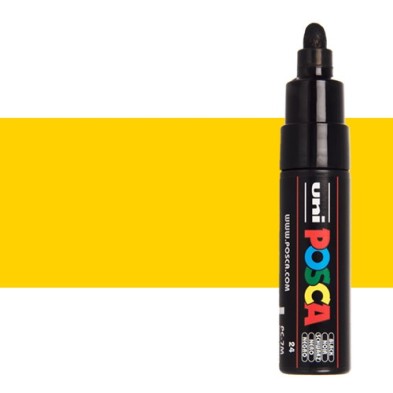
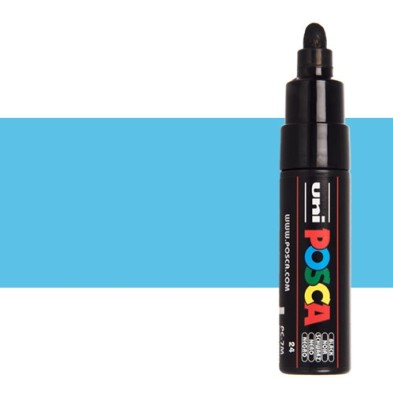
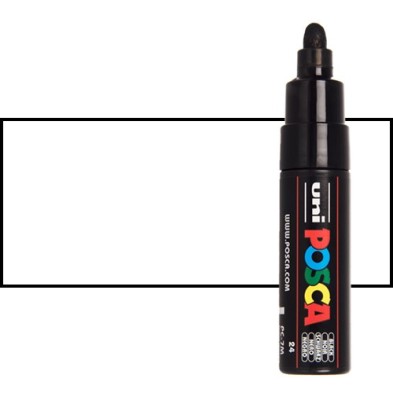
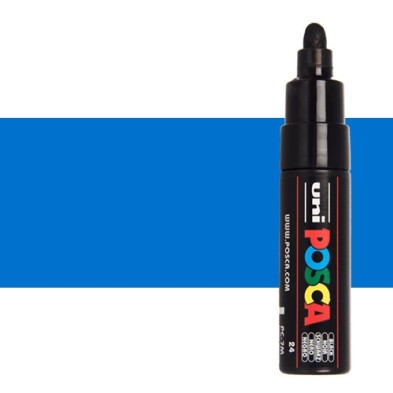
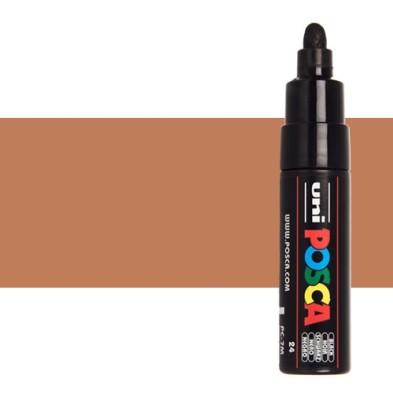
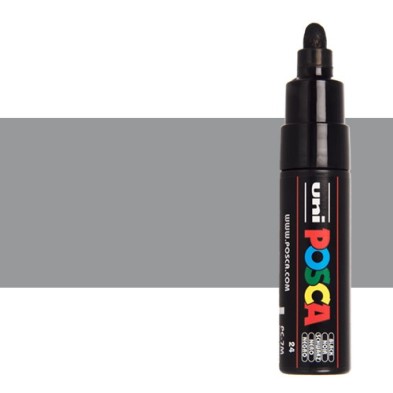
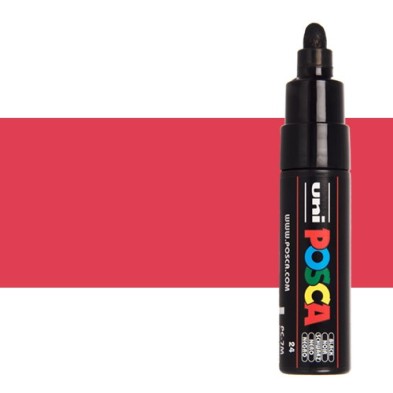
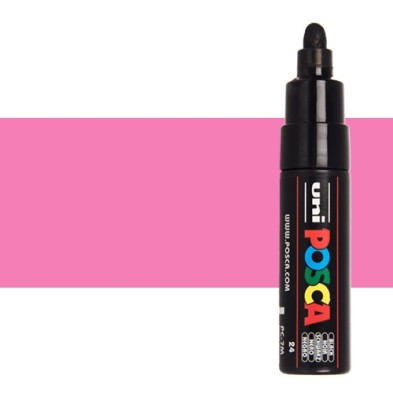
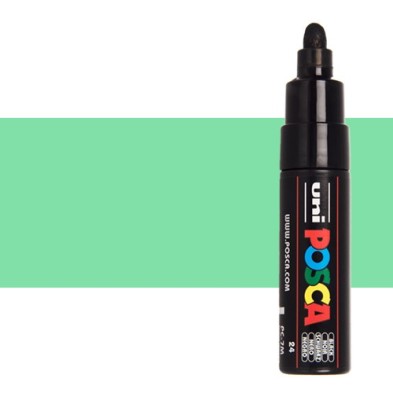
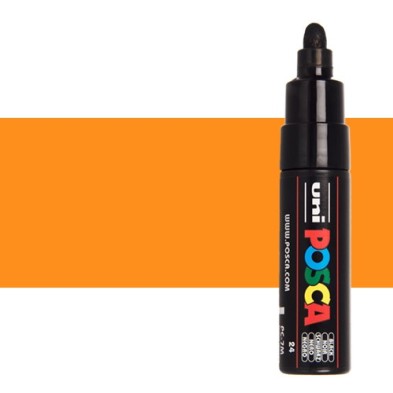
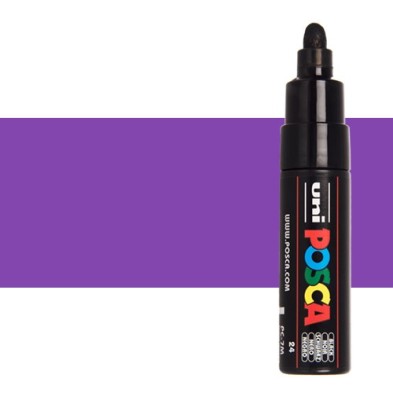
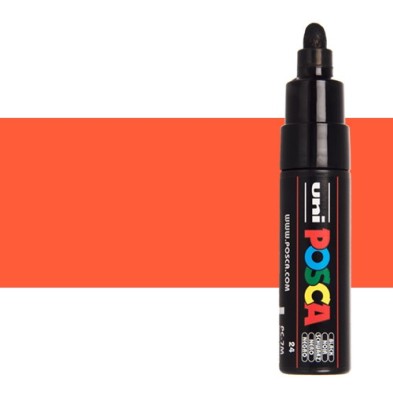
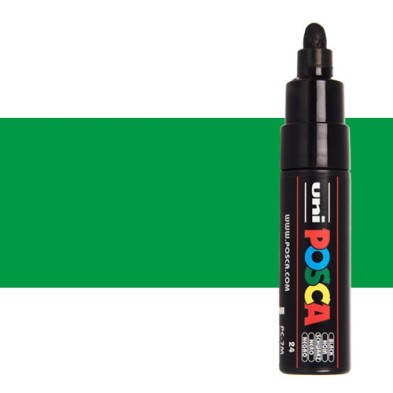
The manufacturer's PC-7M range is 15 colours: the full basic palette plus medium orange, light orange, brown and grey. It is the shortest of the broad sizes because the PC-7M is the most recent addition to the family, and it does not include the metallics or fluorescents found in the PC-5M and PC-8K.
If you would rather start from a ready-made selection, see POSCA sets.
Download the PC-7M colour chart (PDF)
Frequently asked questions about POSCA PC-7M pens
How thick a line does a POSCA PC-7M draw?
Between 4.5 and 5.5 mm, depending on pressure. It is the widest bullet tip POSCA makes, above the PC-5M (1.8-2.5 mm) and below the PC-8K (8 mm). Being a bullet rather than a chisel, the line keeps the same width in every direction.
PC-7M or PC-8K?
The PC-8K is an 8 mm chisel: it covers more ground per pass and allows calligraphy with varying stroke width, but the stroke changes with the angle of your hand. The PC-7M is a 4.5-5.5 mm bullet and gives a round, constant line. For large backgrounds, the 8K; for shapes, bold lettering and controlled fills, the 7M.
Is the PC-7M tip reversible?
No. In the whole POSCA range only the PC-3M and the PC-5M have reversible tips. The PC-7M nib is polyester and can be rinsed with water when another colour stains it, but it cannot be turned around.
How many colours are there in the PC-7M range?
Fifteen. It has the shortest palette in POSCA because it is the brand's most recent size: the primaries, the secondaries and four support tones (medium orange, light orange, brown and grey), but no metallics or fluorescents.