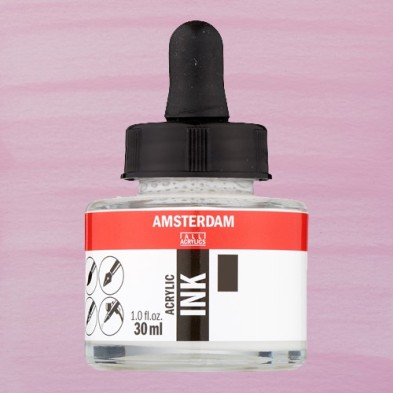
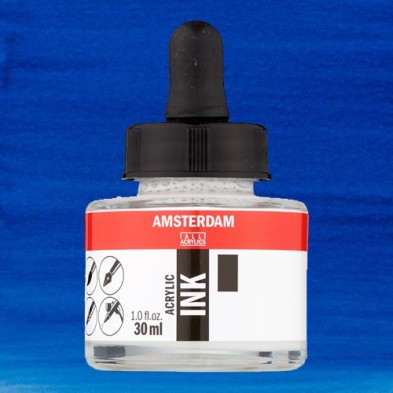
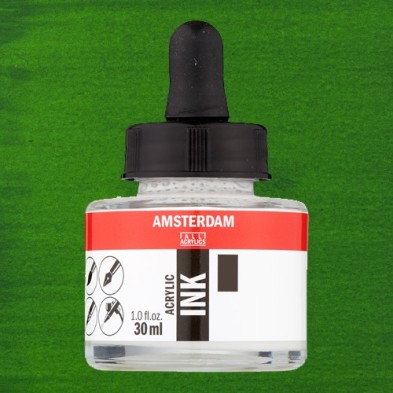
What Amsterdam acrylic ink is
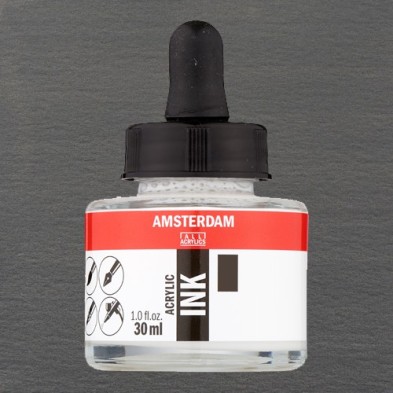
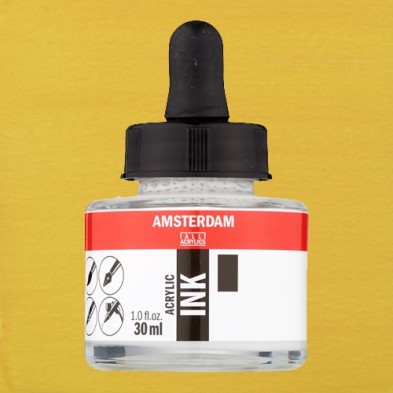
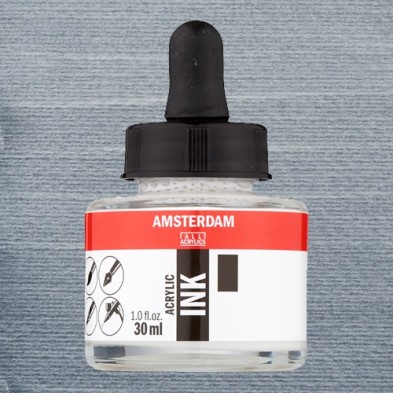
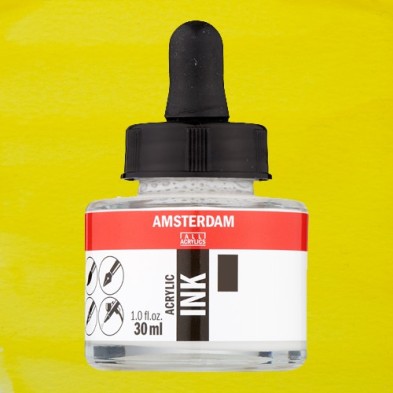
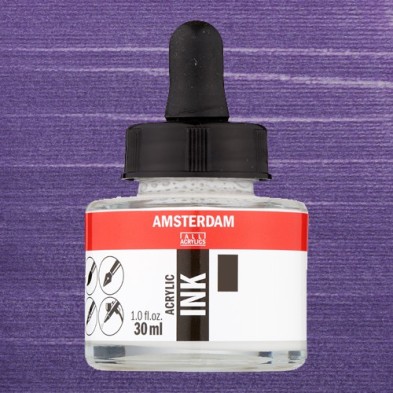
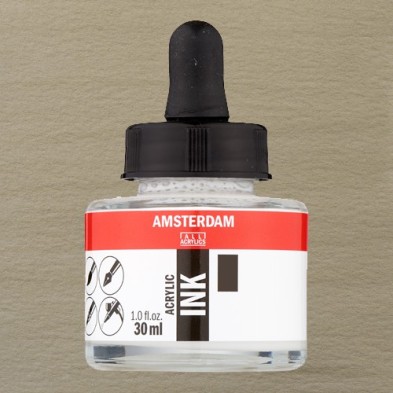
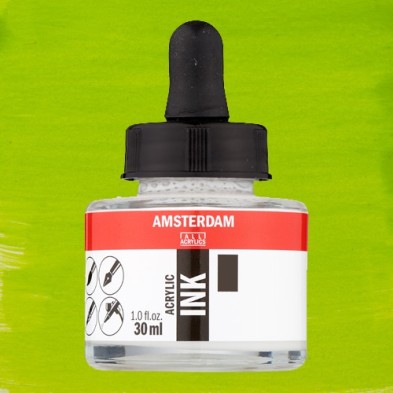
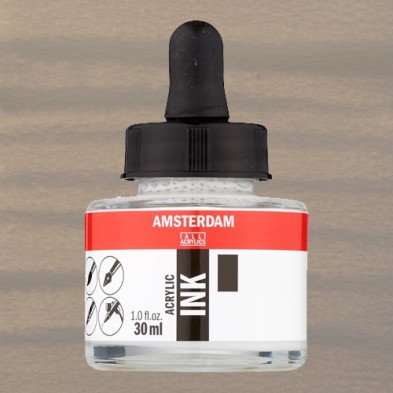
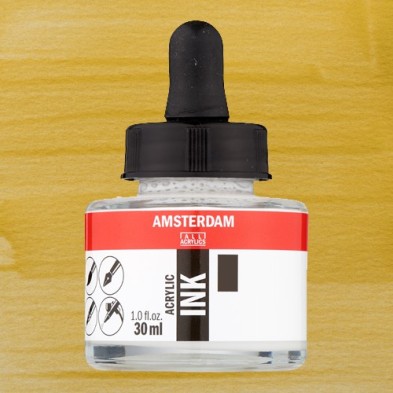
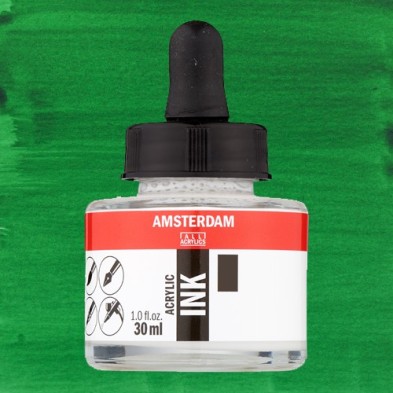
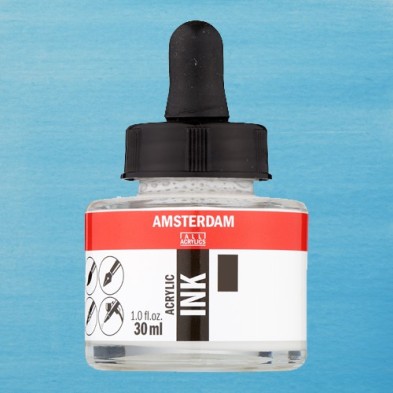
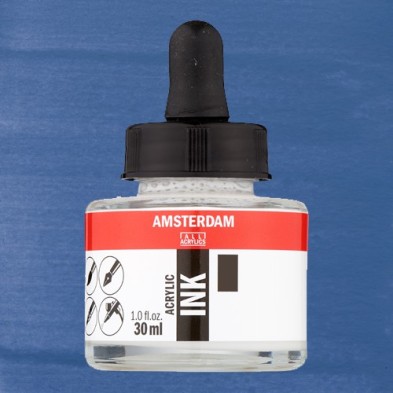
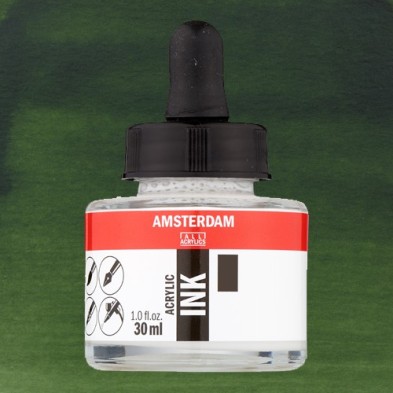
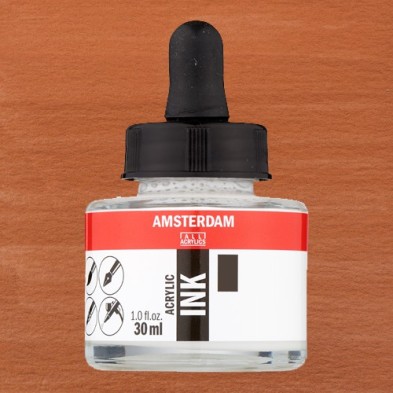
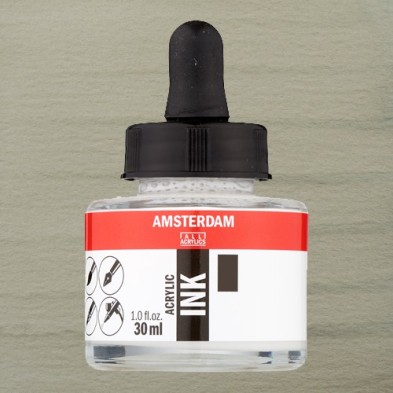
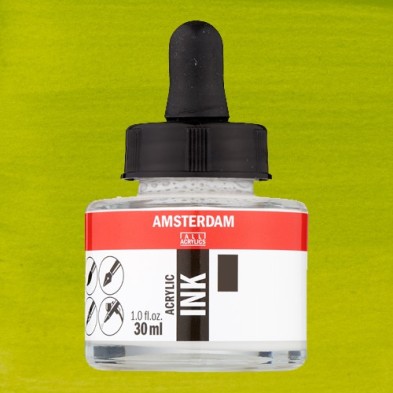
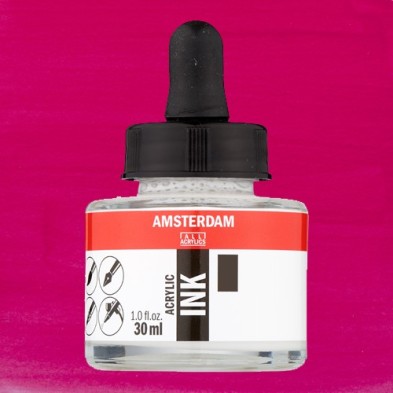
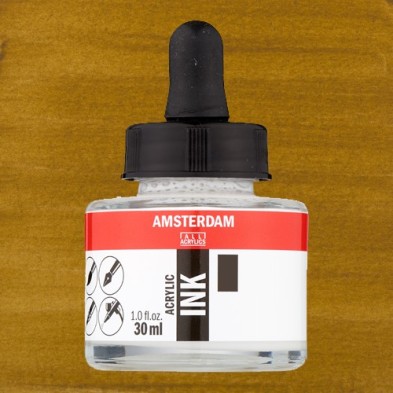
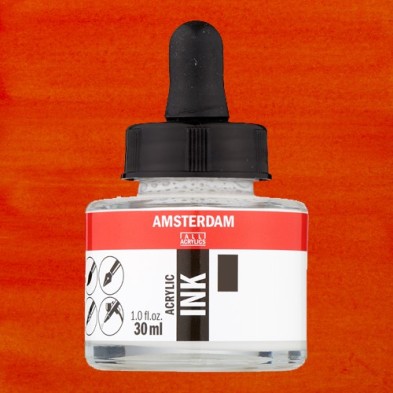
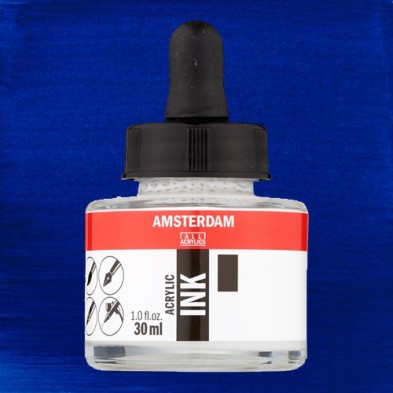
Amsterdam Acrylic Ink is Royal Talens' acrylic ink: an ultra-fluid acrylic rather than a traditional drawing ink. It brings together the flow and luminosity of ink and the behaviour of acrylic, so once dry it is waterproof, permanent and will not reactivate with water. The formula is water-based and odourless, and the 30 ml bottle has a wide opening and a dropper cap to dose drop by drop or fill an airbrush cup straight from the bottle.
The 56 Amsterdam Acrylic Ink colours: opacity and lightfastness
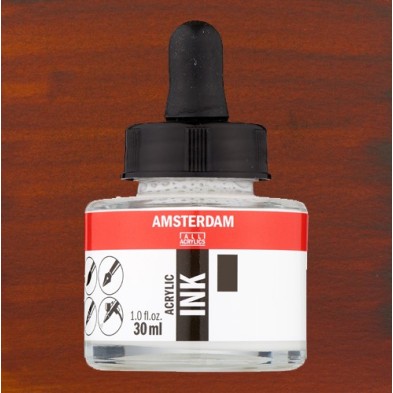
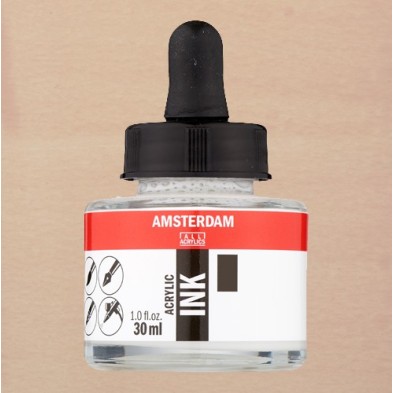
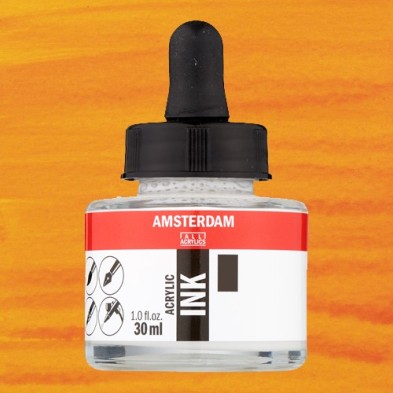
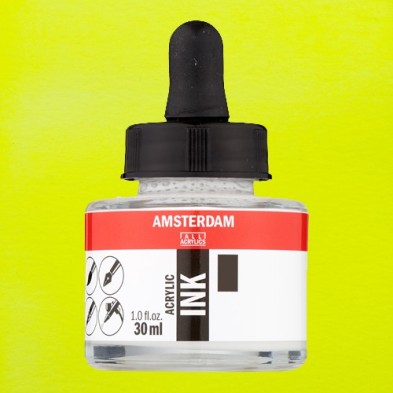
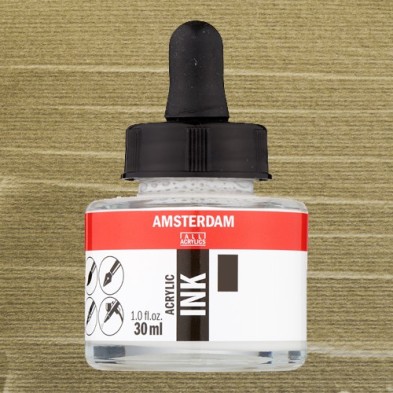
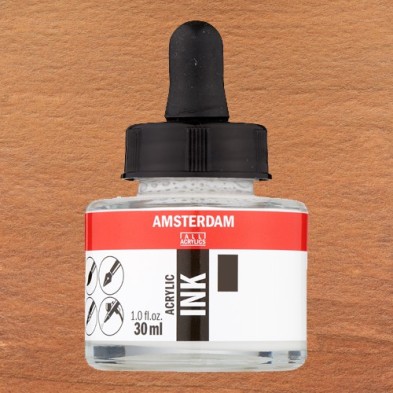
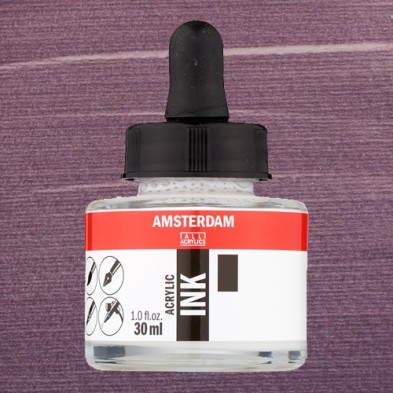
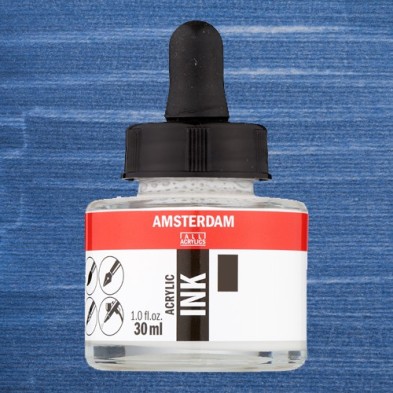
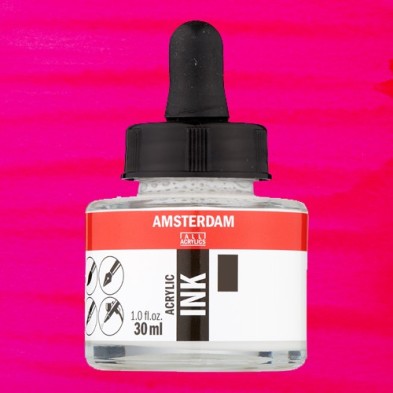
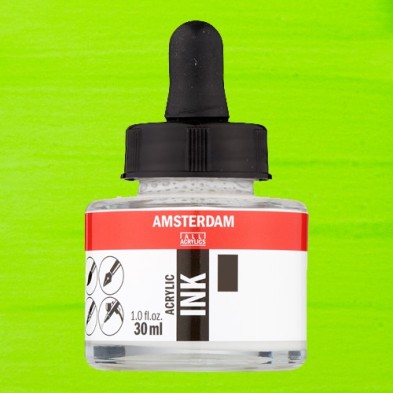
The range has 56 colours, 17 of them Specialty Colors: metallics (light gold 802, dark gold 803, silver 800, copper 805 and bronze 811), pearlescents (pearl white 817, pearl yellow 818, pearl red 819, pearl blue 820, pearl violet 821 and pearl green 822) and the fluorescent reflex shades (yellow 256, orange 257, rose 384 and green 672). Every colour states its opacity — transparent, semi-opaque or opaque — and its lightfastness on the Talens scale: +++ for at least 100 years under museum conditions, ++ for 25 to 100 years, and ° for the four reflex colours, which are fluorescent and inherently not lightfast. For work that will be on display, keep the reflex shades for sketching, illustration and artwork meant to be reproduced.
What Amsterdam acrylic ink is used for
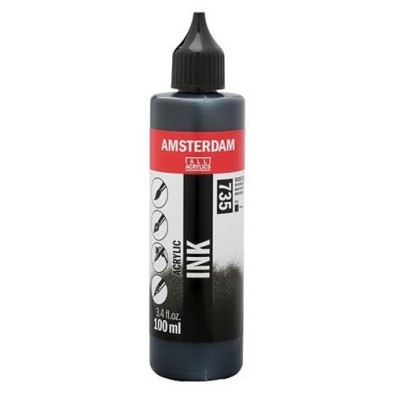
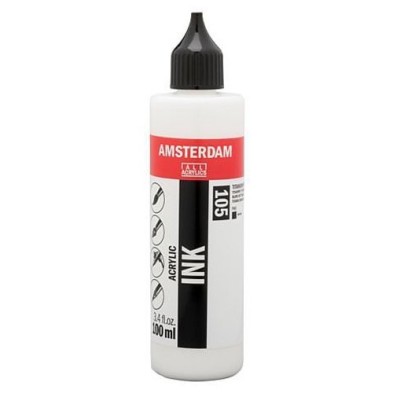
Airbrushing, calligraphy and lettering with a nib or technical pen, illustration, glazes and acrylic watercolour when thinned with water, fine linework over acrylic layers, pouring and mixes with the brand's acrylic mediums. It works on paper, card, canvas, wood and fabric; smooth surfaces such as plastic and metal need priming first. At Totenart it comes in 30 ml bottles and, in a few references, 100 ml.
Frequently asked questions about Amsterdam acrylic ink
What is the difference between Amsterdam acrylic ink and Amsterdam acrylic paint?
Both are acrylic, but the ink is ultra-fluid and comes in a dropper bottle, made for airbrush, nib and fine linework, while Amsterdam acrylic paint has body, comes in tubes or jars and holds the mark of the brush or palette knife.
Can Amsterdam acrylic ink be used in an airbrush?
Yes, it is one of its main uses: it sprays straight from the bottle, undiluted, through medium nozzles. For very fine nozzles or softer passes, thin it with water or with an airbrush medium. Clean the equipment as soon as you finish, because acrylic dries quickly.
Is Amsterdam acrylic ink lightfast?
Most colours are rated +++ (at least 100 years under museum conditions) or ++ (25 to 100 years). The exceptions are the four reflex colours — yellow 256, orange 257, rose 384 and green 672 — which are fluorescent, marked with °, and fade with exposure to light.
Can it be thinned with water?
Yes. Being water-based, it can be thinned for glazes and watercolour-like washes. Once dry it no longer reactivates, so later layers will not lift the ones underneath and you can build up colour without muddying it.
Which surfaces can it be used on?
Paper, card, canvas, wood, fabric and most porous supports. On smooth, non-absorbent surfaces such as plastic, glass or metal, apply a suitable primer first so the ink keys in and does not peel off.
What bottle size does Amsterdam acrylic ink come in?
The range format is the 30 ml bottle with a dropper cap and wide opening, which lets you load a pipette, nib or airbrush without decanting. Totenart also has a few references in 100 ml bottles while stocks last.