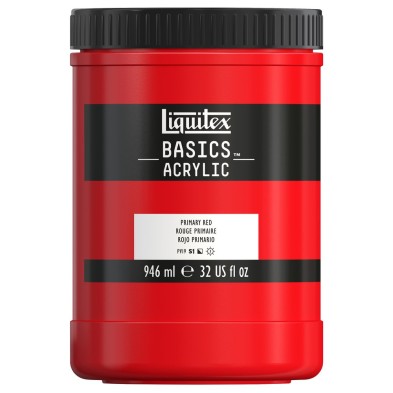
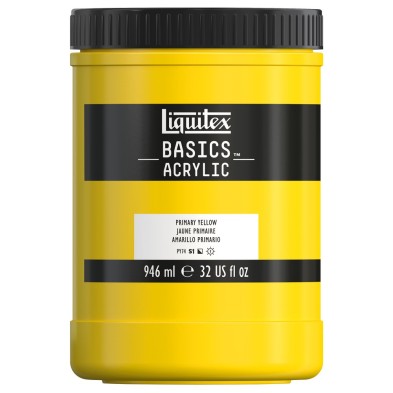
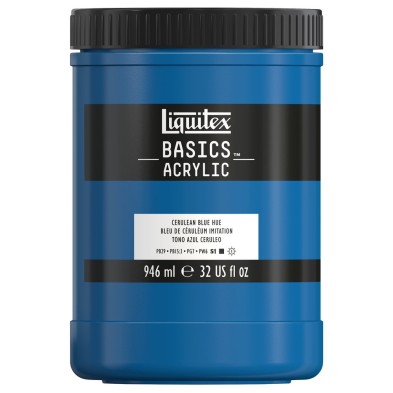
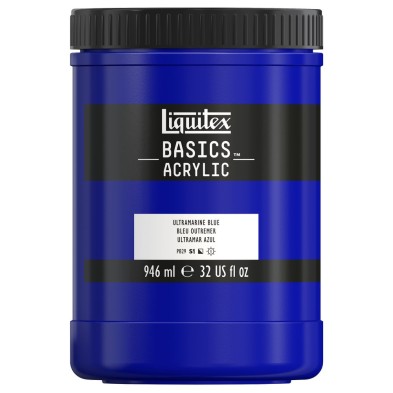
What Liquitex Basics acrylic paint is
Basics is Liquitex's medium viscosity acrylic range. In the manufacturer's own words it is for those new to painting and for anyone on a budget, but also for the experienced artist who uses it for underpainting and sketching, and for the professional exploring colour: a range for all, not only for beginners.
The manufacturer lists these characteristics for the range:
- Medium viscosity, easy to spread and easy to blend.
- Fine art pigments.
- Satin finish.
- A range of opacities: opaque, semi-opaque and transparent colours within the same range.
- Fully AP certified for safety and educational use.
Liquitex Basics colour chart: all 80 colours
This is the full colour chart for the range: 80 colours, with the three-digit colour number, the series, the declared opacity, the lightfastness rating and the pigment code. The colour name links to its 118 ml tube when it is available in the shop.
Liquitex Basics colour chart: the 80 colours in the range, with colour number, series, opacity, lightfastness and pigment code.
| No. | Colour | Series | Opacity | Lightfastness | Pigments |
|---|
| 045 | Transparent Yellow | 1 | Transparent | Excellent | PY128 |
| 046 | Turquoise Blue | 1 | Opaque | Excellent | PB15:3, PG7, PW6 |
| 047 | Transparent Red | 1 | Transparent | Excellent | PR209 |
| 048 | Rose Pink | 1 | Opaque | Excellent | PR122, PR188, PW6 |
| 049 | Iridescent Graphite | 2 | Opaque | Not ASTM rated | Mica, PBk7 |
| 051 | Gold | 2 | Semi-opaque | Not ASTM rated | — |
| 052 | Silver | 2 | Opaque | Not ASTM rated | — |
| 053 | Copper | 2 | Opaque | Not ASTM rated | — |
| 054 | Bronze | 2 | Opaque | Not ASTM rated | — |
| 114 | Quinacridone Magenta | 1 | Semi-opaque | Excellent | PR122 |
| 115 | Deep Violet | 1 | Opaque | Very good | PR122, PV23RS |
| 116 | Alizarin Crimson Hue Permanent | 1 | Semi-opaque | Excellent | DPP, PR179, PR202 |
| 127 | Burnt Sienna | 1 | Opaque | Excellent | PBk9, PR101 |
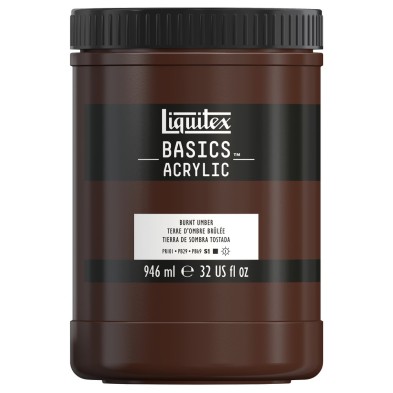
| 128 | Burnt Umber | 1 | Opaque | Excellent | PB29, PBk9, PR101 |
| 142 | Blue Gray | 1 | Opaque | Excellent | PB15:3, PB29, PBk7, PW6 |
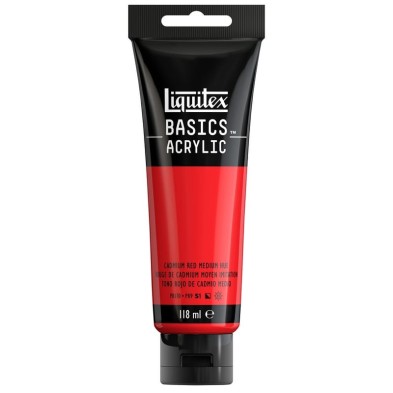
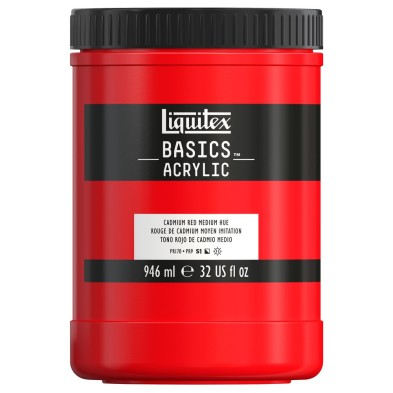
| 151 | Cadmium Red Medium Hue | 1 | Semi-opaque | Very good | PR170, PR9 |
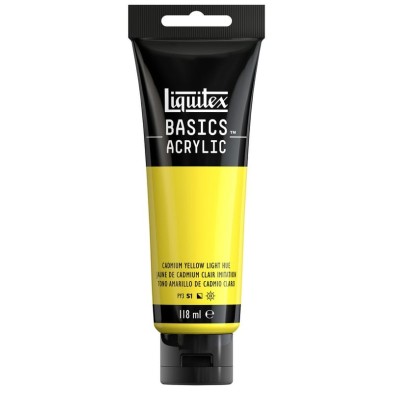
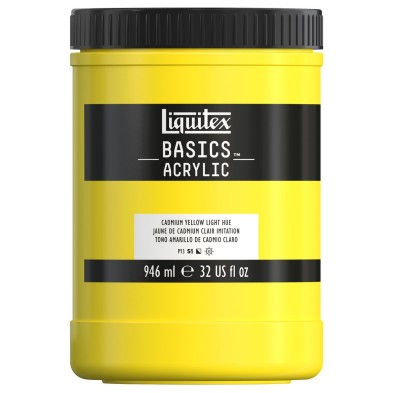
| 159 | Cadmium Yellow Light Hue | 1 | Semi-opaque | Very good | PY3 |
| 163 | Cadmium Yellow Deep Hue | 1 | Semi-opaque | Excellent | PW6, PY83 |
| 186 | Dioxazine Purple | 1 | Semi-opaque | Very good | PV23RS |
| 205 | Green Gray | 1 | Opaque | Excellent | PB29, PW6, PY42 |
| 218 | Light Olive Green | 1 | Semi-opaque | Excellent | PG7, PW6, PY42, PY74 |
| 222 | Lime Green | 1 | Semi-opaque | Excellent | PG7, PW6, PY74 |
| 224 | Hooker's Green Hue Permanent | 1 | Semi-opaque | Excellent | PBk9, PG7, PY74 |
| 238 | Iridescent White | 2 | Semi-opaque | Not ASTM rated | — |
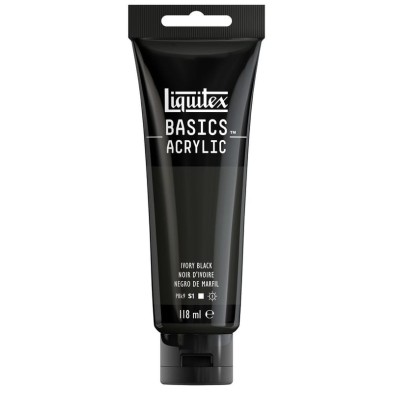
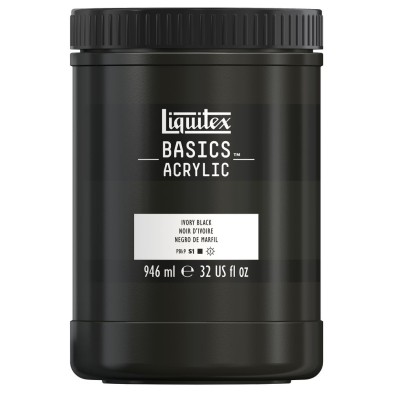
| 244 | Ivory Black | 1 | Opaque | Excellent | PBk9 |
| 263 | Purple Gray | 1 | Opaque | Very good | PR188, PV23RS, PW6 |
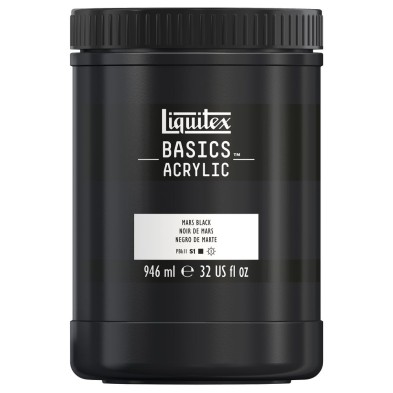
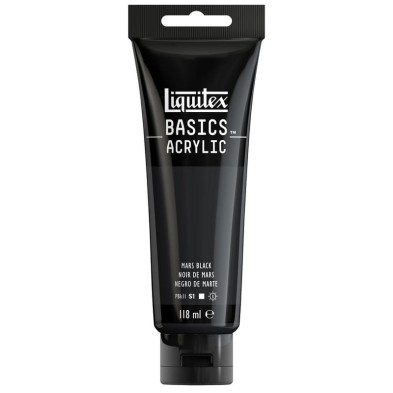
| 276 | Mars Black | 1 | Opaque | Excellent | PBk11 |
| 292 | Naphthol Crimson | 1 | Semi-opaque | Very good | PR170 |
| 310 | Payne's Gray | 1 | Opaque | Excellent | PB29, PBk9, PR122 |
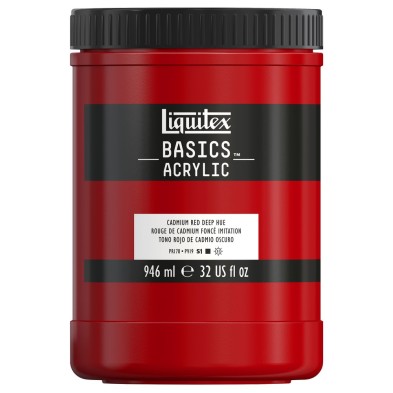
| 311 | Cadmium Red Deep Hue | 1 | Opaque | Very good | PR170, PV19 |
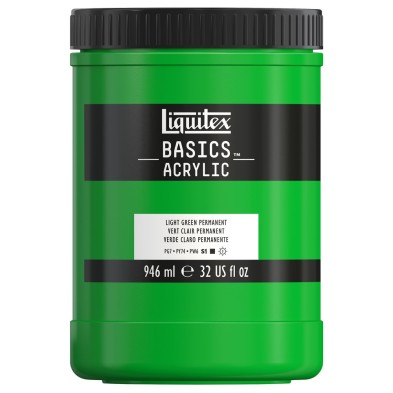
| 312 | Light Green Permanent | 1 | Opaque | Excellent | PG7, PW6, PY74 |
| 316 | Phthalocyanine Blue | 1 | Opaque | Excellent | PB15:3 |
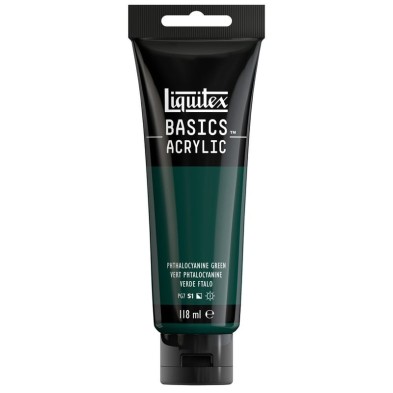
| 317 | Phthalocyanine Green | 1 | Semi-opaque | Excellent | PG7 |
| 320 | Prussian Blue Hue | 1 | Opaque | Very good | PB15:3, PBk7, PV23RS |
| 321 | Pyrrole Red | 1 | Opaque | Excellent | PR254 |
| 330 | Raw Sienna | 1 | Opaque | Excellent | PBk9, PR101, PY42 |
| 331 | Raw Umber | 1 | Opaque | Excellent | PB29, PO73, PY139 |
| 335 | Red Oxide | 1 | Opaque | Excellent | PR101, PY42 |
| 339 | Metallic Green | 2 | Opaque | Not ASTM rated | — |
| 340 | Metallic Purple | 2 | Opaque | Not ASTM rated | — |
| 341 | Metallic Blue | 2 | Opaque | Not ASTM rated | — |
| 342 | Metallic Magenta | 2 | Opaque | Not ASTM rated | — |
| 343 | Metallic Yellow Gold | 2 | Opaque | Not ASTM rated | — |
| 344 | Metallic Burnt Orange | 2 | Opaque | Not ASTM rated | — |
| 345 | Metallic Red | 2 | Opaque | Not ASTM rated | — |
| 346 | Metallic Aqua Green | 2 | Opaque | Not ASTM rated | — |
| 350 | Green Deep Permanent | 1 | Semi-opaque | Excellent | PBk7, PG36 |
| 380 | Ultramarine Blue | 1 | Semi-opaque | Excellent | PB29 |
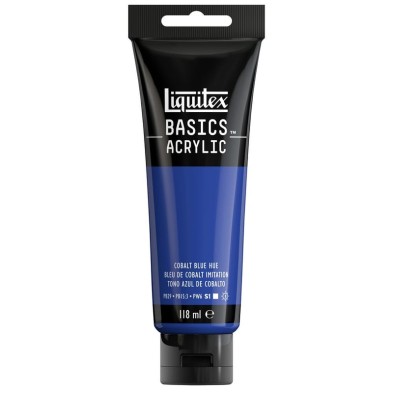
| 381 | Cobalt Blue Hue | 1 | Opaque | Excellent | PB15:3, PB29, PW6 |
| 391 | Prism Violet | 1 | Transparent | Very good | PR122, PV23RS |
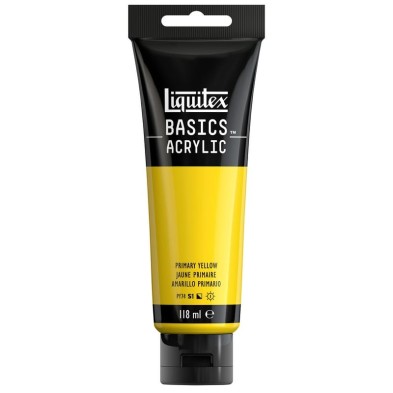
| 410 | Primary Yellow | 1 | Semi-opaque | Excellent | PY74 |
| 415 | Primary Red | 1 | Semi-opaque | Excellent | PV19 |
| 416 | Yellow Oxide | 1 | Opaque | Excellent | PY42 |
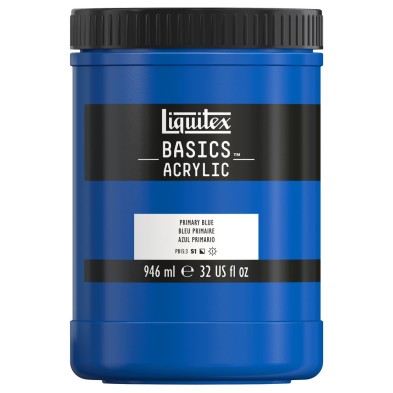
| 420 | Primary Blue | 1 | Semi-opaque | Excellent | PB15:3 |
| 430 | Transparent Mixing White | 1 | Transparent | Excellent | PW6 |
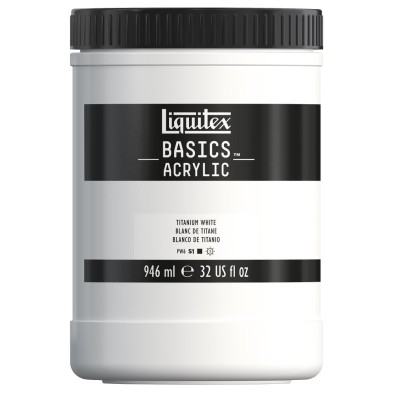
| 432 | Titanium White | 1 | Opaque | Excellent | PW6 |
| 434 | Unbleached Titanium | 1 | Opaque | Excellent | PBk11, PR101, PW6, PY42 |
| 436 | Parchment | 1 | Opaque | Excellent | PBk7, PG7, PW6, PY42 |
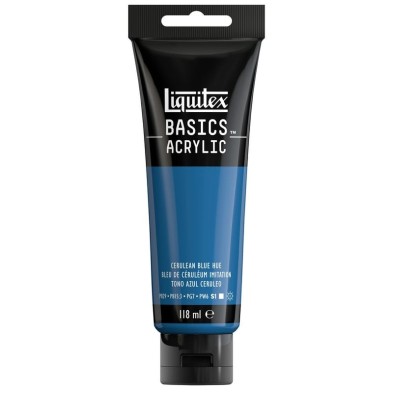
| 470 | Cerulean Blue Hue | 1 | Opaque | Excellent | PB15:3, PB29, PG7, PW6 |
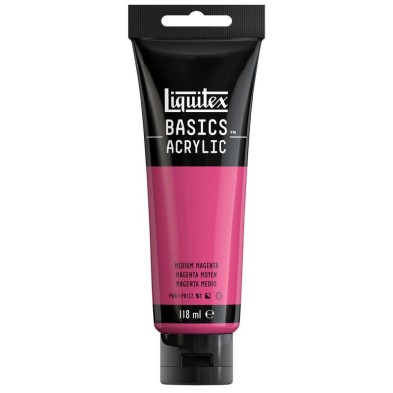
| 500 | Medium Magenta | 1 | Semi-opaque | Excellent | PR122, PW6 |
| 510 | Cadmium Red Light Hue | 1 | Semi-opaque | Excellent | PR9, PY74 |
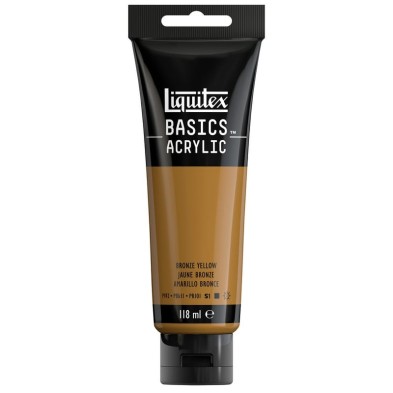
| 530 | Bronze Yellow | 1 | Opaque | Excellent | PBk11, PR101, PY42 |
| 570 | Brilliant Blue | 1 | Opaque | Excellent | PB15:3, PG7, PW6 |
| 590 | Brilliant Purple | 1 | Opaque | Very good | PV23RS, PW6 |
| 599 | Neutral Gray 5 | 1 | Opaque | Excellent | PBk9, PW6, PY42 |
| 601 | Naples Yellow Hue | 1 | Opaque | Excellent | PW6, PY42, PY83 |
| 620 | Vivid Red Orange | 1 | Semi-opaque | Excellent | PO73, PY139 |
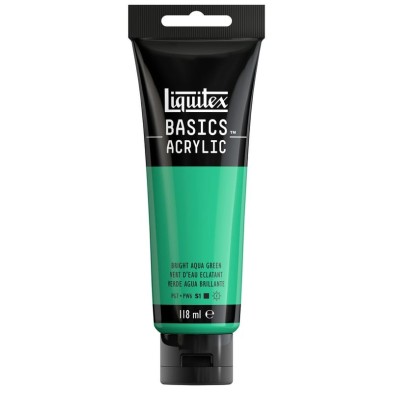
| 660 | Bright Aqua Green | 1 | Opaque | Excellent | PG7, PW6 |
| 680 | Light Blue Violet | 1 | Opaque | Very good | PB29, PV23RS, PW6 |
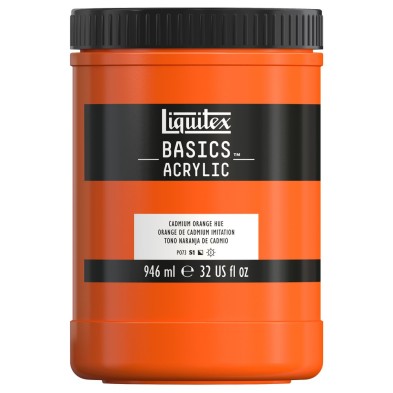
| 720 | Cadmium Orange Hue | 1 | Semi-opaque | Excellent | PO73 |
| 770 | Light Blue Permanent | 1 | Opaque | Excellent | PB15:3, PG7, PW6 |
| 810 | Light Pink | 1 | Opaque | Excellent | PO36, PR188, PW6 |
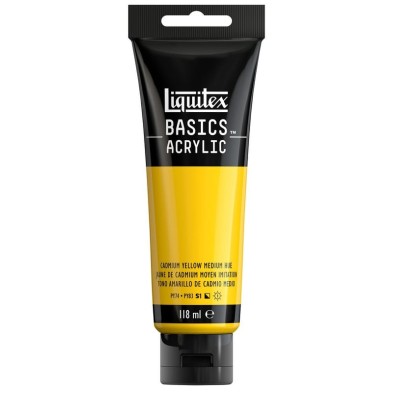
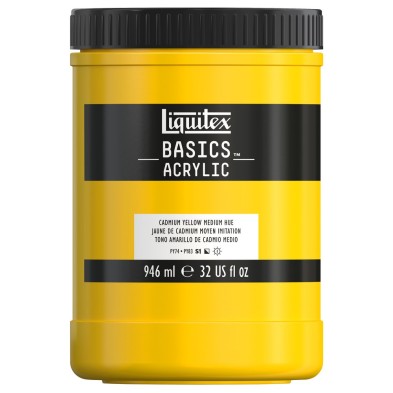
| 830 | Cadmium Yellow Medium Hue | 1 | Semi-opaque | Excellent | PY74, PY83 |
| 840 | Brilliant Yellow Green | 1 | Semi-opaque | Very good | PG7, PW6, PY3, PY74 |
| 981 | Fluorescent Yellow | 2 | Transparent | Not ASTM rated | — |
| 982 | Fluorescent Orange | 2 | Transparent | Not ASTM rated | — |
| 983 | Fluorescent Red | 2 | Transparent | Not ASTM rated | — |
| 984 | Fluorescent Blue | 2 | Semi-opaque | Not ASTM rated | — |
| 985 | Fluorescent Green | 2 | Transparent | Not ASTM rated | — |
| 987 | Fluorescent Pink | 2 | Transparent | Not ASTM rated | — |
You can also download the printable version of the colour chart.
How to read series, opacity and lightfastness in Liquitex Basics
The series tells you the price band of the colour, not its quality: the range has 60 series 1 colours and 20 series 2 colours. The 20 series 2 colours are exactly the metallics, iridescents and fluorescents, which are also the 20 with no ASTM rating.
Opacity is declared by the manufacturer colour by colour: 46 opaque, 25 semi-opaque and 9 transparent. An opaque colour covers the layer underneath; a transparent one lets it show through and works for glazing.
Lightfastness measures how well a colour resists fading: 48 colours are rated excellent, 12 very good and 20 have no ASTM rating. Those 20 are the fluorescents, metallics and iridescents.
The pigment code (PY74, PB15:3, PR122 and so on) identifies the actual pigment in the tube. Use it to tell a single-pigment colour from a mixture, and to match a mix across brands.
Liquitex Basics formats and sets at Totenart
The manufacturer makes the range in 22 ml, 118 ml, 250 ml, 400 ml and 946 ml. These are the two reference formats at Totenart:
- 118 ml tube: single colours, the standard size for a full painting.
- 22 ml sets: 6, 12, 24, 36 and 48 colours. The 48-colour set is the one that gives you the widest colour range in a single purchase.
The 250 ml and 400 ml formats are not part of our catalogue. A few 946 ml jars remain in the grid while stocks last.
What Liquitex Basics is used for
The manufacturer puts the range forward for all painting techniques and, specifically, for sketching and underpainting, colour theory and colour mixing, collage and mixed media, glazing and murals. It is a water-based acrylic paint of medium viscosity.
Pouring is not among the techniques the manufacturer states for this range: Liquitex Basics is a medium viscosity paint, not a pouring paint, and pouring is done with dedicated mediums, which are a separate product.
Liquitex Basics or Liquitex Heavy Body
The difference the manufacturer states is viscosity. Basics is medium viscosity: the brushstroke settles. Liquitex Heavy Body is high viscosity and holds the relief of knife and brush. To compare other brands, the acrylic colours category has the rest of the ranges, and the acrylic technique section has mediums, varnishes and supports.
Frequently asked questions about Liquitex Basics
Is Liquitex Basics suitable for beginners?
Yes, and not only for beginners. The manufacturer puts the range forward for those new to painting and for anyone on a budget, for the experienced artist who uses it for underpainting and sketching, and for the professional exploring colour. The difference from Liquitex's professional range is the lower pigment load, with the same lightfast fine art pigments.
How many colours are there in the Liquitex Basics range?
The Liquitex Basics range has 80 colours: 60 in series 1 and 20 in series 2. All 80 are made in 118 ml tubes and in 22 ml, which is the size used in the sets.
Which sizes is Liquitex Basics made in?
Liquitex makes the Basics range in 22 ml, 118 ml, 250 ml, 400 ml and 946 ml. All 80 colours exist in 22 ml and 118 ml; 36 colours in 250 ml, 30 in 400 ml and 22 in 946 ml. At Totenart the reference format is the 118 ml tube, plus the 22 ml sets.
What does series 1 or series 2 mean in Liquitex Basics?
The series is the price band of the colour, which depends on the pigment it contains. Liquitex Basics has 60 series 1 colours and 20 series 2 colours; the 20 series 2 colours are exactly the metallics, iridescents and fluorescents.
What is the difference between Liquitex Basics and Liquitex Heavy Body?
Viscosity. Liquitex Basics is medium viscosity and the brushstroke settles into the surface; Liquitex Heavy Body is high viscosity and holds the relief of the brushstroke and the painting knife.
Is Liquitex Basics a professional acrylic paint?
No. The manufacturer itself places Basics below its professional range: it uses the same lightfast fine art pigments, but with a lower pigment load. Even so, 48 of the 80 colours in the range are rated excellent for lightfastness.
How lightfast are Liquitex Basics colours?
Of the 80 colours, 48 are rated excellent for lightfastness and 12 very good. The remaining 20, which are the fluorescents, metallics and iridescents, have no ASTM rating.
Can Liquitex Basics colours be mixed with other acrylic ranges?
Yes: they are acrylic paints and they mix together. What changes from one range to another is viscosity and pigment load, so the mix takes the body and intensity of whichever paint dominates: the manufacturer publishes no recommended ratios for mixing across ranges.
Can Liquitex Basics be used in schools?
Yes. The manufacturer states that the Basics range is fully AP certified for safety and educational use.