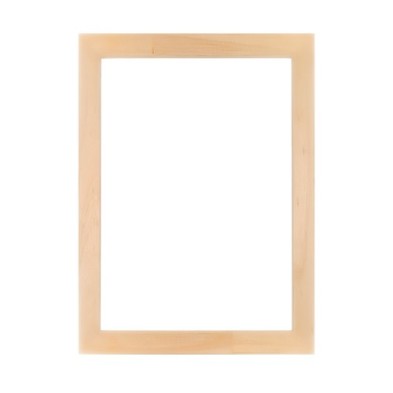
Stretcher bars without canvas: the wooden frame for making your own
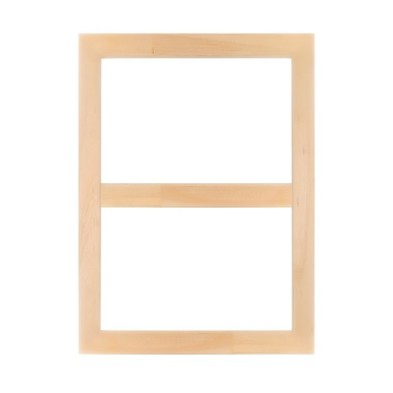
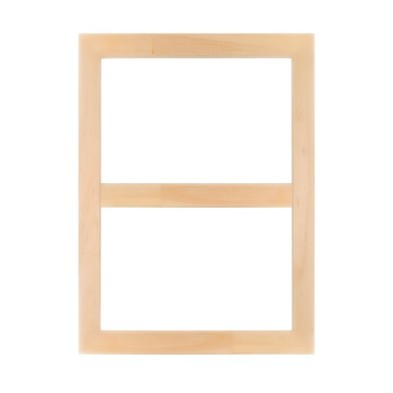
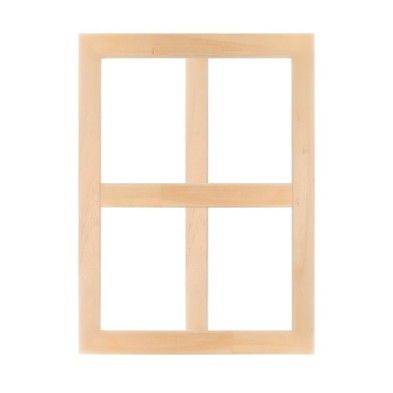
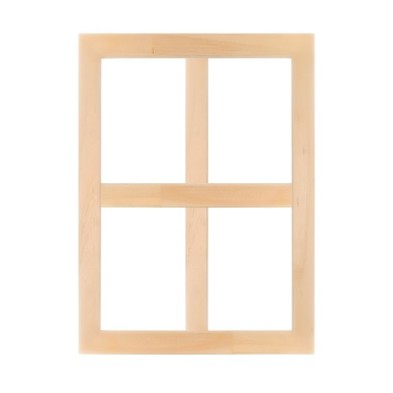
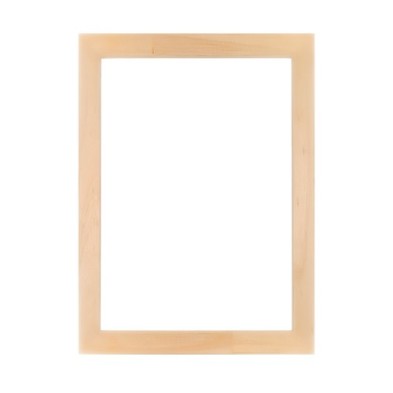
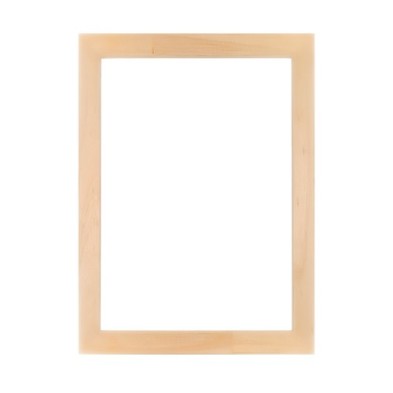
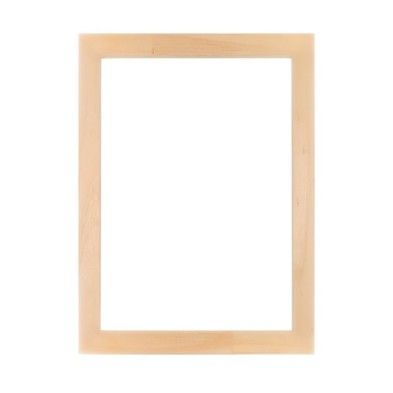
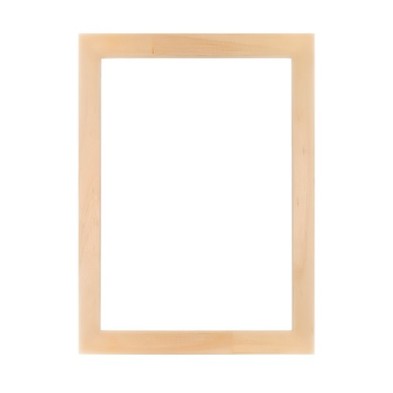
A wooden stretcher frame without canvas is the structure of a painting sold on its own, with no fabric attached. You buy just the frame and stretch whatever fabric you like over it: cotton or linen, raw or primed. It is the way to get almost any size at the best cost per square metre, to restretch an old painting and to work large without blowing the budget. All our stretcher bars are made in Spain, in the traditional depth, and come with their own wedges for tensioning.
At a glance
- What it is: just the wooden stretcher frame, with no fabric and no primer.
- Depth: traditional or slim, about 2 cm, the classic profile for framing.
- Edges: rounded and bevelled, so the fabric does not touch the wood on the inside and tensions better without the bar showing through.
- Tensioning: wooden wedges included to restore the tension of the fabric when it slackens.
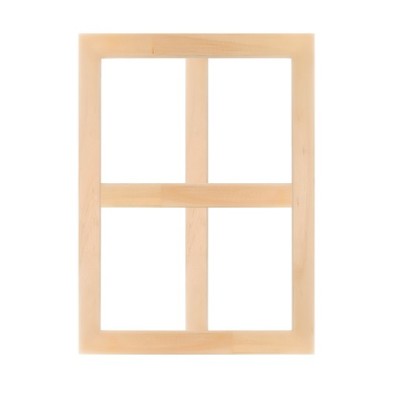
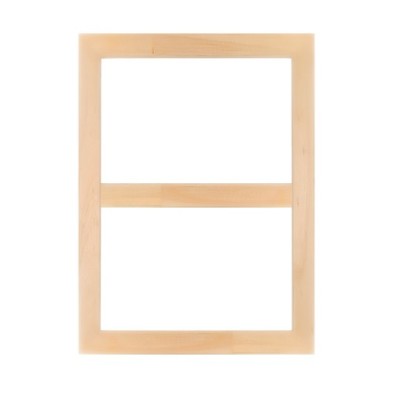
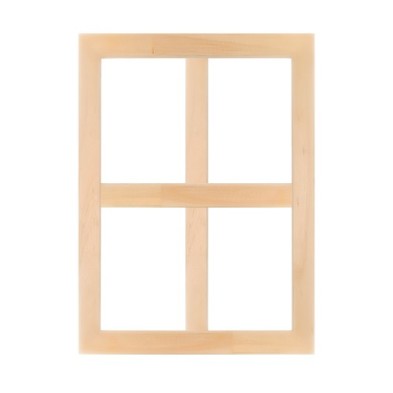
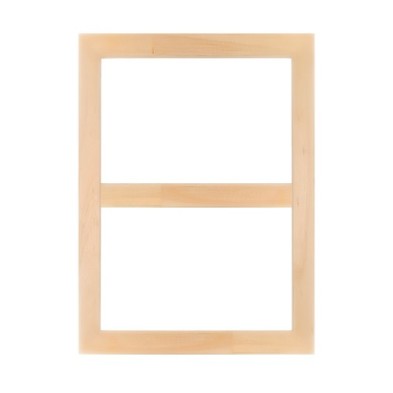
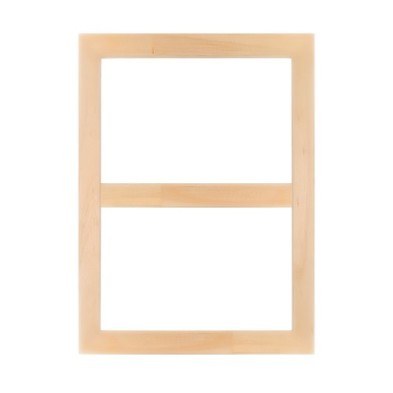
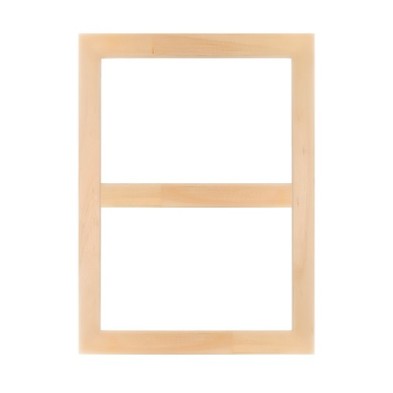
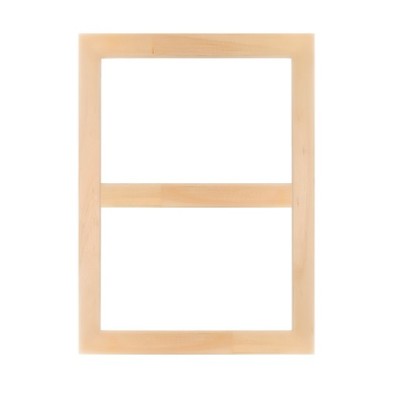
- Bracing: large sizes usually have cross braces inside to stop the wood from bowing.
- Assembly: can be supplied assembled or as loose bars.
- Sizes: standard French F, M and P sizes, from 22×16 cm (1F) to 195×130 cm (120F).
- Manufacture: our own, in Spain.
When it pays to buy stretcher bars on their own
- Large formats. From around size 50-60, stretching your own with fabric from a roll costs far less than a ready-made canvas.
- Non-standard sizes. With separate bars and fabric you choose the proportion you want, without being tied to the F, M and P series.
- Control over the surface. You choose the fabric weight, the number of coats of primer and how absorbent the ground is; it is the only way to get a specific preparation.
- Restretching. A stretcher in good condition can be reused again and again by changing only the fabric.
- Batch production. If you paint a lot, stretching in batches cuts the cost per painting considerably.
If you just want to start painting with no extra steps, take a look at our ready-primed canvases for painting.
What our wooden stretcher bars look like inside
Not all stretchers are the same, and the differences show the moment you tension the fabric. These are the three key features:
- The bevelled edge. The bar is bevelled towards the inside, so only the outer edge touches the fabric. Without that bevel, the profile of the wood can end up showing through on the painted surface.
- The wedges. These are the small triangular pieces of wood that slot into the corners at the back. Tapping them gently opens the frame by a few millimetres and tightens slack fabric again.
- The cross brace. This is the internal brace on large sizes. Without it, a stretcher over a metre long can bow under the tension of the fabric, and the painting no longer hangs flat against the wall.
F, M and P size chart and fabric needed
Each size number comes in three proportions: Figure (F), the squarest; Marine (M), the longest; and Landscape (P), in between. The last column gives the approximate minimum fabric recommended to stretch the Figure size in that row.
F, M and P stretcher sizes and minimum fabric for the F size, worked out with the +14 cm rule (above size 50, allow a wider margin)
| Size |
Figure (F) |
Marine (M) |
Landscape (P) |
Minimum fabric for the F size |
| 3 |
27×22 cm |
27×16 cm |
27×19 cm |
41×36 cm |
| 4 |
33×24 cm |
33×19 cm |
33×22 cm |
47×38 cm |
| 5 |
35×27 cm |
35×22 cm |
35×24 cm |
49×41 cm |
| 6 |
41×33 cm |
41×24 cm |
41×27 cm |
55×47 cm |
| 8 |
46×38 cm |
46×27 cm |
46×33 cm |
60×52 cm |
| 10 |
55×46 cm |
55×33 cm |
55×38 cm |
69×60 cm |
| 12 |
61×50 cm |
61×38 cm |
61×46 cm |
75×64 cm |
| 15 |
65×54 cm |
65×46 cm |
65×50 cm |
79×68 cm |
| 20 |
73×60 cm |
73×50 cm |
73×54 cm |
87×74 cm |
| 25 |
81×65 cm |
81×54 cm |
81×60 cm |
95×79 cm |
| 30 |
92×73 cm |
92×60 cm |
92×65 cm |
106×87 cm |
| 40 |
100×81 cm |
100×65 cm |
100×73 cm |
114×95 cm |
| 50 |
116×89 cm |
116×73 cm |
116×81 cm |
130×103 cm |
| 60 |
130×97 cm |
130×81 cm |
130×89 cm |
144×111 cm |
| 80 |
146×114 cm |
146×89 cm |
146×97 cm |
160×128 cm |
| 100 |
162×130 cm |
162×97 cm |
162×114 cm |
176×144 cm |
| 120 |
195×130 cm |
195×97 cm |
195×114 cm |
209×144 cm |
The range also includes the smallest sizes, such as 1F at 22×16 cm and 2P at 24×16 cm.
How much fabric do I need to stretch a frame?
The rule is simple: on each side of the frame, add the depth of the wood plus the margin you need to grip the fabric and staple it at the back.
Fabric needed = frame size + 14 cm in each dimension (2 cm for the edge and a 5 cm stapling margin on each side).
Example: for a 20F frame measuring 73×60 cm, you need a piece of fabric at least 87×74 cm. Above size 50, increase the margin to 8 cm per side, because you need more fabric to grip with the canvas pliers and pull. Before you buy, check the roll width: at least the short side of your piece has to fit within it; if it does not, you will need a wider roll. You can see the widths available in cotton and linen canvas rolls.
What you need to stretch a canvas
To stretch a canvas you need the stretcher frame itself, a piece of fabric about 14 cm larger than the frame in each dimension, a staple gun and a pair of canvas pliers to pull the fabric taut as you staple. The fabric is stapled at the back, working from the centre of each side towards the corners, and the wedges go in last to fine-tune the tension.
Priming the fabric after stretching
If you have stretched raw fabric, prime it with gesso and primers before painting, because without a ground the oil in oil paint soaks into the fibre and eventually rots it; if you would rather skip this step, buy factory-primed fabric.
Frequently asked questions about canvas stretcher bars
Do the stretcher bars come assembled?
They can be supplied either way: assembled or as loose bars.
How deep are these stretcher bars?
Traditional or slim depth, roughly 1.7 to 2 cm depending on the size. It is the classic profile, designed for framing the painting once it is finished.
From what size does a stretcher have a cross brace?
Large sizes are made with an internal cross brace; small and medium sizes do not need one. As a guide, the 30M at 92×60 cm has a cross brace and the 25F at 81×65 cm does not. You can check on the page for each size.
Why are the edges rounded and bevelled?
Because only the outer edge should touch the fabric. The bevel leaves a gap between the wood and the fabric, so the profile of the stretcher does not show on the surface of the painting and the canvas tensions more cleanly.
What is the difference between a stretcher and a frame?
The stretcher is the inner structure the fabric is stretched over, and it is part of the painting: without it there is no canvas. The frame, or moulding, is the decorative surround fitted around the finished painting. A painting can be shown without a frame, but never without a stretcher.
Can I paint directly on the wood of the stretcher?
A stretcher is a structure, not a painting support: it has no continuous surface to work on. If you want to paint on wood, the right choice is a rigid support such as okoume wood painting panels or canvas boards.