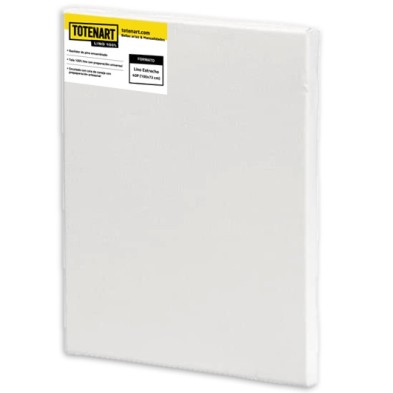
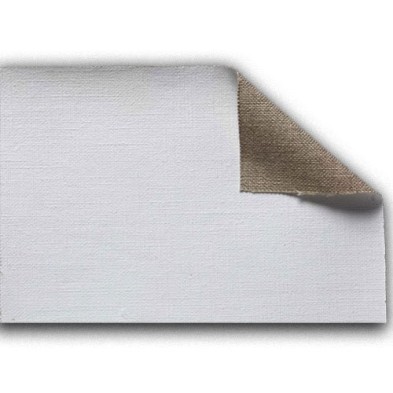
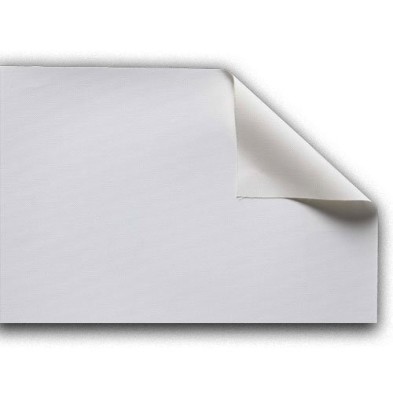
Canvases for painting: primed fabric on a stretcher, ready to use
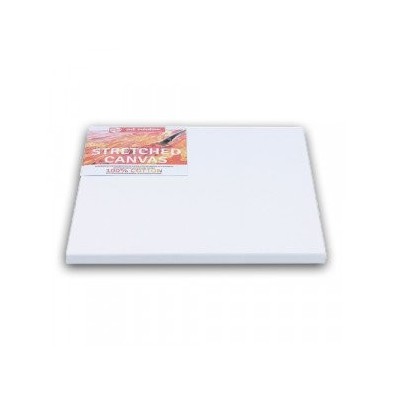
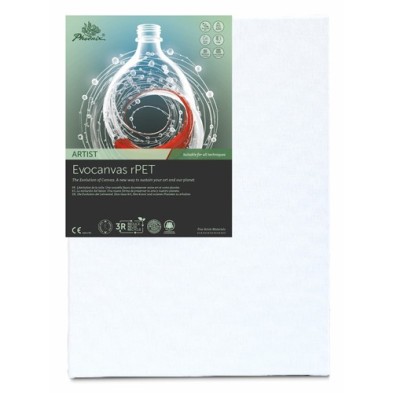
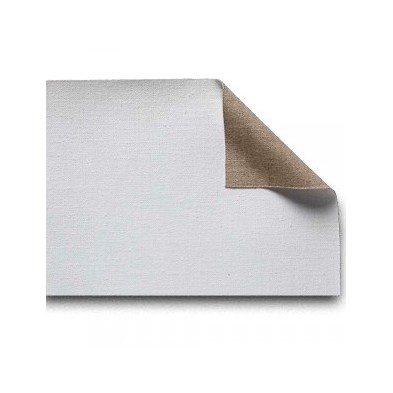
A canvas for painting is fabric pulled taut over a stretcher frame, stapled in place and primed so you can paint straight onto it. It is the classic support for oil and acrylic painting. Choosing the right one comes down to four decisions: the fabric, the depth of the frame, the size and the technique you plan to use. Each is explained below, together with a table of every type of support in this section.
At a glance
- What it is: cotton or linen stretched over a frame and already primed, so no preparation is needed before painting.
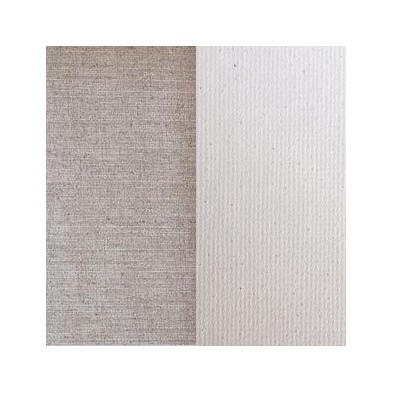
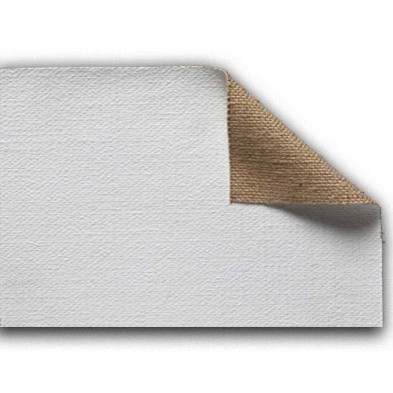
- Fabrics: cotton (regular weave, the usual choice for beginners) and linen (irregular weave, more stable in changing humidity and the longest-lasting painting fabric).
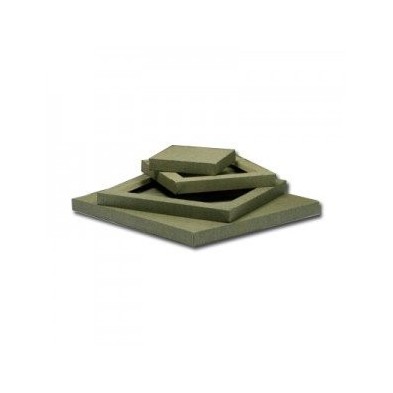
- Depth: standard profile, 1.7 to 2 cm deep, designed for framing; and deep-edge 3D, 3.5 to 4 cm deep, designed to hang unframed.
- Sizes: the French sizing system, by number and series: F (Figure, the squarest), M (Marine, the longest) and P (Landscape, in between). The system runs from size 1 (22×16 cm) to size 120 (195×130 cm).
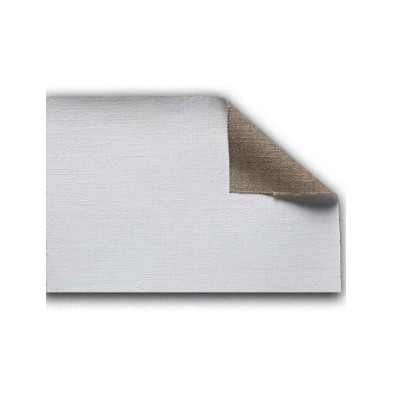
- Priming: our stretched canvases come universally primed for oil and acrylic; watercolour canvases have an absorbent ground.
- Alternative: if you would rather stretch your own or need a size outside the standard series, you can buy the stretcher bars and the fabric separately.
Types of canvas and support: what each one is and what it is for
The types of support in Canvases and Supports
| Type of support |
What it is |
Best for |
Where to find it |
| Traditional cotton canvas |
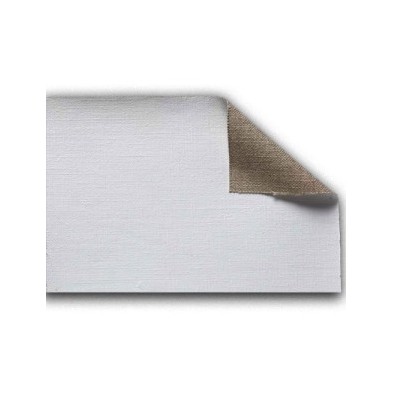
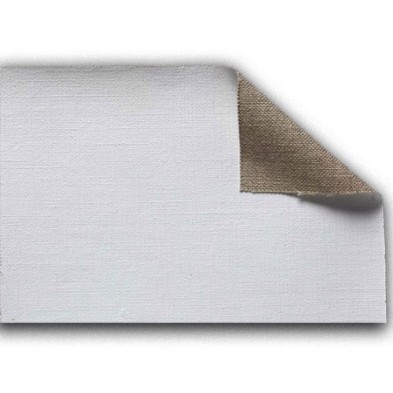
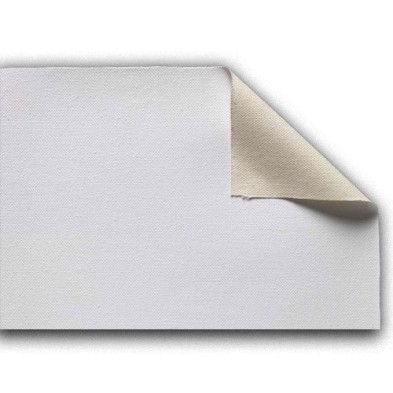
Universally primed cotton on a slim 1.7 to 2 cm stretcher, in F and P sizes |
Oil and acrylic work that will be framed |
Traditional cotton canvases |
| Linen canvas |
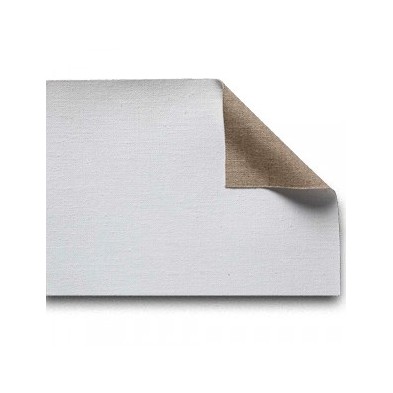
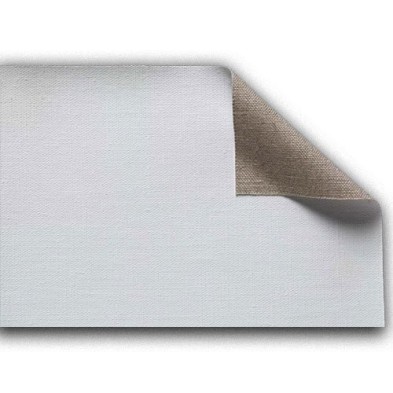
100% linen, universally primed, on a slim 1.7 cm stretcher |
Oil and finished work that needs to last |
Linen canvases |
| 3D canvas |
Universally primed cotton on a 3.5 to 4 cm frame with staple-free sides |
Hanging unframed and painting the edges; includes sizes over a metre long |
Large and deep-edge 3D canvases |
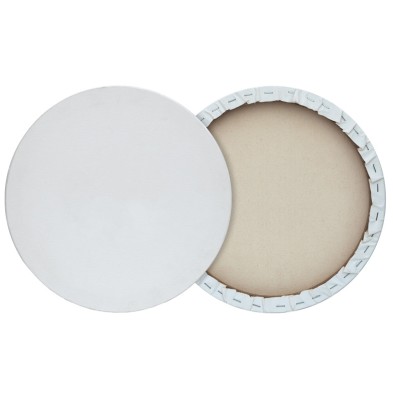
| Round or oval canvas |
Curved stretcher covered in cotton: rounds from 20 to 110 cm in diameter and ovals from 18×24 to 50×60 cm |
Circular or oval compositions; heart and triangle shapes too |
Round and oval canvases |
| Watercolour canvas |
Cotton with an absorbent ground, stretched or as a rigid board |
Watercolour and gouache on fabric |
Watercolour canvases |
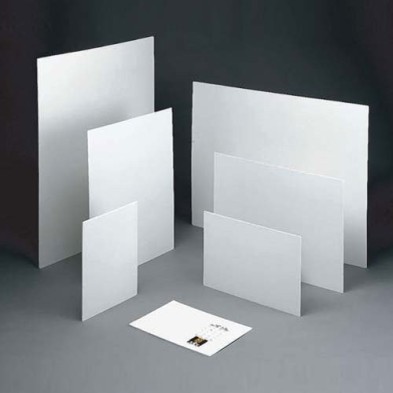
| Canvas board |
Rigid panel about 3 mm thick, faced with universally primed fabric |
Sketches, colour studies and detailed work: it does not give under the brush |
Canvas boards |
| Okoume panel |
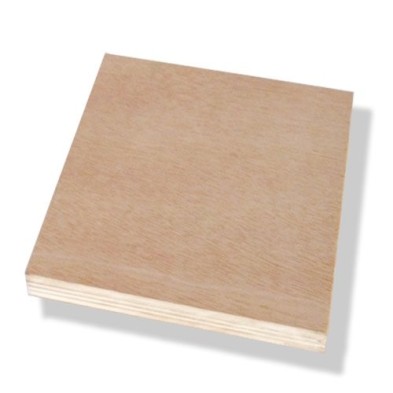
Okoume wood veneer mounted on a deep 3D frame |
Painting on wood and hanging unframed: oil, acrylic and mixed media |
Okoume wood painting panels |
| Stretcher bars |
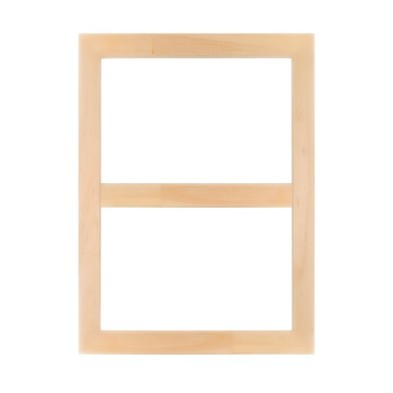
The wooden frame on its own, with bevelled edges and wedges for tensioning, in F, M and P sizes |
Stretching your own canvas or restretching a painting |
Canvas stretcher bars |
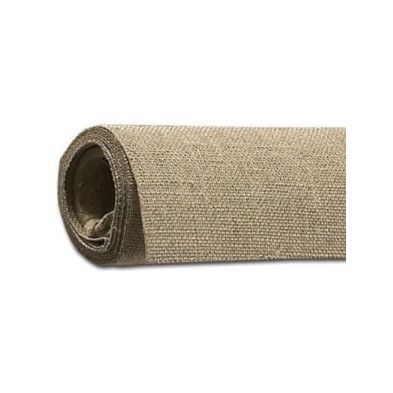
| Canvas roll |
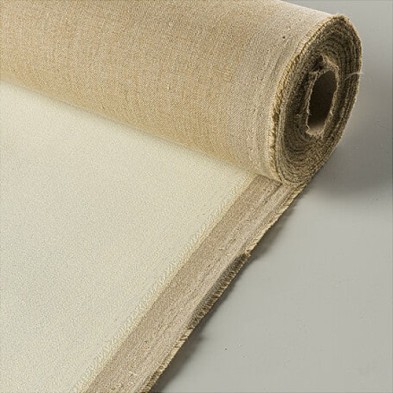
Cotton and linen, raw or primed, plus primed polyester and poly-cotton; raw fabric by the metre in several widths and rolls 1.05 and 2.10 m wide |
Stretching frames to any size |
Canvas rolls for painting |
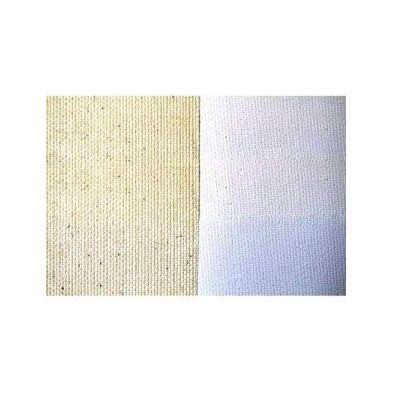
Cotton or linen canvas: which fabric to choose
The fabric sets the surface texture, the price and how well the canvas holds its tension over time. For studies, classes and everyday work, cotton covers almost every need. Linen is kept for work that is meant to last.
Cotton canvas compared with linen canvas
| Fabric |
Weave |
Stability and lifespan |
Best for |
| Cotton |
Regular |
Good; copes less well than linen with changes in humidity |
Acrylic, oil, studies, classes and beginners |
| Linen |
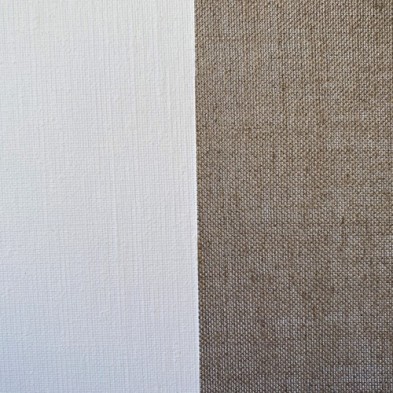
Irregular, takes more tension |
Very high; copes better with changes in temperature and humidity and is the longest-lasting painting fabric |
Oil, finished and commissioned work |
For cotton, the benchmark is traditional cotton canvases, both those made in Spain and the Talens Art Creation range. If you want the most stable fabric for oil, go for linen canvases.
Canvas depth: standard profile or deep-edge 3D
Depth does not change how you paint; it changes how the finished work is displayed.
- Standard profile (slim edge, 1.7 to 2 cm): the classic format, designed to go into a frame, and the lighter option.
- Deep-edge 3D (3.5 to 4 cm): the frame is roughly twice as deep, so the painting can hang without a frame and the image can carry on round the edges.
On both profiles the fabric is fixed at the back and the sides are staple-free: only the depth changes. If the work will hang as it is, choose a deep-edge 3D canvas; if you frame your work, the slim profile is more practical and takes up less storage space.
French canvas sizes F, M and P explained
Canvas sizes follow a system that originated in France in the 19th century: a size number (from 1 to 120) and a letter for the proportion. For the same number, all three letters share the long side and differ on the short side:
- F (Figure): the squarest proportion. The most versatile, traditionally used for portraits and figures.
- M (Marine): the longest, most panoramic proportion, for landscapes with a strong horizon line and wide compositions.
- P (Landscape, from the French paysage): between the other two, intended for landscapes and backgrounds.
The traditional cotton canvases and the linen canvases in this section come in the F and P series; all three series, M included, are available as stretcher bars.
Common French canvas sizes in the F, M and P series
| Size |
Figure (F) |
Marine (M) |
Landscape (P) |
| 3 |
27×22 cm |
27×16 cm |
27×19 cm |
| 5 |
35×27 cm |
35×22 cm |
35×24 cm |
| 8 |
46×38 cm |
46×27 cm |
46×33 cm |
| 12 |
61×50 cm |
61×38 cm |
61×46 cm |
| 20 |
73×60 cm |
73×50 cm |
73×54 cm |
| 30 |
92×73 cm |
92×60 cm |
92×65 cm |
| 50 |
116×89 cm |
116×73 cm |
116×81 cm |
| 80 |
146×114 cm |
146×89 cm |
146×97 cm |
| 120 |
195×130 cm |
195×97 cm |
195×114 cm |
The full chart, from size 1 to 120, with how much fabric each size needs, is in the stretcher bars category.
Which canvas suits each technique
Which canvas or support to choose for each technique
| Technique or situation |
What to choose |
Why |
| Oil, commissions or work meant to last |
Primed linen, standard profile |
The longest-lasting fabric and the best at coping with changes in humidity |
| Acrylic and mixed media |
Primed cotton |
The universal primer takes acrylic, and the value for money lets you work freely |
| Work to hang unframed |
Deep-edge 3D canvas |
The edges look clean and finished without a frame |
| Practice, classes or high volume |
Small cotton canvases or canvas boards |
Low cost per piece, ideal for experimenting |
| Watercolour and washes |
Dedicated watercolour canvas |
Its absorbent ground holds water instead of repelling it |
| Fine detail, icon painting, small formats |
Canvas board or okoume panel |
The surface does not give under the brush |
Special formats: round, oval, watercolour and rigid supports
Beyond the standard rectangle, there are stretched supports for specific needs. Round canvases range from 20 to 110 cm in diameter and ovals from 18×24 to 50×60 cm, and there are heart and triangle shapes too. Watercolour canvases have an absorbent ground that lets you work with water on fabric. And when you need a surface that will not give (miniatures, icon painting, highly detailed work), there are canvas boards, primed fabric on a rigid panel, and okoume panels, a wood veneer on a deep 3D frame.
How to look after a canvas before and after painting
- Storage: upright, kept apart from each other and away from radiators and damp walls. Never rest them on the painted face.
- Slack canvas: fabric naturally loses some tension as humidity changes. Fix it by gently tapping the wooden wedges in the corners of the frame with a small hammer, a little at a time and evenly.
- Transport: always protect the edges; they are the first place a knock shows.
- Oil over acrylic, yes; never the other way round: you can paint oil over an acrylic base, but not acrylic over dry oil.
- Extra coats of primer: for a smoother surface, add one or two coats of gesso over the factory primer, sanding dry between coats.
Other options in Canvases and Supports
If you need a size outside the standard series or would rather prepare the surface yourself, you can make your own canvas: buy the wooden stretcher bars and fabric on the roll, in cotton or linen, raw or primed. Raw fabric also needs gesso and primers before you paint on it.
Frequently asked questions about canvases for painting
Does a canvas need priming before painting?
A stretched canvas does not: the ones in this section are universally primed for oil and acrylic, so you can paint straight onto them. For a smoother surface, add one or two coats of gesso and sand dry between coats. Only raw fabric has to be primed before painting.
What is a stretched canvas?
It is a canvas ready to paint: the primed fabric is pulled taut and stapled over a frame of wooden bars, with wedges in the corners to adjust the tension. ‘Stretched canvas’ and ‘canvas on a stretcher’ are two names for the same support. If you buy stretcher bars on their own, you do the stretching and priming yourself.
What is the difference between canvas fabric and a stretched canvas?
Canvas fabric is the loose cloth, in cotton, linen or blends, sold by the metre or on the roll for stretching. A stretched canvas is that fabric already pulled taut over a wooden frame and prepared for painting.
What is the difference between cotton and linen canvas?
Cotton has a more regular weave, costs less and is the fabric most often recommended for beginners, although it copes less well with humidity. Linen has an irregular weave, takes more tension, copes better with changes in temperature and humidity and is the longest-lasting painting fabric, so it is kept for finished and commissioned work, especially in oil.
Which canvas is best for oil painting?
For finished oil paintings, primed linen on a standard profile is the best choice: it is the longest-lasting fabric and copes best with changes in humidity, so it distorts less over the years. For practice, studies or beginners, universally primed cotton works well with oil.
What do F, M and P mean on a canvas?
They are the three proportion series of the French sizing system: Figure (F) is the squarest, Marine (M) the longest and Landscape (P) sits in between. For the same size number, they share the long side and differ on the short side. For example, at size 5: 5F measures 35×27 cm, 5P measures 35×24 cm and 5M measures 35×22 cm.
What canvas size should a beginner choose?
At Totenart we usually recommend sizes 8 (46×38 cm) and 12 (61×50 cm) for beginners: they are big enough to work freely and small enough to finish a painting in a few sessions and frame it without a high cost.
What size is a 20F, 30F or 50F canvas?
A 20F canvas measures 73×60 cm, a 30F measures 92×73 cm and a 50F measures 116×89 cm. The letter F stands for the Figure series; in the Marine and Landscape series the long side stays the same and the short side is shorter. For example, a 30M measures 92×60 cm and a 30P, 92×65 cm.