



Unit price (tax included)

Free shipping on orders over €95
Free returns within 14 days
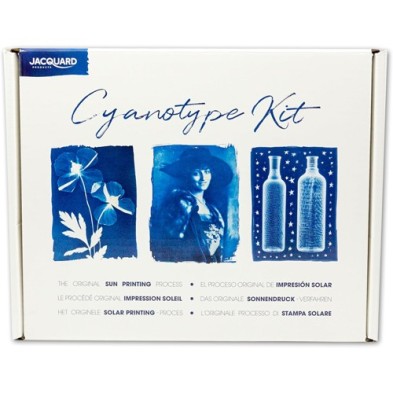
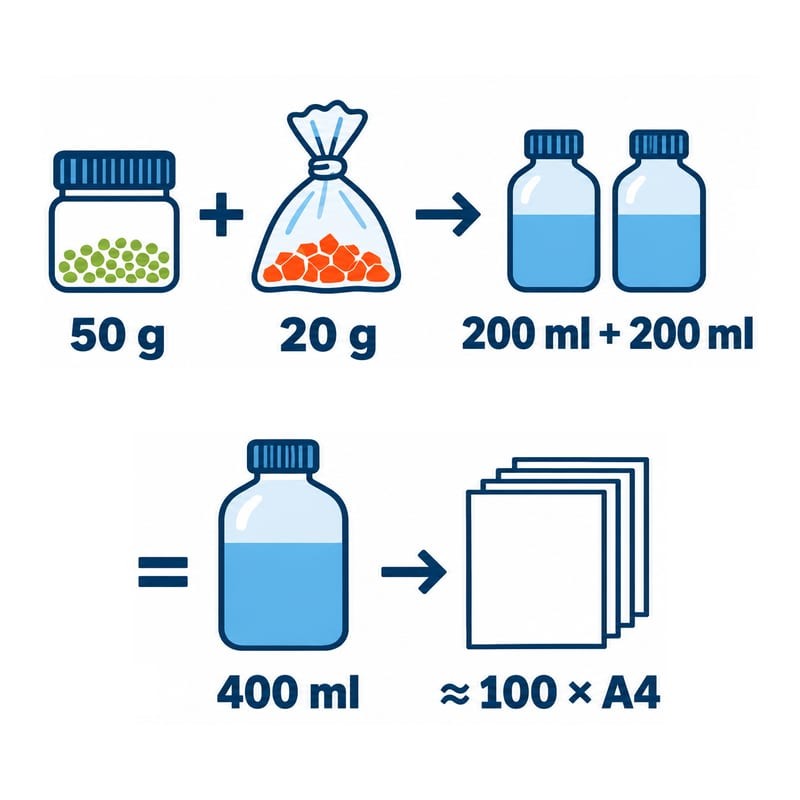
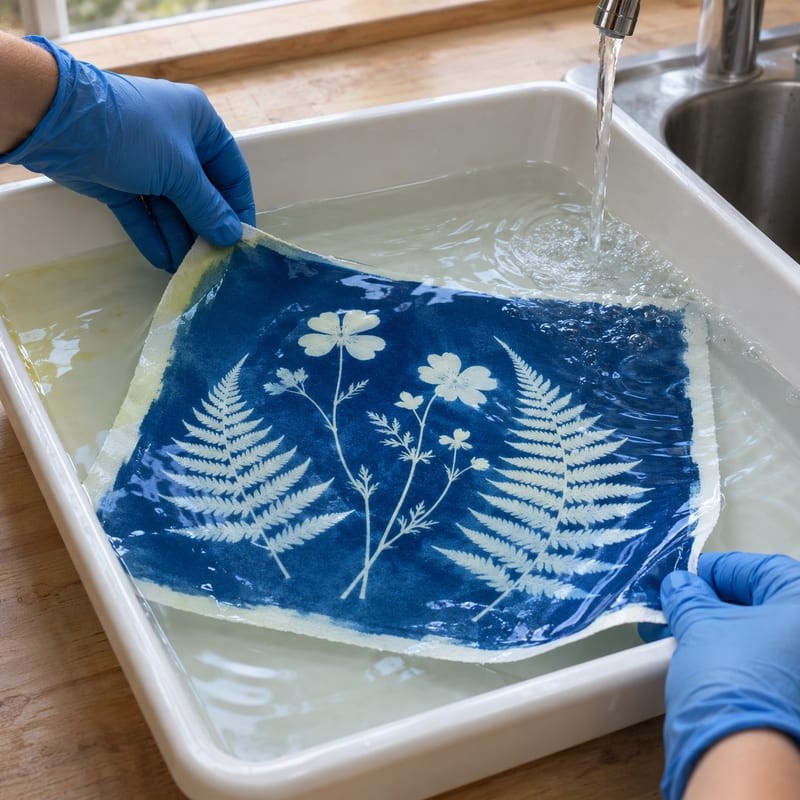
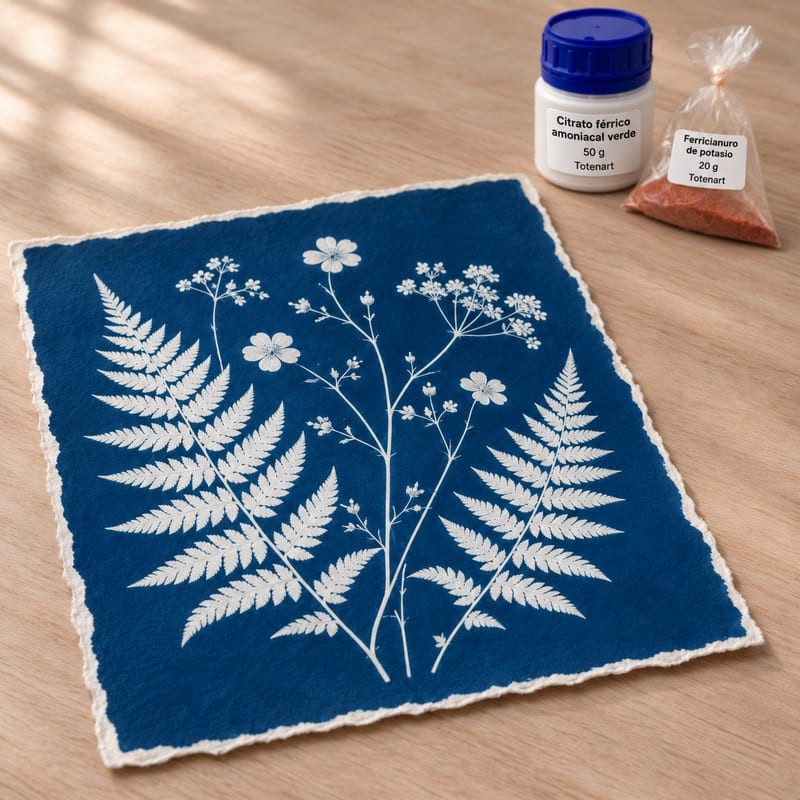
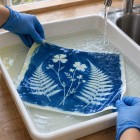
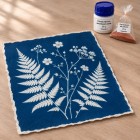
The kit contains the two compounds of classic cyanotype, the process invented by Sir John Herschel in 1842. The quantities are exactly double the reference formula published by chemist Mike Ware (25 g of citrate and 10 g of ferricyanide, each made up to 100 ml with water), so each component is dissolved whole and there is nothing to weigh. Under ultraviolet light, the ferric iron in the citrate is reduced to ferrous iron, which reacts with the ferricyanide to form insoluble Prussian blue: that is why the image is developed and fixed in plain water.
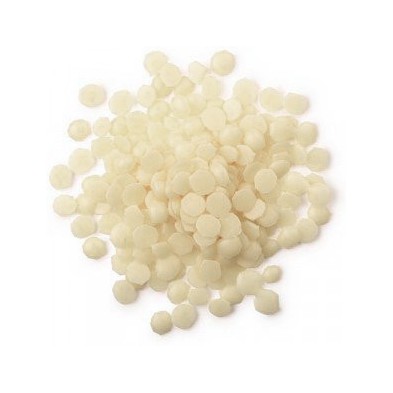
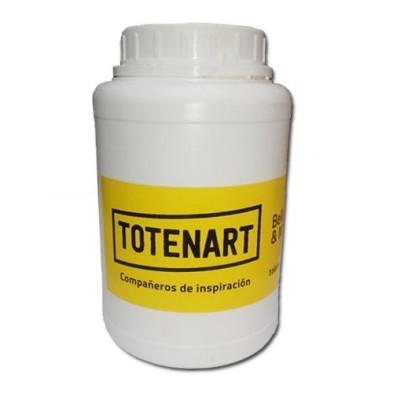
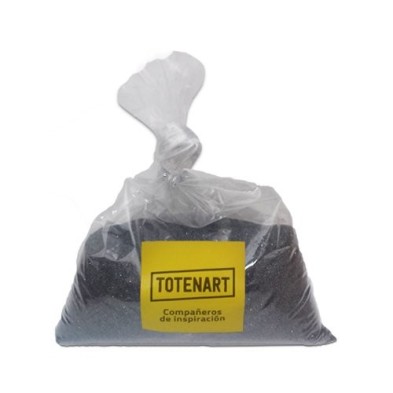
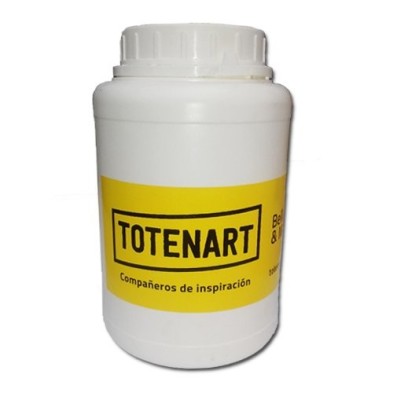
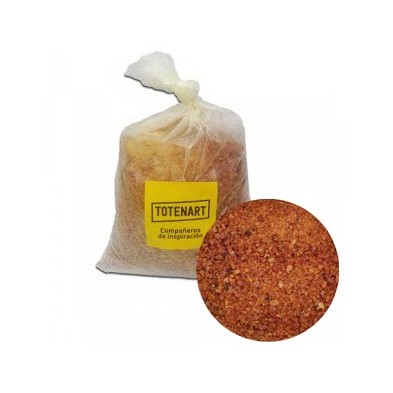
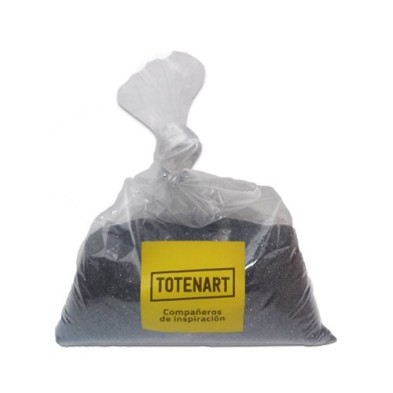
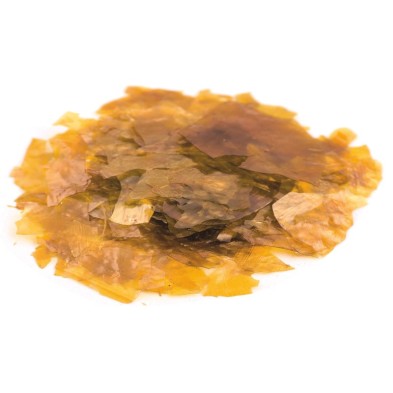
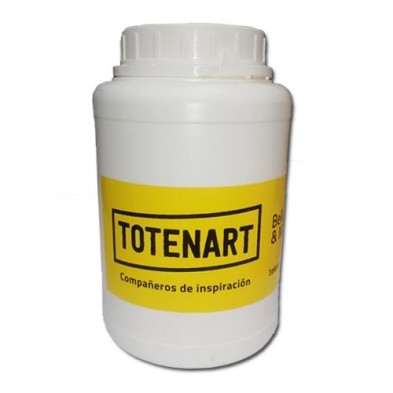
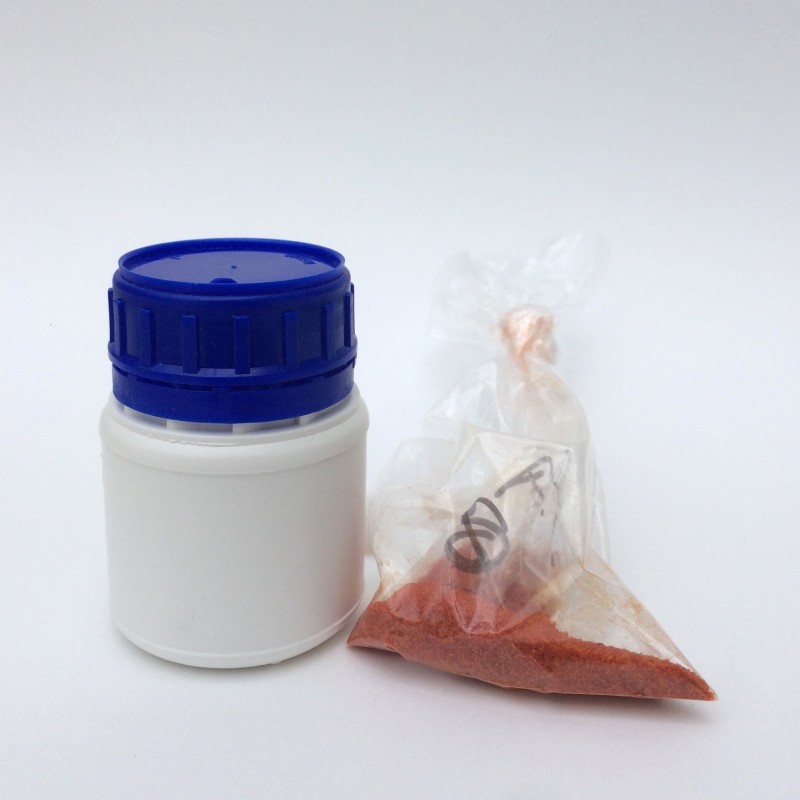
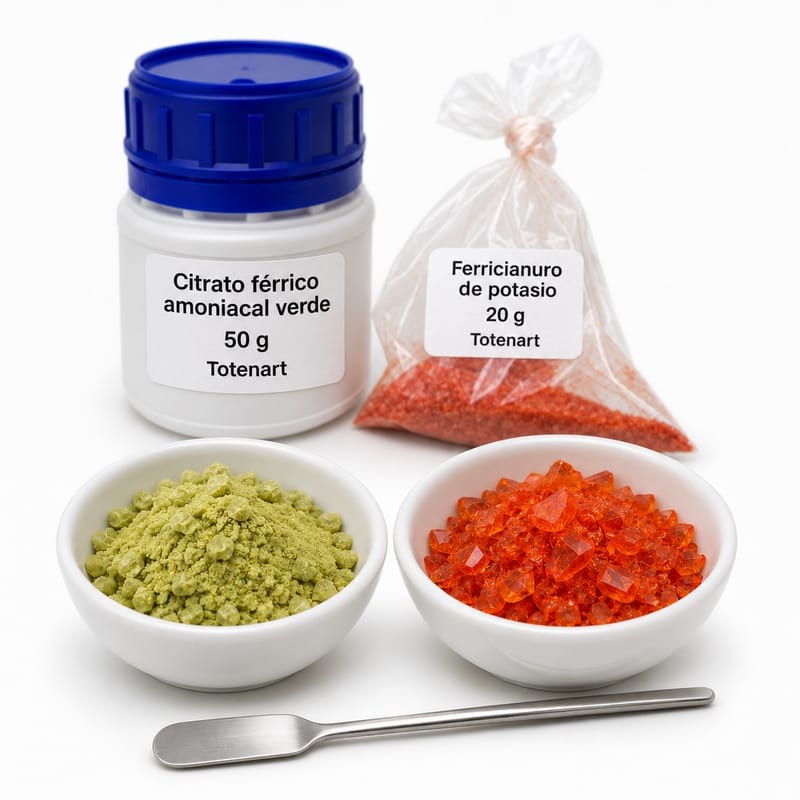
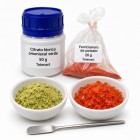
| Component A | Green ferric ammonium citrate (14.5-16% iron): 50 g in a white plastic tub |
|---|---|
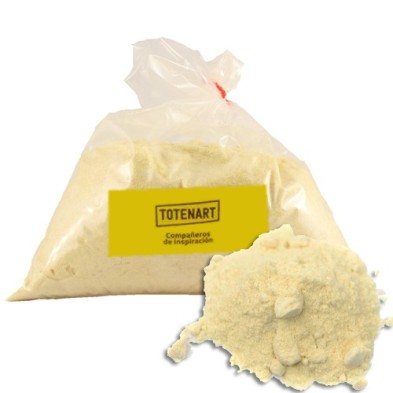
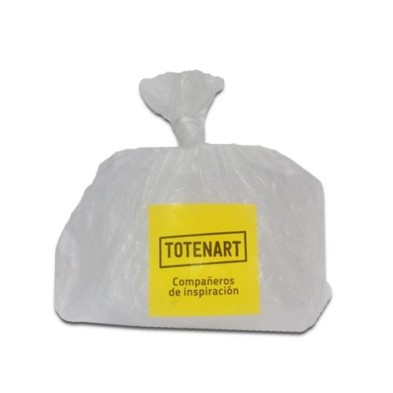
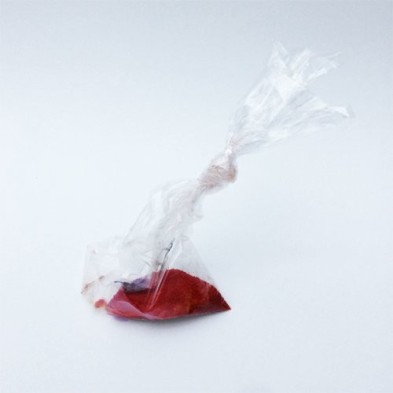
| Component B | Potassium ferricyanide (potassium hexacyanoferrate(III) or red prussiate), dark orange crystalline powder, minimum purity 99.5%: 20 g in a pouch |
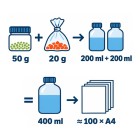
| Solution A | 200 ml (50 g of citrate made up to 200 ml with distilled water) |
| Solution B | 200 ml (20 g of ferricyanide made up to 200 ml with distilled water) |
| Sensitiser | 400 ml, A and B in equal parts |
| Approximate coverage | Up to about 100 A4 sheets, depending on paper and coating method |
| Exposure | Ultraviolet light: sunlight or UV lamp |
| Development and fixing | Water |
| Brand | Totenart |
Use purified water (distilled, deionised or pharmaceutical grade) at room temperature.
In many environments solution A can grow mould within a week or two. If you won't use 200 ml in that time, make up half using scales: 25 g of citrate to 100 ml and 10 g of ferricyanide to 100 ml.
This is the ratio published by Mike Ware and by specialist suppliers such as Parallax and Bostick & Sullivan. Some manuals, such as Christopher James's, use a slightly more dilute version with the same ratio (20 g of citrate and 8 g of ferricyanide per 100 ml): with this kit that gives 250 ml of each solution. For denser blues, James recommends applying two coats.
Watercolour paper is the preferred support; at Totenart we usually recommend weights between 220 and 370 gsm. Avoid papers with an alkaline buffer: Prussian blue breaks down rapidly and irreversibly in alkaline conditions, even at pH 9.4, and the image fades away over time.
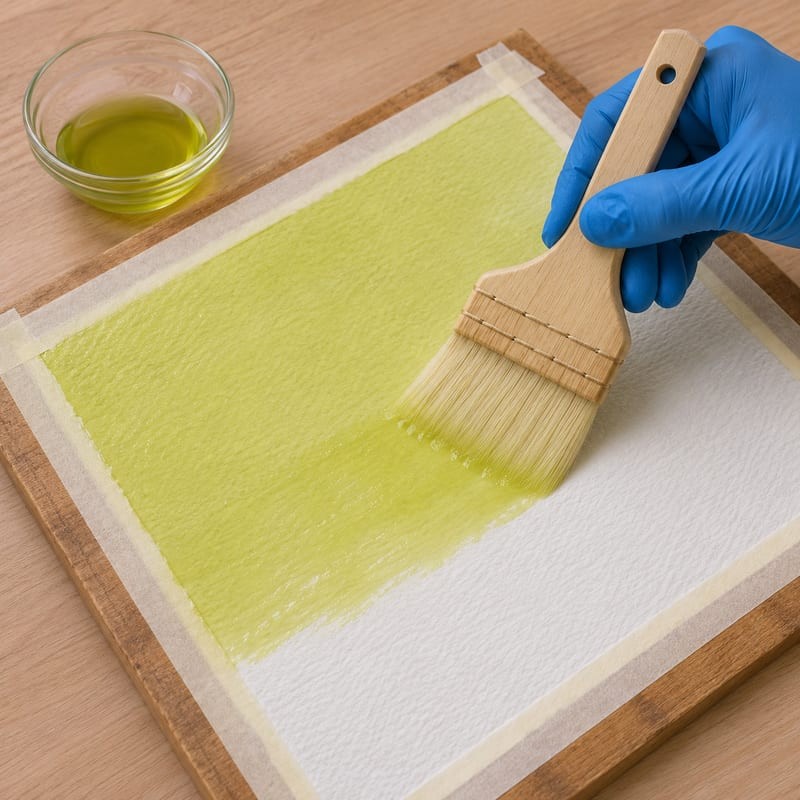
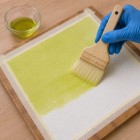
Coat with a hake brush or a coating rod; a brush can use up to twice as much as a rod. If your brush has a metal ferrule, cover it with masking tape: according to the chemicals' supplier, metal can contaminate the solution. On fabric, it works on cotton or wool, among others.
The alkalinity that damages Prussian blue can also be used to change its colour: the print is bleached in an alkaline solution and then toned with tannic acid, which gives brown or black tones. One published recipe uses 10 g of tannic acid powder in 500 ml of water. Test on a spare print before toning a final one.
Wear gloves and eye protection, don't eat or drink in the work area, keep out of reach of children and wash your hands thoroughly afterwards. Ferric ammonium citrate carries the GHS07 pictogram (exclamation mark), the signal word Warning and the hazard statements H315, “Causes skin irritation”, and H319, “Causes serious eye irritation”: if it gets into your eyes, rinse with water for several minutes and, if irritation persists, get medical advice. Potassium ferricyanide carries the statement EUH032, “Contact with acids liberates very toxic gas”: do not mix it with strong acids or heat it. Store both products tightly closed, between 5 and 25 °C, in a dry, well-ventilated place, away from direct sunlight and from oxidising agents or strongly acidic or alkaline materials; stored this way, the supplier gives the citrate a shelf life of 4 years. Do not pour leftovers or spare solutions down the drain: dispose of them as chemical waste according to local rules.
Two: ferric ammonium citrate and potassium ferricyanide. In the classic formula they are dissolved separately (25 g of citrate made up to 100 ml with water and 10 g of ferricyanide made up to 100 ml) and mixed in equal parts just before coating paper or fabric. Prints are developed in plain water. The Totenart cyanotype kit contains twice these amounts: 50 g and 20 g.
The Totenart cyanotype kit (50 g of ferric ammonium citrate and 20 g of potassium ferricyanide) makes 400 ml of sensitiser. According to Parallax, that covers roughly 100 A4 sheets; very absorbent papers or heavier coats give fewer, and Alternative Photography's guideline (5 to 10 ml per 24 × 32 cm sheet) works out at 50 to 100. Mike Ware estimates about 1.5 ml per 10 × 8 inch print coated with a rod, and twice that with a brush.
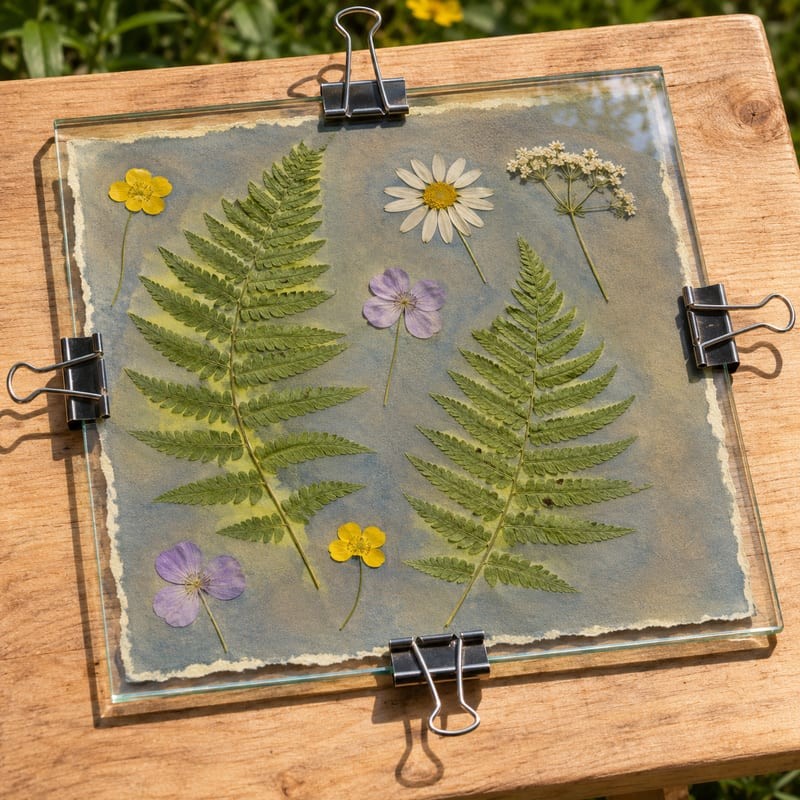
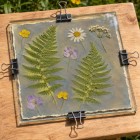
Besides the cyanotype kit, you need distilled water, two amber bottles, syringes or pipettes, watercolour paper or cotton fabric, a brush or rod for coating and UV light: sunlight or a UV lamp. To print a photograph, a negative; for a photogram, leaves, flowers or objects. If you dissolve each component whole, you don't need scales.
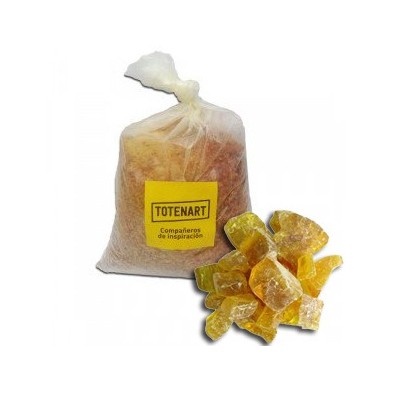
This kit uses the green form, the one specified in today's classic formulas (Mike Ware, Alternative Photography, Bostick & Sullivan). The composition of ferric ammonium citrate varies widely: green contains 14-18% iron and brown 18-28%. Mike Ware prefers green because it is more sensitive to light; brown, used in the early days of cyanotype, also works, but more slowly.
Ferricyanide. Potassium ferricyanide (hexacyanoferrate(III) or red prussiate) is what this kit contains, and it only forms Prussian blue where light has first reduced the iron in the citrate. Potassium ferrocyanide (hexacyanoferrate(II) or yellow prussiate) is a different compound: with ferric salts it forms Prussian blue straight away, without light, so it cannot be used as a sensitiser.
Freshly mixed sensitiser is yellow and only turns blue under UV light. If it turns blue in the bottle, one possible cause is using ferrocyanide instead of ferricyanide; another is exposure to light. This kit contains potassium ferricyanide, a dark orange crystalline powder.
To make up the solutions, Mike Ware specifies purified water: distilled, deionised or pharmaceutical grade. If your demineralised water is deionised and contains no additives, it is fine. Tap water can be used for washing, as long as it is not alkaline.
There is no fixed time: in sunlight it varies a lot with the time of day, the season and cloud cover. Make a test strip and stop when the image looks heavily blocked up. Without sun, under a UV lamp, Mike Ware gives around 20-30 minutes.
Only a few days, so mix it just before coating and only as much as you need. Kept separately, each solution is stored in an amber bottle in the dark; solution A can grow mould within a week or two in many environments.
About half the tonal scale is lost in the wash, so if the print is not properly over-exposed, the image ends up very pale or disappears. Expose until the image looks heavily blocked up, and check that the water is not alkaline: a little very dilute citric acid in the first bath may improve the result.
Yes. As well as watercolour paper, the preferred support, cyanotype works on fabrics such as cotton or wool, among others.
In strong light they can fade, but the reaction is largely reversible: stored in the dark, a print regains its blue as it reoxidises in the air. Irreversible damage comes from alkalinity, so avoid papers and mounts with an alkaline buffer.
Buyers say it is easy to use even the first time: the chemicals come in the right proportions, the mix works well and the blue is beautiful. They recommend it for getting started with cyanotype and fine-art photography, and note that it goes further than it looks.
At Totenart, a fine art supplies shop in Valencia (Spain) that also sells online. This kit contains ferric ammonium citrate and potassium ferricyanide in the classic ratio and works out cheaper than buying them separately. If you only need to top up one of them, we also sell both individually.
Because these are light-sensitive chemicals that light or improper handling can alter, this kit cannot be exchanged or returned, except in case of a defect or a shipping error on our part.
Unleash your creativity without spending more, take advantage of our free shipping on orders over €95 (Spain and mainland Portugal, and Balearic Islands).
Also, so you don’t miss anything, we will always keep you informed about the status of your order, through your customer account, by email, and with a link to the carrier tracking when your order is out for delivery.
We put a lot of effort into ensuring our products reach your home in perfect condition, however, if they arrive damaged, notify us within 24 hours so we can resolve it, and if you change your mind and want to return any product, you have up to 14 calendar days to do so.
We only accept returns due to defects in the product and will not be held liable for installation errors where the installation has not been carried out by our technicians. We accept returns within 14 calendar days of the delivery date, subject to our prior approval, confirmed by email or other means.
Refunds will be issued via the original payment method within a maximum of 7 calendar days of our confirmation.
At Totenart we love art, and that’s why we work every day to make it more accessible and closer to you. We want living art to be as easy as feeling it, which is why you can now find galleries, museums, and cultural spaces from all our cities in one single place. The best part? They’re organized in an interactive map that allows you to explore them easily and visually, wherever you are.
Whether you’re passionate about art or just beginning your creative journey, this resource will help you get inspired, discover new spaces, and enrich your artistic experience.
And if you are an artist, we invite you to take it a step further: join our artist directory. It’s the perfect opportunity to showcase your work, gain visibility, and connect with art lovers, fellow creators, and potential clients.
Are you a trainer or do you run a workshop? You can also register in our training centers directory. Let more people know about your space, your courses, and your artistic proposal.
Because we believe art is meant to be shared, to build networks, and to grow together.
We have more than 50,000 products on our website, but not all of them are available in our physical store.
If you are interested in this product and want to buy it at our store in Valencia, please make sure we have it there beforehand.
You can send us an email letting us know how many you need and when you plan to come, and we will confirm the stock or notify you when it’s available so you can pick it up!
Shopping in Valencia
You may also like