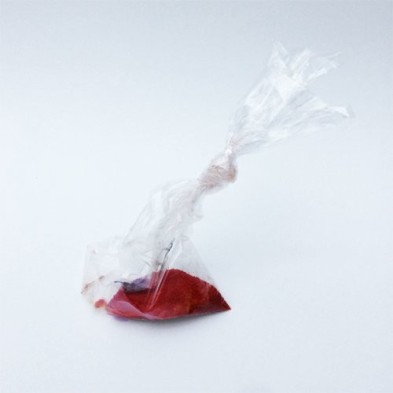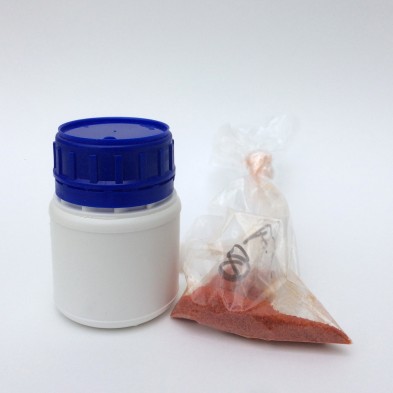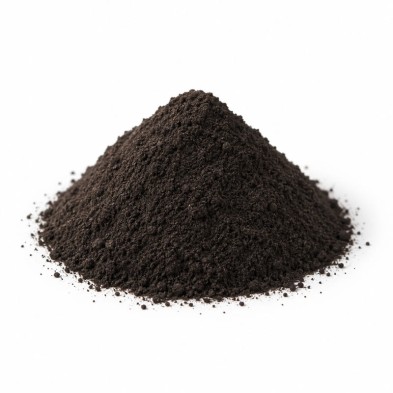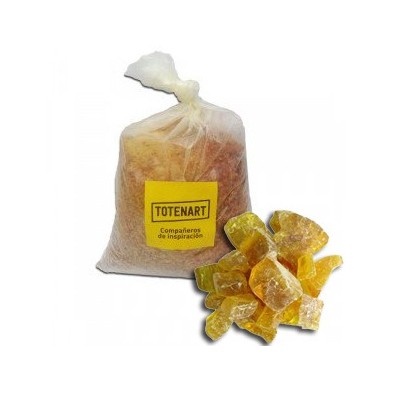




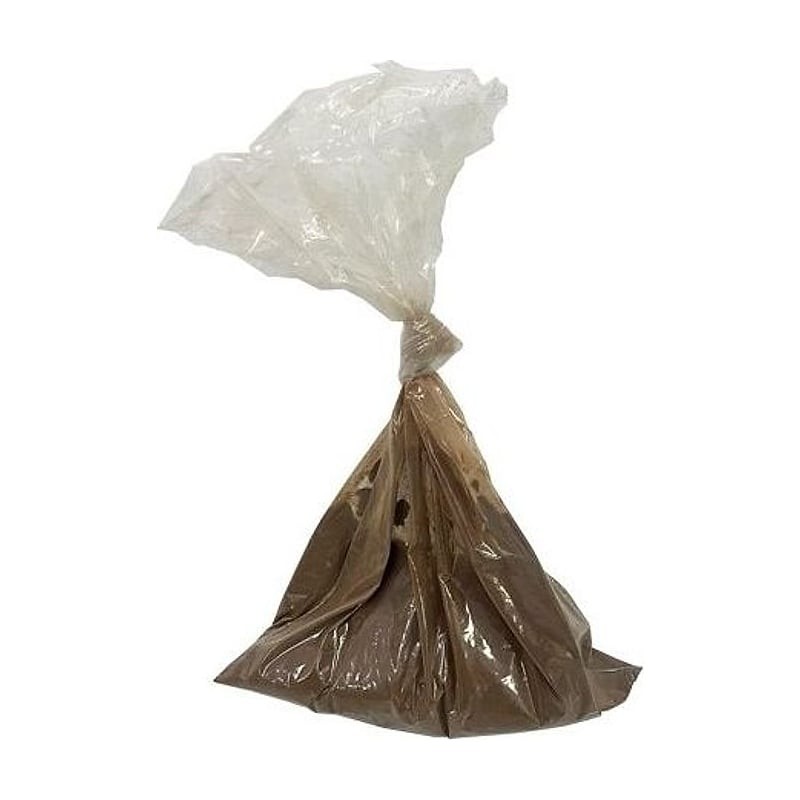
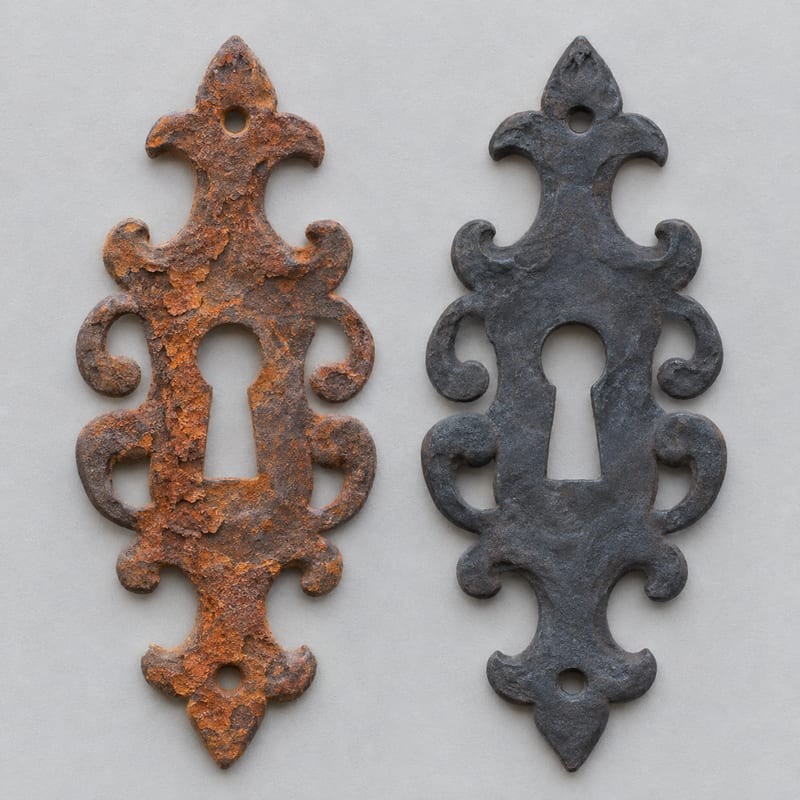


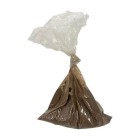
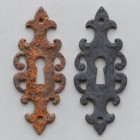




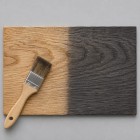

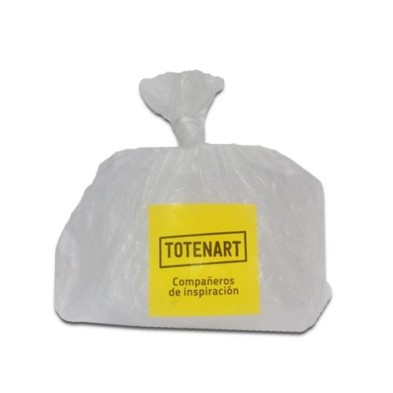
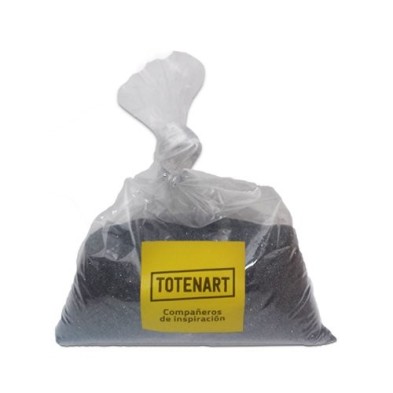
Tannic acid powder, also known as gallotannic acid, in a 100 g pouch. A water-soluble plant tannin that reacts with iron salts to form blue-black ferric tannate — the basis of the tannic acid coating used on rusted iron in conservation, of iron gall ink, of ebonising wood with iron salts and of tannin mordanting on cotton and linen. Supplied as a technical and artistic material.
Unit price (tax included)

Free shipping on orders over €95
Free returns within 14 days
Tannic acid, also called gallotannic acid, is a plant tannin traditionally extracted from galls and tannin-rich barks. It comes as a brown powder with a characteristic smell, soluble in water, giving an acidic solution. Its relative density is 0.5-0.6, so it is a very light powder: 100 g takes up more room than you would expect.
What makes it useful in the workshop is not its acidity but its affinity for iron. As soon as the tannin meets iron ions it forms ferric tannate, an insoluble blue-black compound. The same reaction lies behind the dark film used to stabilise iron objects, the black of the inks Europe wrote with for centuries, and the darkening of wood treated with iron salts.
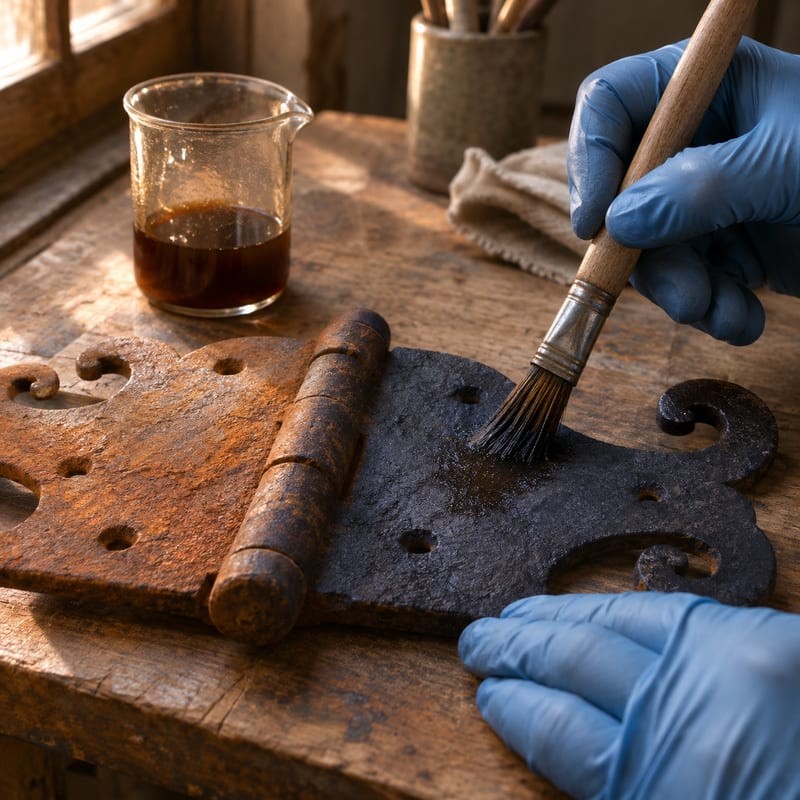
This is its best established use in conservation. Brushed onto iron, tannic acid forms a blue-black ferric tannate film that slows corrosion indoors. The Canadian Conservation Institute protocol uses a 2.5 % solution in deionised water with around 50 ml of ethanol per litre as a wetting agent so it reaches pits and fissures, the pH adjusted to 2.2-2.4 with dilute phosphoric acid, and the solution applied warm, at about 50 °C, with a stiff bristle brush, brushing as it dries to spread it and introduce oxygen. Flaky material is brushed off dry between coats, and heavily corroded areas need more coats than light rust or bare metal. According to that protocol, removing light rust beforehand is neither necessary nor desirable.
It is worth knowing what it does not do: it is not a varnish or a vapour barrier, its protection is not indefinite, it offers no protection outdoors, where it degrades quickly, and it is unsuitable for objects meant to stay bright or to be painted. Ferric tannate also stains wood, paper, textile, leather and bone permanently, so on composite objects those parts must be dismantled or protected first.
Classic iron gall ink is a water solution of three things: a tannin — usually gallotannic or tannic acid — ferrous sulphate, which supplies the iron the tannin forms its dark complex with, and gum arabic as the binder, giving body and flow, helping the ink bond to the support and limiting how much oxygen it takes up. It is the recipe historical calligraphy, facsimile work and printmaking or bookbinding projects return to when they want the brownish black of manuscripts.
On cellulose fibres — cotton, linen — tannin is used as a pre-treatment so natural dye will take. A common guide is 6 % on the weight of the fibre: 6 g of tannic acid per 100 g of cloth, dissolved first in boiling water so the powder does not stick to the bottom of the pot, simmered for an hour and left to stand for 24 hours, as the middle bath between two alum baths. It leaves a pale yellow cast on the fibre, worth bearing in mind if you want clean whites.
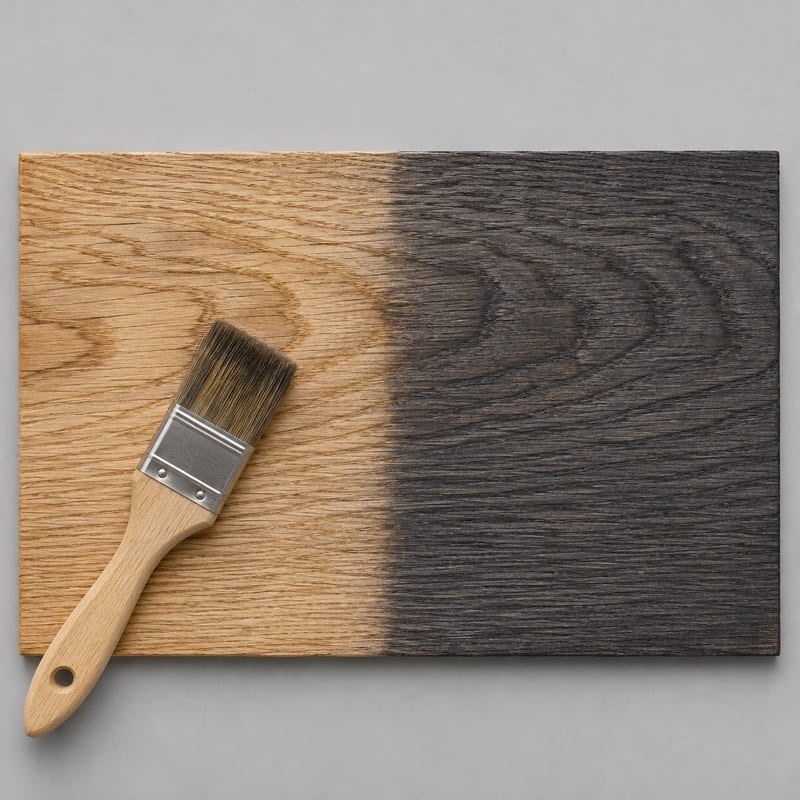
The ferric tannate reaction is also what darkens wood treated with iron salts: tannin is added to the surface and the iron does the rest, giving tones from grey to near black depending on the timber and the strength used. Woods already rich in tannins, such as oak, react on their own; on tannin-poor woods, adding it is precisely what makes the effect possible.
Tannic acid is the classic vegetable tanning agent — the very word tanning comes from it. In the workshop it is used in leather and bookbinding work, and for dyeing and darkening hide.
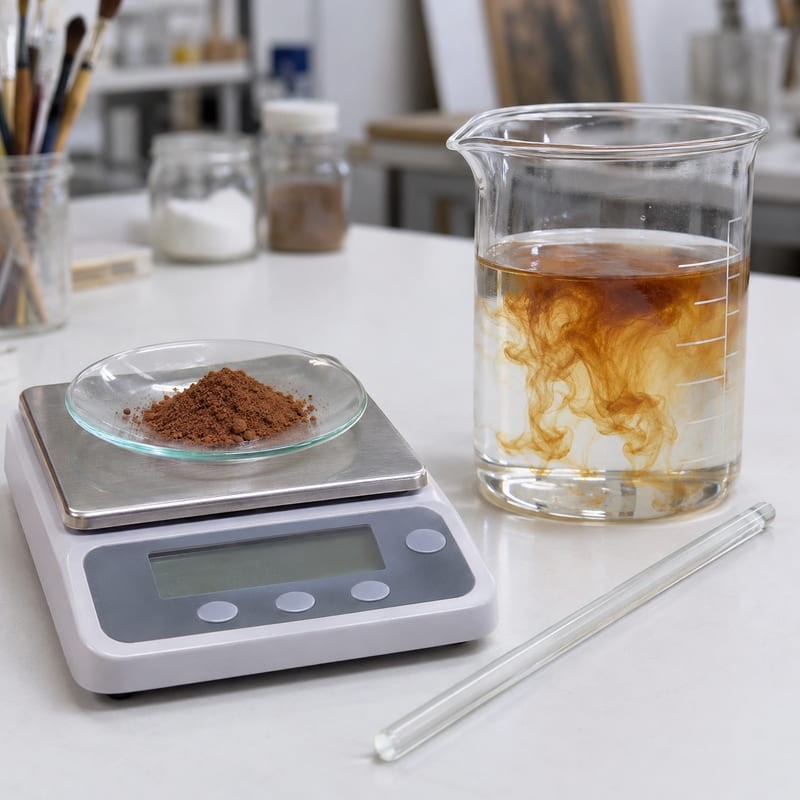
Weigh it rather than measuring by spoonfuls: at a relative density of 0.5-0.6 the same volume of powder can be half the product you think it is. Dissolve it in deionised or distilled water — tap water brings chlorides, which encourage the very corrosion you are trying to stop — do it warm, and add the powder to the water, never the other way round. Mix only what you are going to use: the solution darkens as it oxidises and, once it has turned black, it should be discarded and replaced with a fresh one. If the pH needs adjusting, acid always goes into water.
This is a fine powder, and acidic in solution: work with gloves, eye protection and a dust mask, avoid raising dust, and do not eat or drink in the work area. Store it between 5 and 35 °C somewhere dry and well ventilated, tightly closed and upright, away from food and from oxidising agents or strongly acidic or alkaline materials. Safety data sheet available on request.
| Product | Tannic acid (water-soluble tannin) |
| Other names | Gallotannic acid |
| Size | 100 g |
| Form | Powder, in a pouch |
| Appearance | Brown powder, characteristic odour |
| Solubility | Water soluble |
| pH | 3.2-3.8 in a 1 % solution |
| Relative density | 0.5-0.6 |
| Flash point | 198 °C |
| Approximate yield | 4 litres of solution at 2.5 % |
| Storage | Between 5 and 35 °C, dry and well ventilated |
| Techniques | Iron conservation, iron gall ink, natural dyeing, ebonising wood, vegetable tanning |
| Brand | Totenart |
| Reference | 66-TAN100 |
It is a water-soluble plant tannin in powder form that reacts with iron to form an insoluble blue-black compound called ferric tannate. That is why it is used to treat rusted iron in conservation, to make iron gall ink, to darken wood with iron salts, as a mordant for natural dyes on cotton and linen, and in vegetable tanning of leather.
Gallotannic acid, and commercially water-soluble tannin. It should not be confused with gallic acid, a related but different compound found in the same plant sources.
Weigh the powder and dissolve it in warm deionised or distilled water, adding the powder to the water. For iron treatment, the Canadian Conservation Institute protocol works at 2.5 %, with around 50 ml of ethanol per litre as a wetting agent and the pH adjusted to 2.2-2.4 with dilute phosphoric acid. For mordanting cotton or linen, the usual guide is 6 % on the weight of the fibre. Mix only what you will use: the solution oxidises and darkens.
It does not remove it, it stabilises it. It forms a blue-black ferric tannate film that slows corrosion indoors, and the Canadian Conservation Institute protocol states that removing light rust beforehand is not necessary. It is neither a stripper nor a varnish, its protection is not indefinite, and it is not suitable for objects kept outdoors.
Around 4 litres at 2.5 %, 2 litres at 5 % or one litre at 10 %. Used as a dyeing mordant at 6 % on the weight of the fibre, it covers about 1.5 kg of cotton or linen.
No. We do not sell it for those uses: we do not process or pack it for consumption, and we do not follow the hygiene requirements a food product would demand. Totenart supplies it as a technical and artistic material, for conservation, printmaking, dyeing and leather. If you need food or pharmaceutical grade, it has to come from a supplier who certifies it as such.
Those of a fine powder that is acidic in solution: gloves, eye protection and a dust mask, no raising dust, and no eating or drinking in the work area. Keep it away from oxidising agents and from strongly acidic or alkaline materials. We hold the product safety data sheet for anyone who asks for it.
Ferric tannate stains wood, paper, textile, leather and bone permanently. On composite objects, dismantle what you can and protect the rest before applying it. It is also unsuitable for ironwork that has to stay bright or that will be painted afterwards.
No. The ferric tannate film gives no protection outdoors and degrades quickly there: it is a treatment for objects that will be kept indoors, and it is no substitute for stable relative humidity.
The powder, tightly closed and upright, between 5 and 35 °C somewhere dry and well ventilated, away from food. Made-up solution is not kept: it darkens as it oxidises and loses effectiveness.
Here. We stock the 100 g size and ship from Spain. If you need a larger quantity or have questions about how to use it, write to us before ordering.
Unleash your creativity without spending more, take advantage of our free shipping on orders over €95 (Spain and mainland Portugal, and Balearic Islands).
Also, so you don’t miss anything, we will always keep you informed about the status of your order, through your customer account, by email, and with a link to the carrier tracking when your order is out for delivery.
We put a lot of effort into ensuring our products reach your home in perfect condition, however, if they arrive damaged, notify us within 24 hours so we can resolve it, and if you change your mind and want to return any product, you have up to 14 calendar days to do so.
We only accept returns due to defects in the product and will not be held liable for installation errors where the installation has not been carried out by our technicians. We accept returns within 14 calendar days of the delivery date, subject to our prior approval, confirmed by email or other means.
Refunds will be issued via the original payment method within a maximum of 7 calendar days of our confirmation.
At Totenart we love art, and that’s why we work every day to make it more accessible and closer to you. We want living art to be as easy as feeling it, which is why you can now find galleries, museums, and cultural spaces from all our cities in one single place. The best part? They’re organized in an interactive map that allows you to explore them easily and visually, wherever you are.
Whether you’re passionate about art or just beginning your creative journey, this resource will help you get inspired, discover new spaces, and enrich your artistic experience.
And if you are an artist, we invite you to take it a step further: join our artist directory. It’s the perfect opportunity to showcase your work, gain visibility, and connect with art lovers, fellow creators, and potential clients.
Are you a trainer or do you run a workshop? You can also register in our training centers directory. Let more people know about your space, your courses, and your artistic proposal.
Because we believe art is meant to be shared, to build networks, and to grow together.
We have more than 50,000 products on our website, but not all of them are available in our physical store.
If you are interested in this product and want to buy it at our store in Valencia, please make sure we have it there beforehand.
You can send us an email letting us know how many you need and when you plan to come, and we will confirm the stock or notify you when it’s available so you can pick it up!
Shopping in Valencia
You may also like
Recently viewed