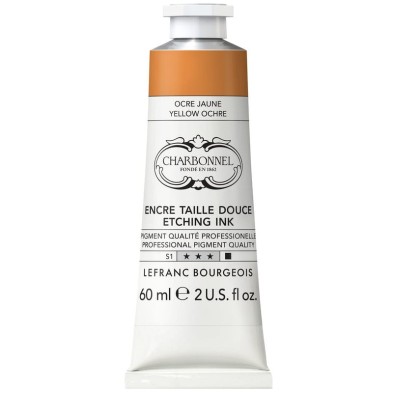
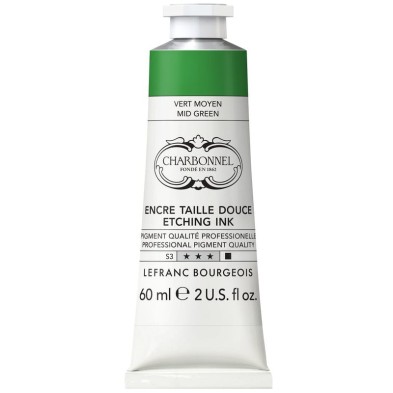
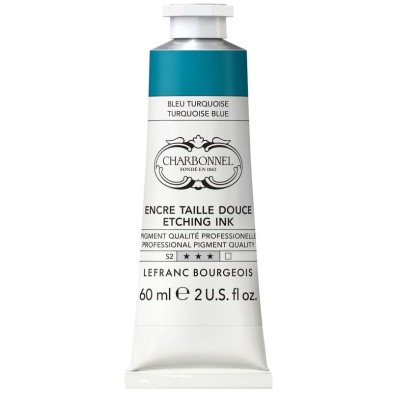
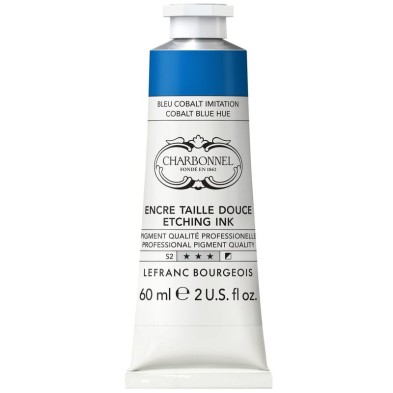
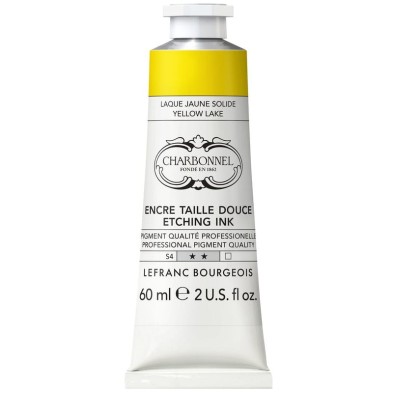
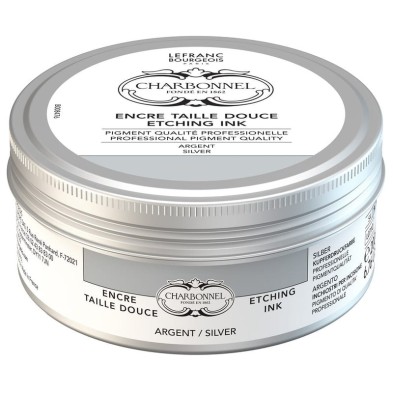
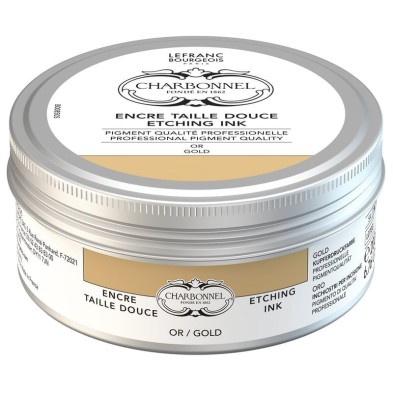
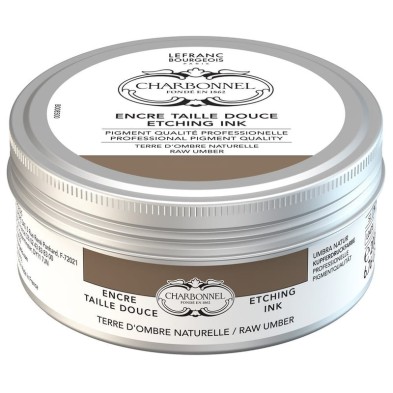
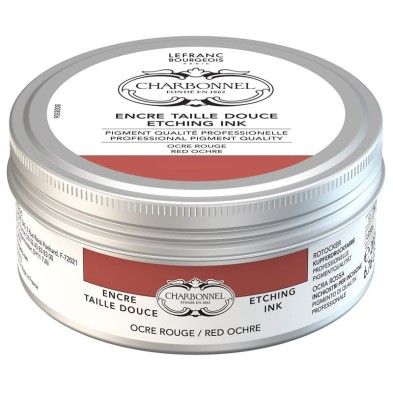
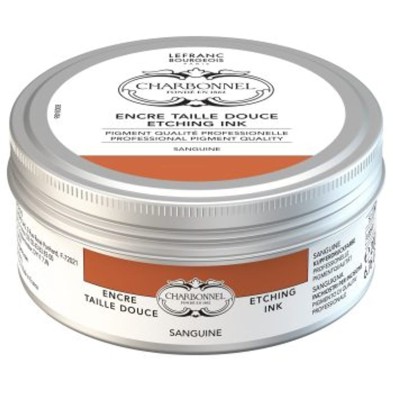
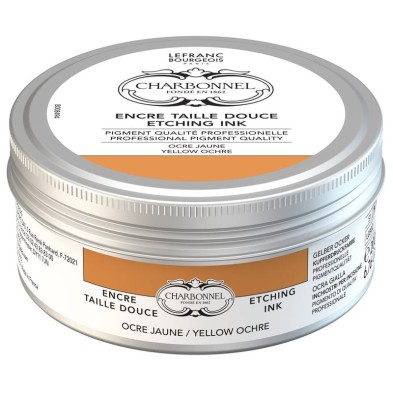
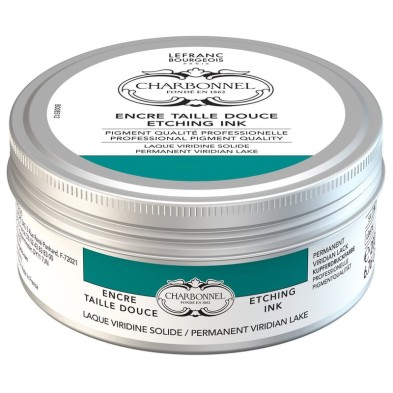
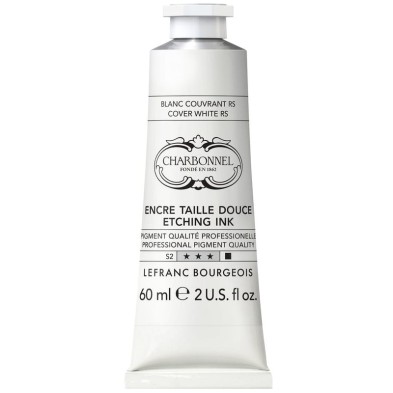
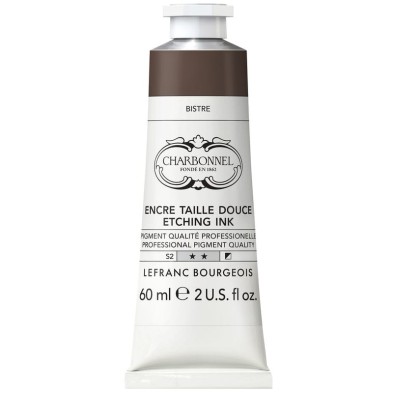
What is Charbonnel intaglio ink?
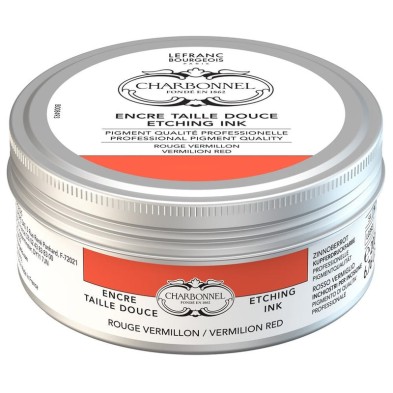
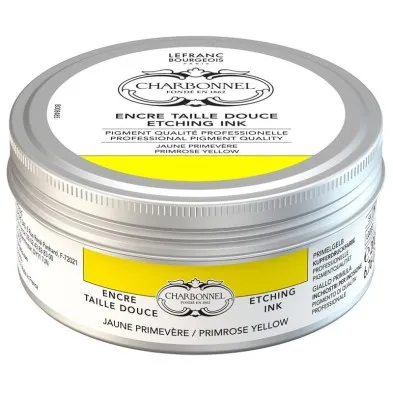
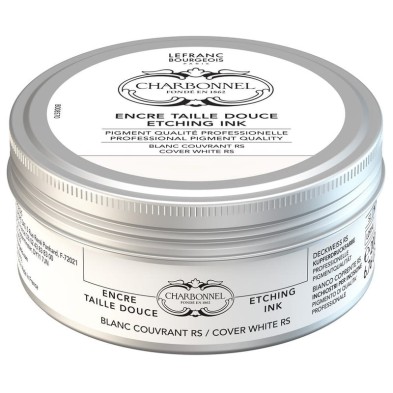
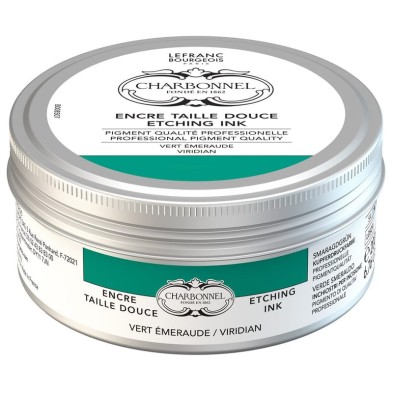
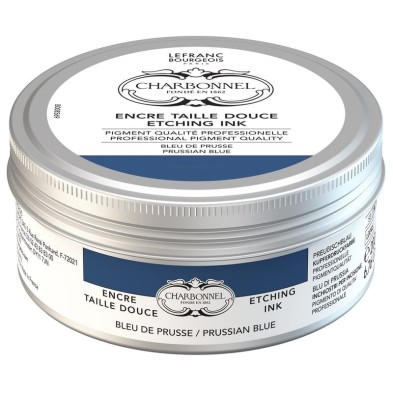
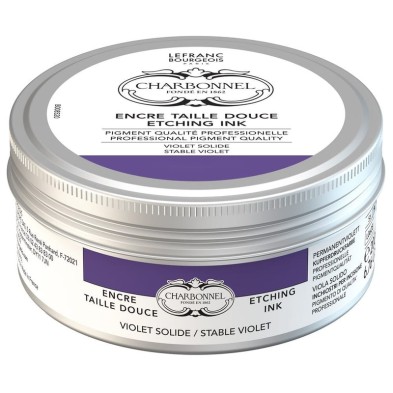
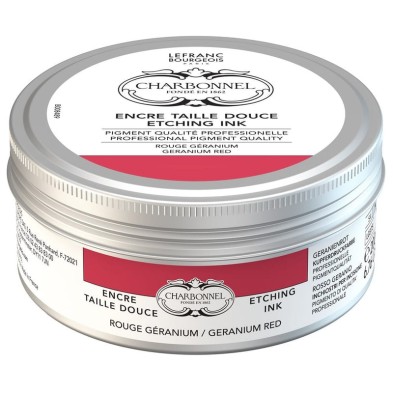
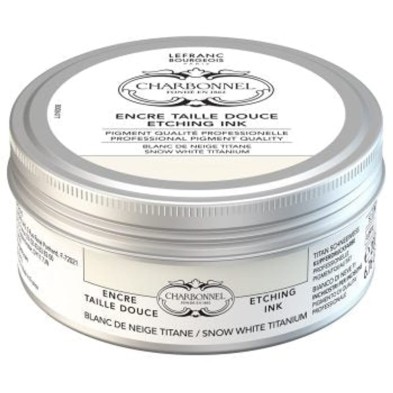
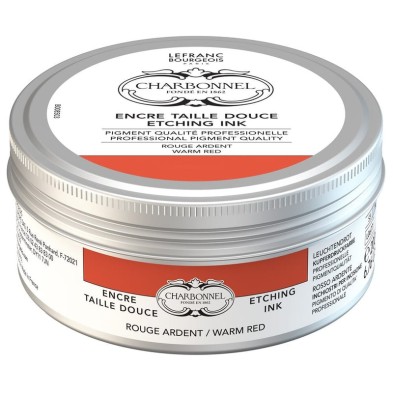
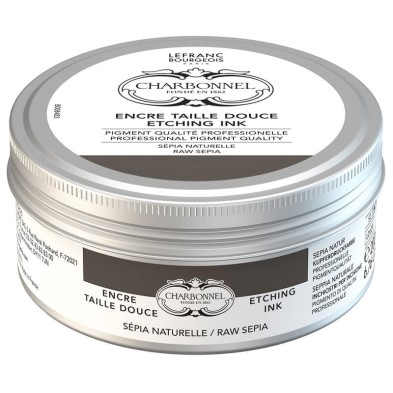
Charbonnel is the printmaking ink house that the chemist François Charbonnel opened in Paris in 1862. It is now part of Lefranc Bourgeois and describes itself as ‘the international reference for art printing’. According to the brand, its grounds, varnishes and inks drew artists such as Pissarro, Degas and Toulouse-Lautrec to its shop, and later Picasso and Chagall were loyal customers. Its intaglio ink (encre taille-douce) is the traditional oil-based ink for printing plates worked in intaglio: etching, aquatint, drypoint, engraving or mezzotint. The plate is inked, the excess is wiped off with tarlatan and the palm of the hand, and it is printed on an etching press onto damp paper.
- Binder: linseed oil, no additives.
- Pigment: high concentration and fine grinding; good covering power even when thinned.
- Drying: by oxidation, in 2 to 3 weeks depending on the colour.
- Clean-up: with oil or solvent.
- Origin: made in France.
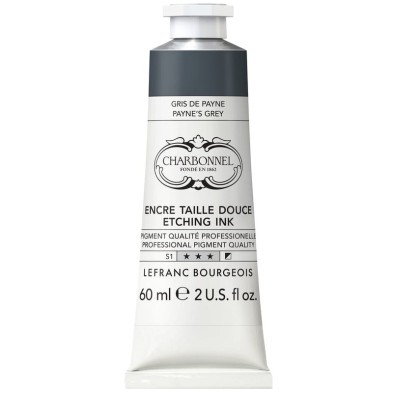
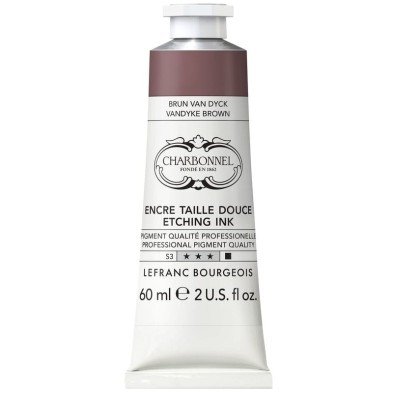
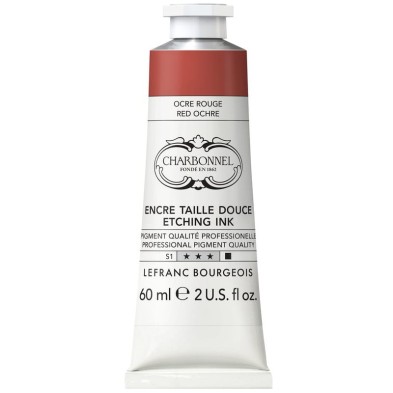
- Sizes: 60 ml tube and 200 ml tin; several blacks also in an 800 ml tin.
At Totenart, a Valencia shop that grew out of printmaking in 1999, you can compare it with other oil-based and water-washable brands in intaglio etching inks.
Which Charbonnel black to choose
Black is the most widely used colour in intaglio, and Charbonnel's traditional range has nine. To choose one, Lefranc Bourgeois suggests three criteria, viscosity, texture and tone: a soft black adapts to fine, shallow work; a stiff, thick black fills deep lines and holds in the burr; cold or bluish blacks are best avoided on yellowish papers, while warm blacks give deeper prints with more contrast.
The nine Charbonnel intaglio blacks, according to the manufacturer
| Black | Viscosity and wiping | Character |
|---|
| 55985 | Very viscous; hard to wipe | Cold, very deep and slightly bluish; strengthens other blacks |
| 55981 | Very viscous; easier to wipe than 55985 | Medium intensity; supple and all-purpose |
| 71303 | Viscous and fairly greasy; needs long wiping | No tone given; contains ivory black, carbon black and Prussian blue |
| RSR Concentré | Fairly viscous but supple; easy to wipe | Powerful and warm |
| Luxe C | Low viscosity, fairly supple | Slightly bluish; strengthens other blacks |
| F66 | Low viscosity; easy to wipe | Medium intensity |
| Soft Black (Noir Doux) | Low viscosity, supple and easy to wipe | Weak and fairly opaque; lowers the tone in over-deep lines and loosens a very viscous black |
| Vignette Luxe RSA | Supple | For hand relief printing, such as woodcut or linocut |
| Carbon Black | Low viscosity; very easy to wipe | Suited to proofing |
In the manufacturer's colour chart, all nine blacks are opaque and carry the top lightfastness rating (three stars).
Quick picks
- One black to start with: 55981, which Charbonnel calls all-purpose.
- Deep lines, engraving or drypoint with heavy burr: a very viscous black such as 55981 or 55985.
- Fine, shallow work: a low-viscosity black such as F66, or loosen your own with Soft Black.
- A more intense black: add 55985 or Luxe C, the two the maker recommends for strengthening other blacks.
- Cream or ivory paper: a warm black such as RSR rather than a bluish one.
- Proofing: Carbon Black.
Charbonnel colour inks for intaglio
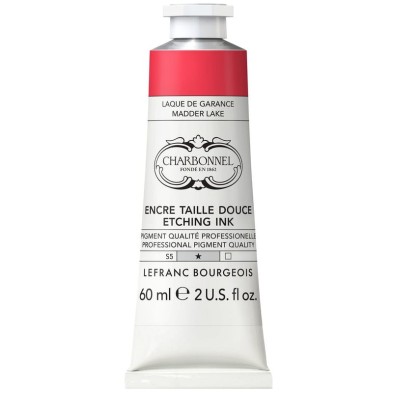
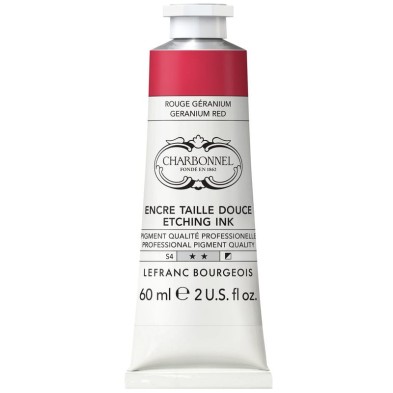
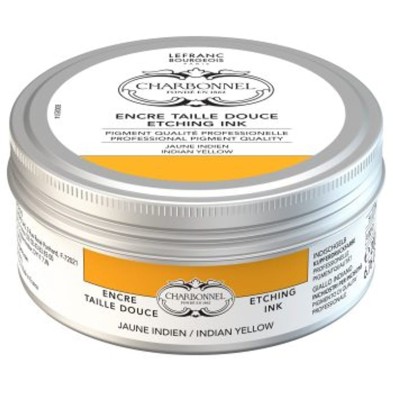
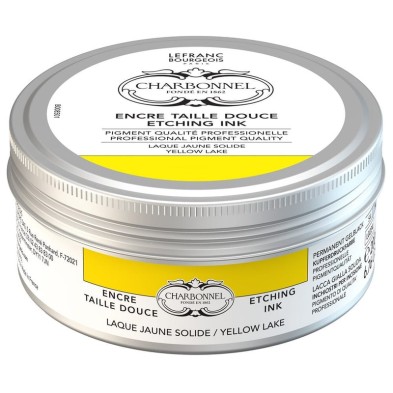
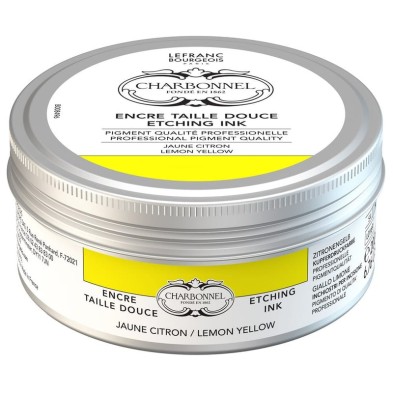
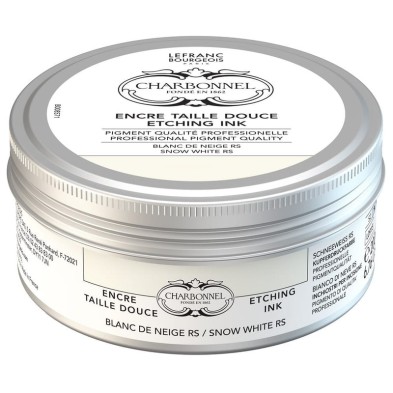
Beyond the blacks, the range covers yellows, reds such as Madder Lake or Cardinal Red, violets, blues, greens, earths and sepias, whites and two metallics, gold and silver. For colour printing, the official colour chart shows whether each ink is transparent, semi-transparent or opaque, rates its lightfastness from one to three stars, and flags three primaries: Primrose Yellow, Geranium Red and Ocean Blue.
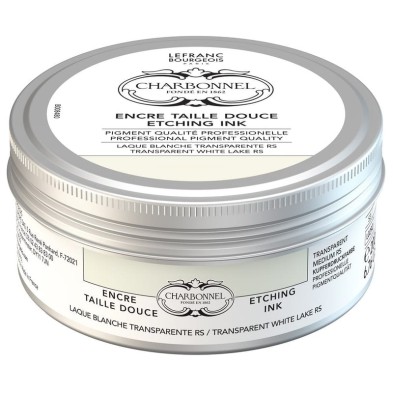
In multi-plate or overprinted work, a transparent colour lets the one beneath show through and an opaque one covers it. To make any colour transparent, Charbonnel makes Laque Blanche Transparente RS, a transparent white additive within the range. The chart also shows each colour printed at several bite times in nitric acid.
Frequently asked questions about Charbonnel etching inks
Is Charbonnel etching ink oil-based or water-based?
Charbonnel's traditional intaglio ink is oil-based: the binder is linseed oil with no additives and, according to the manufacturer, it cleans up with oil or solvent, not water. The brand makes a separate range that washes up with soap and water, Charbonnel Aqua Wash.
How long does Charbonnel etching ink take to dry?
Charbonnel states that its intaglio ink dries by oxidation in 2 to 3 weeks, depending on the colour. Allow that long before stacking or framing prints.
How do you clean Charbonnel etching ink?
With oil or solvent, according to the manufacturer. Lefranc Bourgeois, Charbonnel's parent brand, specifies that traditional oil-based inks need a solvent such as white spirit to clean the studio. If you would rather avoid solvents, the brand's alternative is its Aqua Wash range, which washes up with soap and water.
How do you loosen or stiffen Charbonnel etching ink?
For blacks, Charbonnel suggests mixing in Soft Black (Noir Doux), which loosens an over-viscous black and makes wiping easier. To adjust the viscosity of any colour, the maker recommends adding its light oil, a 5-poise linseed oil, until you reach the consistency you want and, if the ink becomes too runny, its heavy oil, a 30-poise cooked linseed oil (listed here as strong oil), to restore body. To make a colour more transparent, mix in Laque Blanche Transparente RS.
What is the difference between Charbonnel black 55985 and 55981?
Both are very viscous, but according to Charbonnel 55985 is a cold, very deep, slightly bluish black (ivory black, carbon black and Prussian blue) that is hard to wipe and is also used to strengthen other blacks. Black 55981, by contrast, is a medium-intensity black without Prussian blue (ivory and carbon black), easier to wipe and supple: the one the manufacturer calls all-purpose.
What paper should I use with Charbonnel etching ink?
A heavyweight printmaking paper, dampened before printing. Lefranc Bourgeois explains that in intaglio the inked plate is printed on an etching press onto thick, pre-dampened paper so that, softened by the moisture, it picks up ink from the finest detail, and that the dampness needs careful judging. On cream or yellowish paper, Lefranc Bourgeois also advises avoiding cold, bluish blacks.