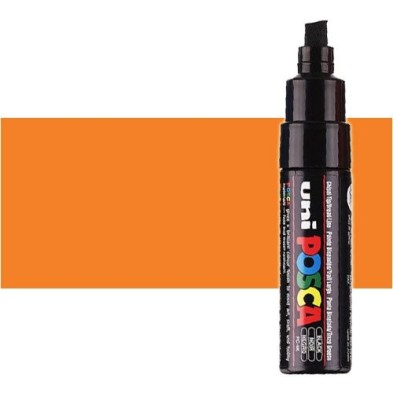
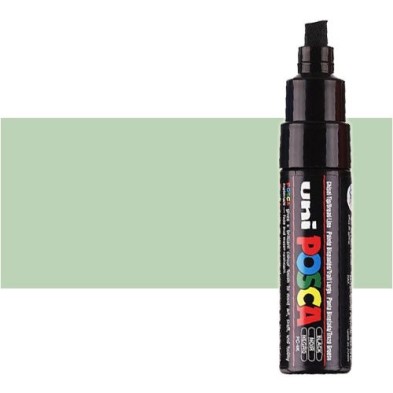
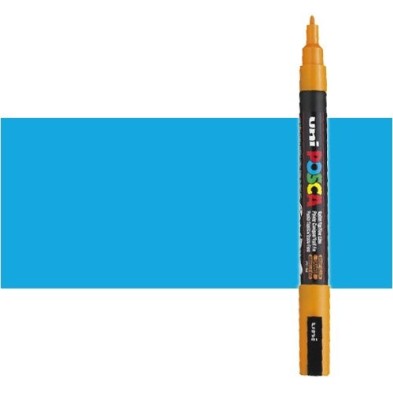
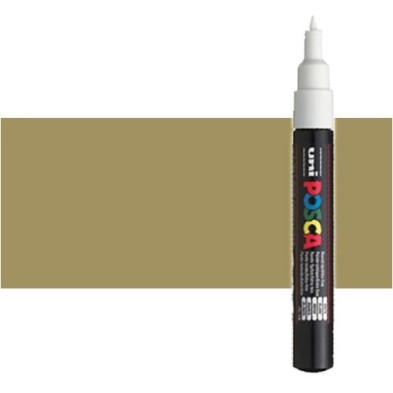
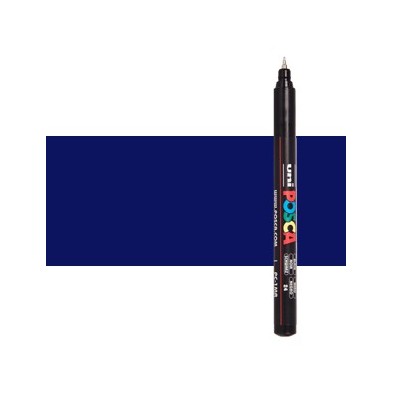
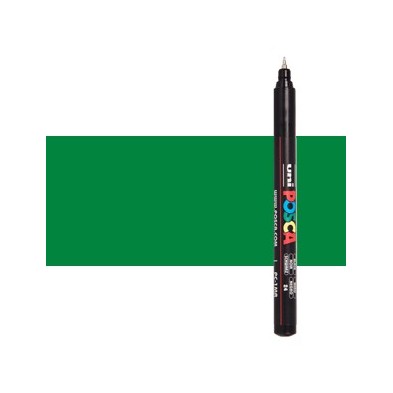
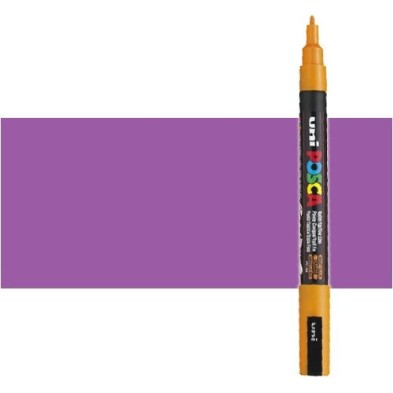
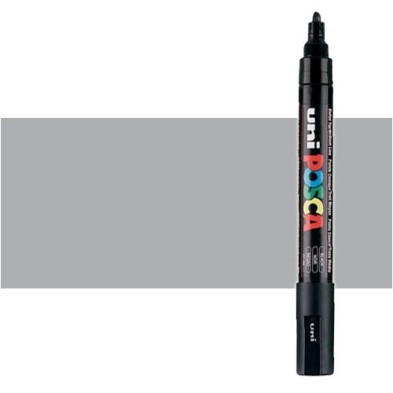
POSCA pens guide: what they are, how to choose and what surfaces they work on
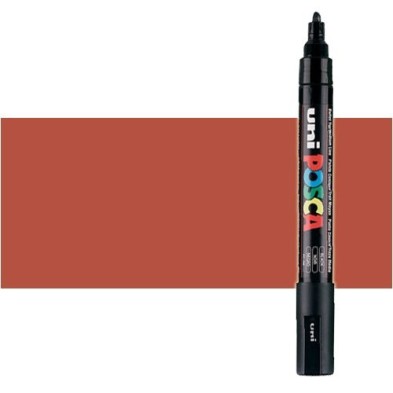
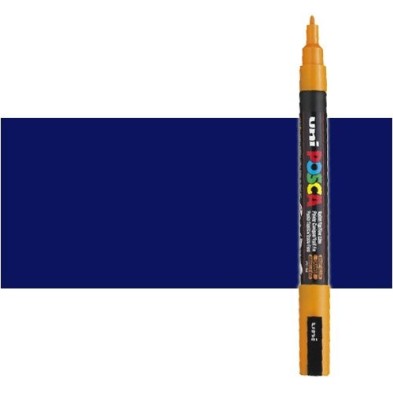
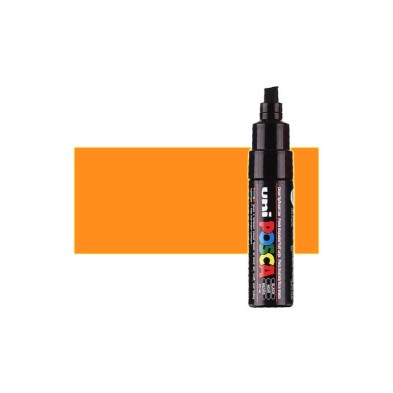
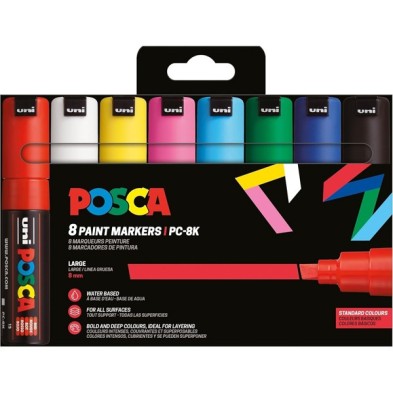
POSCA pens — also called POSCA markers or POSCA paint markers — are water-based acrylic markers made by Uni-ball (Japan). Their formula uses high-concentration pigments in a water-based medium, with no solvents or alcohol. This lets them cover dark surfaces, layer colours without muddying, and adhere to virtually any material without primer. The current range covers 9 tips in 6 shapes and 66 colours (8 metallics, 6 fluorescents and 8 glitters).
Comparing POSCA ranges: choose by the tip
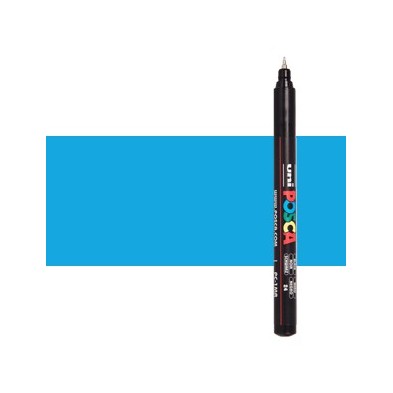
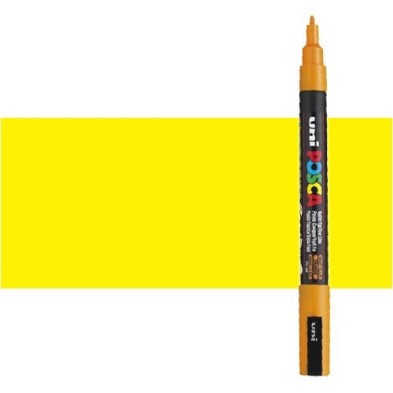
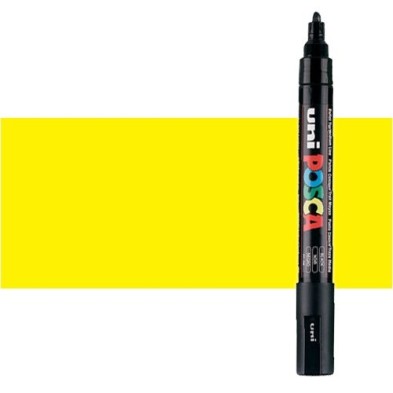
What separates each range is not the colour — it is the tip. The same black in a PC-1M and a PC-8K are completely different tools. This table covers all 9 ranges stocked at Totenart:
| Range |
Tip type |
Size |
Best for |
First POSCA? |
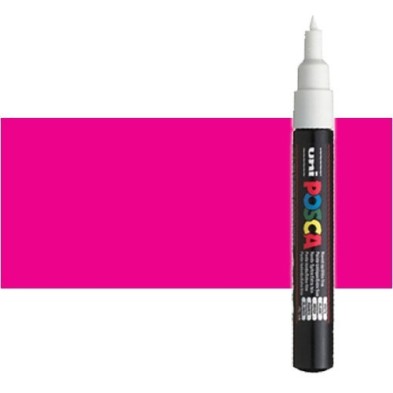
| PC-1M |
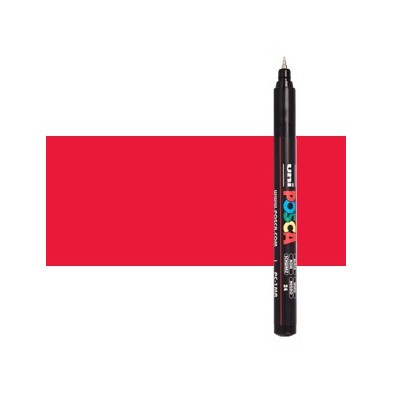
Extra fine round |
0.7 mm |
Fine detail, lettering, technical illustration, miniature outlines |
✓ if you need precision |
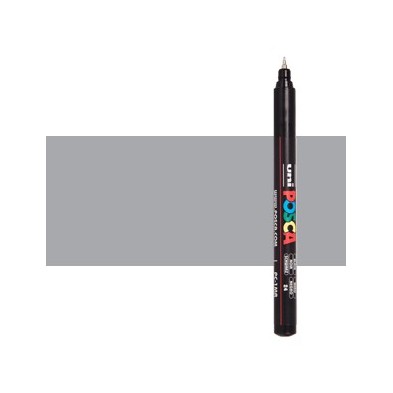
| PC-1MR |
Calibrated precision |
0.7 mm |
Consistent line width, millimetre outlining |
— |
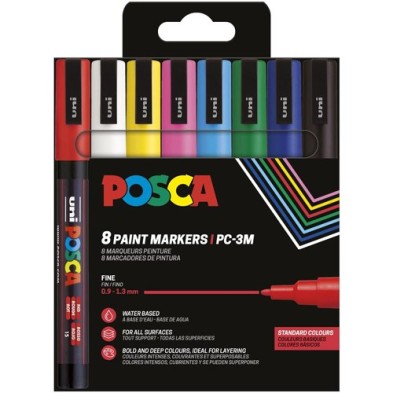
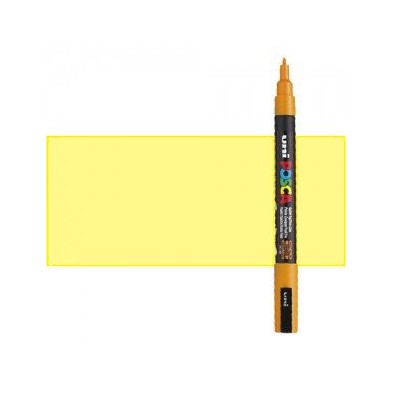
| PC-3M |
Fine round |
0.9–1.3 mm |
Drawing, design, school projects, medium detail |
— |
| PC-5M |
Medium round (conical) |
1.8–2.5 mm |
General use. The most versatile in the range |
✓ recommended |
| PC-7M |
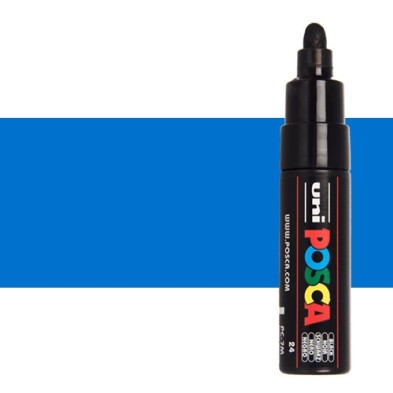
Thick round (conical) |
4.5–5.5 mm |
Wide fills, graffiti, expressive marks |
— |
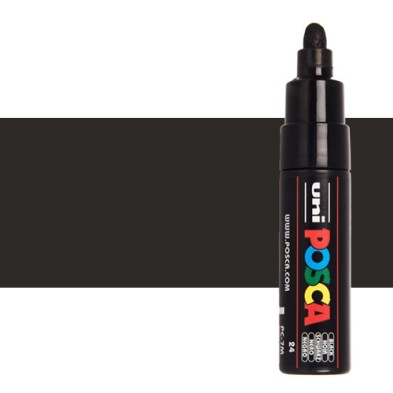
| PC-8K |
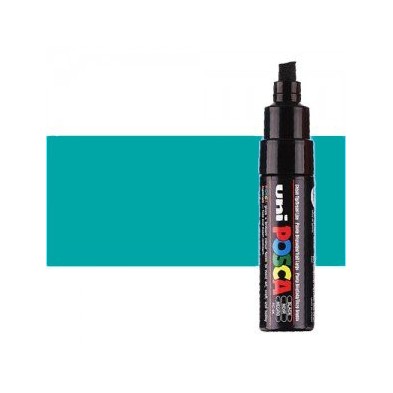
Broad chisel |
8 mm |
Curves, backgrounds, large surfaces, street art |
— |
| PC-17K |
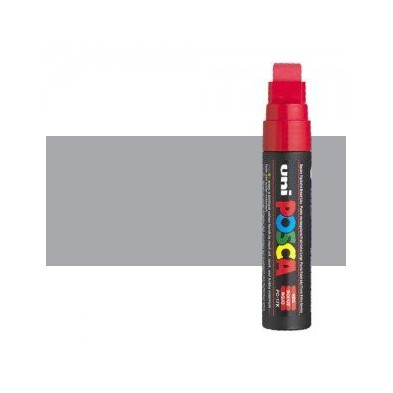
Rectangular XXL |
15 mm |
Murals, large shading, wide backgrounds |
— |
| PCF-350 |
Flexible brush |
Variable |
Calligraphy, watercolour effect, fluid colouring |
— |
| MOP'R (PCM-22) |
Round XXL |
3–19 mm |
Large-scale work, controlled drips, quick fills |
— |
Not sure which to start with? The PC-5M is the recommended entry point for its versatility. For fine detail work, the PC-1M. For large-scale art, the PC-8K or PC-17K.
What surfaces do POSCA pens work on?
POSCA pens require no primer or surface preparation. The key is sealing afterwards: each surface type needs a different treatment to make the result permanent and long-lasting.
Paper, card and canvas
No sealing needed. The mark is permanent once dry. For paper, a minimum of 300 gsm is recommended. On canvas POSCA behaves like acrylic paint — apply on a primed surface for the best colour vibrancy.
Wood and stone
Clean the surface before painting; on treated wood, lightly sand first. Once the paint is dry, apply water-based varnish spray. For outdoor use, 2–3 coats.
Glass, plastic, metal and unfired ceramics
These non-porous surfaces take longer to dry and remain vulnerable until sealed. Apply 2–3 coats of water-based varnish spray once the design is fully dry. On metal for outdoor use, 3 coats are recommended.
Fabric: cotton, trainers, canvas bags, leather
Allow to dry completely, then heat-set by ironing the reverse of the design with no steam at the appropriate temperature for the fabric. Without this step the colour may wash off. Avoid highly elastic fabrics as the paint may crack with stretching.
Fired ceramics and porcelain: oven baking
Raw clay or earthenware: bake at 220 °C with a slow warm-up; leave to cool inside the oven. Porcelain: 160 °C for a maximum of 45 minutes; cool inside the oven. Do not use the standard heat-gun or iron method for these materials — oven baking is required for a durable result.
The 66 POSCA colours
The POSCA palette is organised into four families:
- Classic colours: the core palette. Black, white, red, blue, yellow, green and pink are available across all 9 tip sizes.
- Metallics (8 colours): gold, silver, bronze, copper and variants. Available mainly in PC-1MR, PC-5M, PC-8K and PCF-350.
- Fluorescents (6 colours): high-visibility tones. Available mainly in PC-5M and PC-8K.
- Glitters (8 colours): sparkle-effect pigment particles. Available in selected ranges.
Download the full POSCA colour chart (PDF).
POSCA pen prices
Individual pens cost between €3.24 and €9.00 depending on the range. Sets and cases start from €16 (8-colour PC-3M set) up to €132 for the premium 40-marker case. Up to 20% off on selected items, with free shipping on orders over €95.
Which POSCA should you buy for your experience level?
With nine ranges and 66 colours, the first question is almost always the same: where to start. The nib determines the difficulty as much as the result, so before looking at colours it's worth choosing the model that suits your level. This table settles the decision in under a minute.
| Level |
Recommended models |
Why |
| Beginner |
PC-5M, PC-8K |
Wide nib, generous flow and less demanding on pressure. Easy to activate and control. |
| Intermediate |
PC-3M, PC-5M, PC-7M |
A combination that covers both detail and fill. Lets you work in layers and build up. |
| Advanced |
PC-1M, PC-1MR, PC-3M, PCF-350 |
Fine nibs that require a steady hand and good knowledge of the material. |
| Professional / mural |
PC-8K, PC-17K, MOP'R |
Designed for large formats, where coverage speed is key. |
Expert tip: at Totenart we find the most common mistake is starting with the PC-1M. Its 0.7 mm nib is demanding: it needs a steady hand and the right paper. For beginners, the PC-5M is far more forgiving.
Which POSCA colours should you buy first?
If you're starting from scratch, these six colours in PC-5M cover the vast majority of projects:
- White — the most used. On dark backgrounds it's irreplaceable.
- Black — outlines, shadows and signatures.
- Red — warm primary, essential in a basic palette.
- Blue — cool primary, a base for mixing and backgrounds.
- Yellow — high opacity even over dark tones.
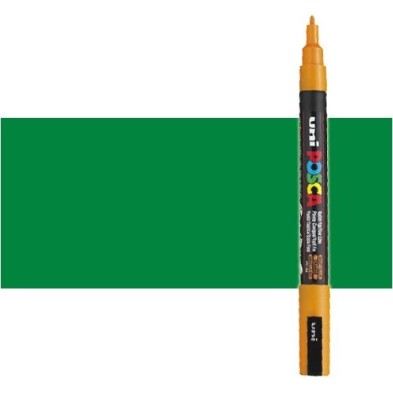
- Mid green — saves mixing and covers well in a single coat.
You can achieve blending effects by working wet on wet, though mixing is limited. The strength of POSCA is dry layering: once the first coat is dry, you apply another on top without the colours contaminating each other.
To see the full 66-colour catalogue, download the complete POSCA colour chart (PDF).
Frequently asked questions about POSCA pens
What are POSCA pens used for?
POSCA pens are used to paint, draw and decorate on virtually any surface: paper, canvas, wood, glass, stone, ceramic, plastic, metal, fabric and leather. Artists use them for illustration, lettering, street art, rock painting, personalising shoes and clothing, and craft projects. Their water-based acrylic ink is opaque and covers dark backgrounds — setting them apart from conventional markers.
What is the difference between the PC-1M and the PC-5M?
The tip. The PC-1M has a 0.7 mm extra fine round tip: ideal for fine detail, lettering and precise outlines. The PC-5M has a 1.8–2.5 mm conical medium tip: the most versatile in the range, suitable for fills, illustration and general use. If this is your first POSCA, start with the PC-5M.
Are POSCA pens permanent?
On porous surfaces (paper, wood, stone, heat-fixed fabric) they are permanent without any additional treatment. On non-porous surfaces (glass, plastic, metal) the paint is touch-resistant once dry but can be removed with abrasives. Seal with water-based varnish spray for lasting results on those surfaces.
Do POSCA pens work on fabric and clothing?
Yes. Paint, allow to dry fully, then heat-set by ironing the back of the design with no steam at the fabric's recommended temperature. Without heat-setting the colour will fade or peel in the wash. For best results, pre-wash the garment without fabric softener before painting.
Do POSCA pens wash off?
On fabric without heat-setting: yes, the paint can wash off. On porous surfaces with proper sealing: no, the paint is permanent. On glass or metal without varnish: the dried paint resists water but is not fully waterproof — apply varnish spray for a waterproof finish.
Can you mix POSCA colours?
Yes. While the ink is still wet you can blend directly on the surface to create gradients and new tones. Once dry, POSCA ink is fully opaque — you can paint light colours directly over dark ones with no show-through.
How long does POSCA take to dry?
On porous surfaces (paper, wood), a few minutes. On smooth non-porous surfaces (glass, plastic), longer because the paint is not absorbed. Allow at least 10–15 minutes between coats to prevent mixing.
Can POSCA pens be refilled?
No, POSCA pens are not refillable. However, replacement nibs are available for the PC-1M, PC-3M, PC-5M and PC-8K when the tip wears out.
Which POSCA is best for painting rocks and stones?
Any range works on stone without preparation. For small stones with detailed designs (mandalas, dot art), the PC-1M or PC-3M. For larger stones or solid background coverage, the PC-5M. Seal with water-based varnish spray for outdoor display.
Which POSCA is best for painting trainers and sneakers?
The PC-5M for colour fills and backgrounds. The PC-1M or PC-3M for fine detail and outlines. Paint on clean canvas or leather and heat-set if the material allows, or seal with water-based varnish spray.
What is the difference between POSCA pens and acrylic paint?
POSCA pens contain the same type of acrylic pigment as tube or bottle acrylic paint, but in a controlled marker format. The advantage over a brush and paint is precision, portability and consistent flow — no palette, no cleaning brushes. The disadvantage is that the range of textures you can achieve is more limited than with a brush.
POSCA pens at Totenart
We have been specialists in fine art materials since 1999, with a physical store in Valencia, Spain. We stock the most complete POSCA range available in Spain: all 9 tip sizes, over 176 individual references, sets and cases, and replacement nibs. Free shipping on orders over €95 to Spain and mainland Portugal.