What is an Etching Press?
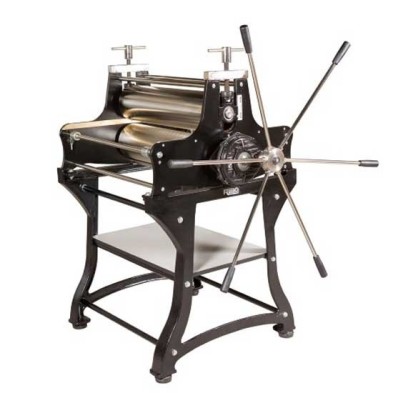
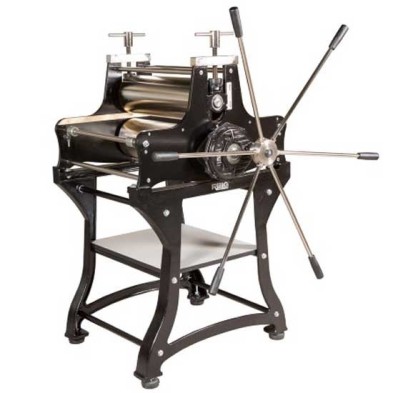
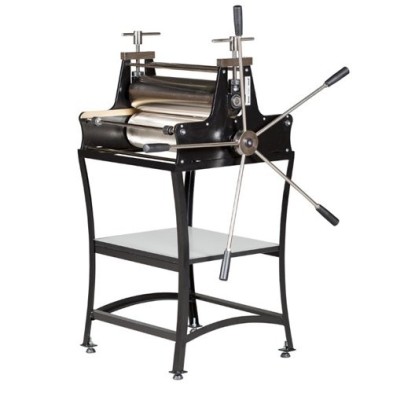
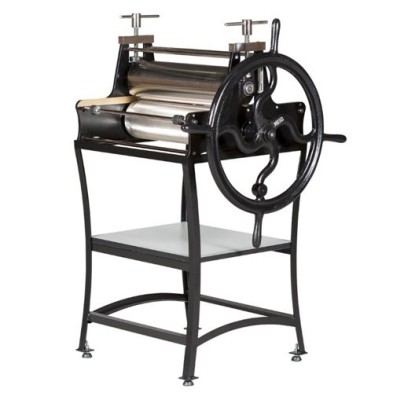
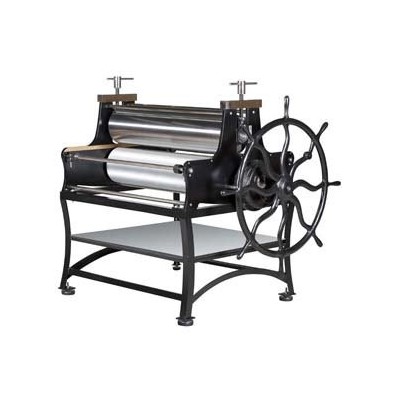
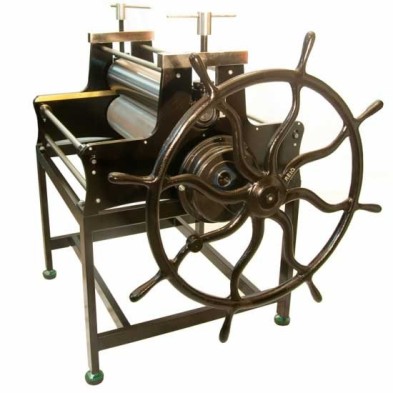
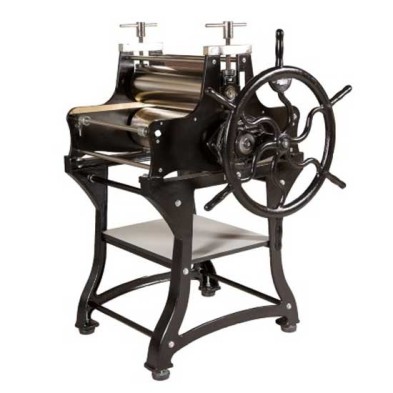
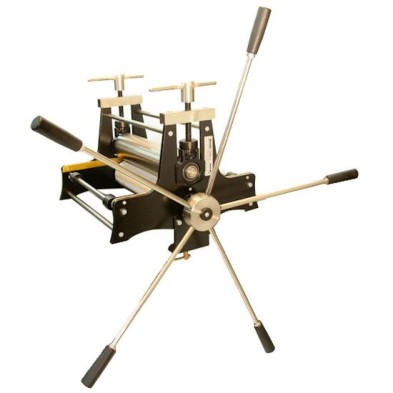
An etching press, also known as an intaglio press or printing press, is a tool used by printmakers to transfer plates made of metal, wood or linoleum, among other materials. Etching presses are used for a range of printmaking techniques, including etching, collagraph, drypoint, roll-up, linocut and woodcut...
It's arguably the most important machine for any printmaker, since it's the only way to transfer the image worked on the plate onto paper!
How does an etching press work?
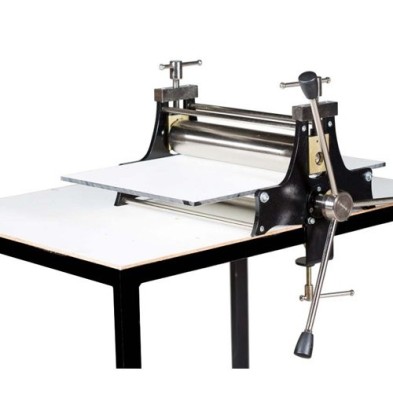
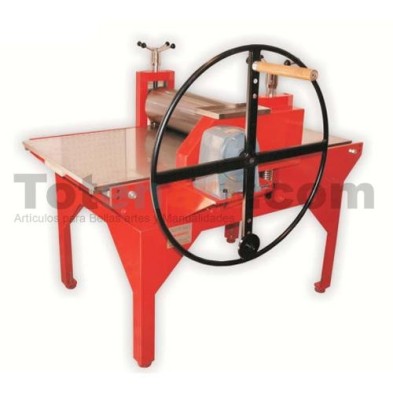
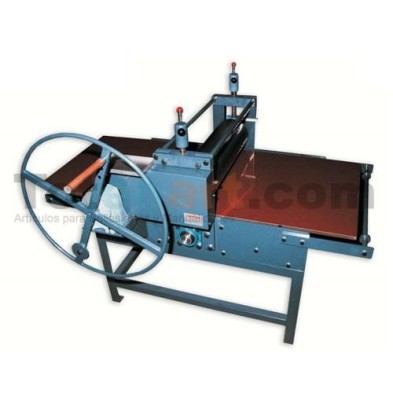
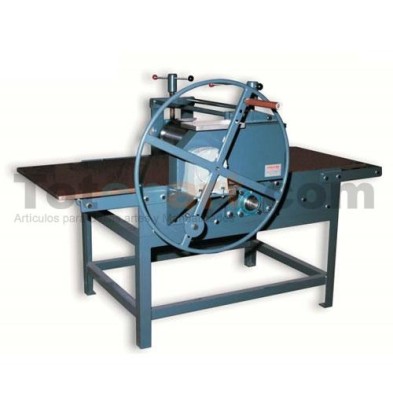
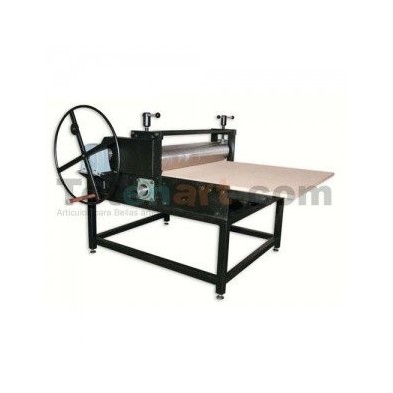
An etching press works using two rollers that press down on a flat support plate (known as the bed or platen), on which the inked, engraved plate (the matrix) and the corresponding paper have previously been placed, along with felt blankets on top to distribute the pressure and protect the paper, the plate and the rollers. When the artist operates the press mechanism, it feeds the bed — with the inked plate and paper — through the rollers, producing the print (also known as the impression).
Parts of an etching press
One of the key things to understand about how an etching press works is knowing its different parts. Depending on the model, capacity and features, some parts may vary, but the main ones are:
- Bed/platen: the flat surface between the rollers where the plate and paper are placed for printing. Its size (width) determines the maximum printing capacity. Etching press beds were originally made of steel, but today lighter alternative materials are also used with excellent results, such as PVC and anti-warp resin. Although many beds don't include one, it's worth fitting a rubber stop at both ends to stop the bed sliding out and falling off the press during printing.
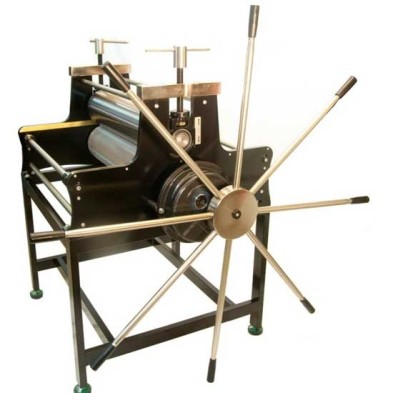
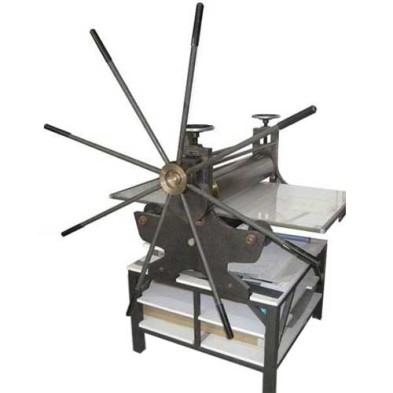
- Rollers: an etching press always has two rollers — upper and lower — responsible for transferring the image onto the paper through pressure. They're driven by a star wheel, handwheel or motor. As they turn, they move the bed between them to make the print (transferring the ink from the plate to the paper). Some manufacturers build their presses with drive on the lower roller, which requires that roller to be knurled to improve grip.
- Pressure screws: these set the pressure the rollers apply to make the print. They let you determine how much pressure the rollers exert on the bed and, in turn, on the print. The press usually also includes pressure gauges so you can adjust the pressure on both sides of the roller more safely. Some pressure screws include a built-in micrometric dial for fine adjustment.
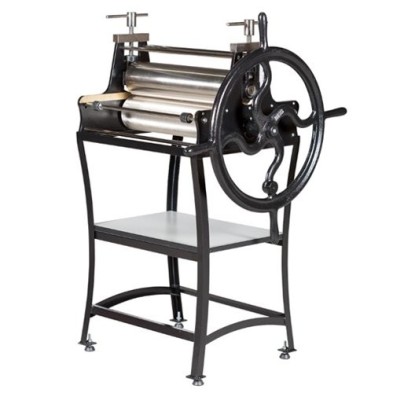
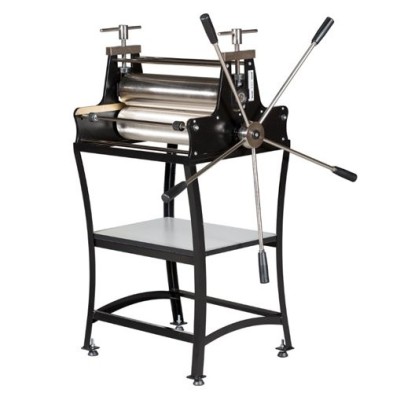
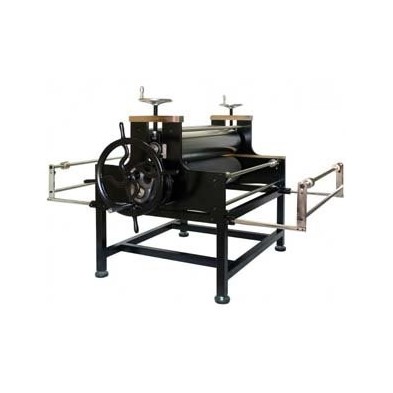
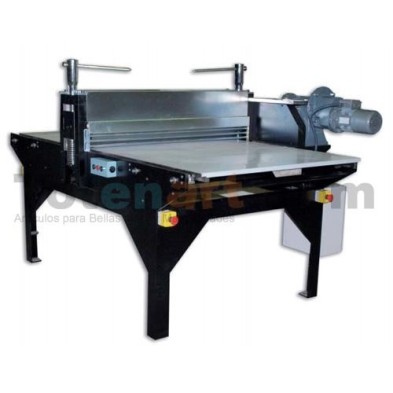
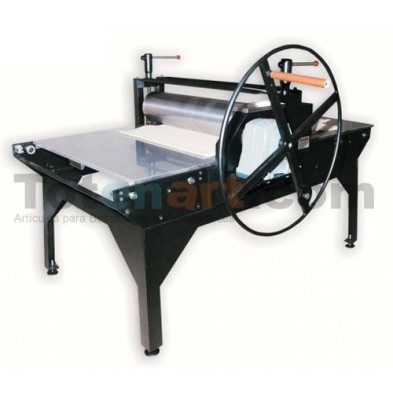
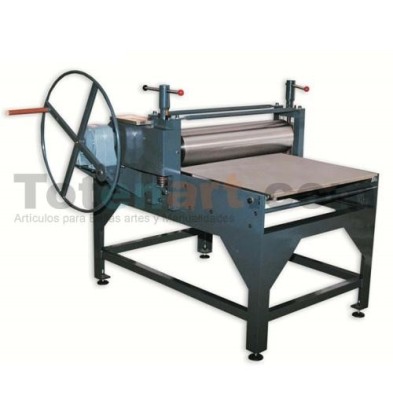
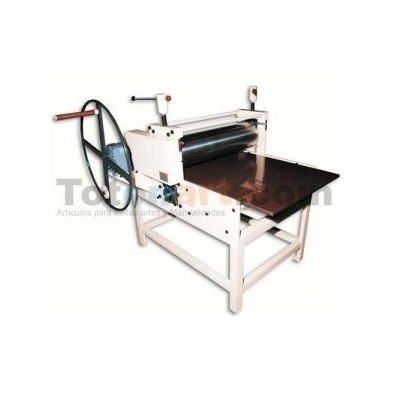
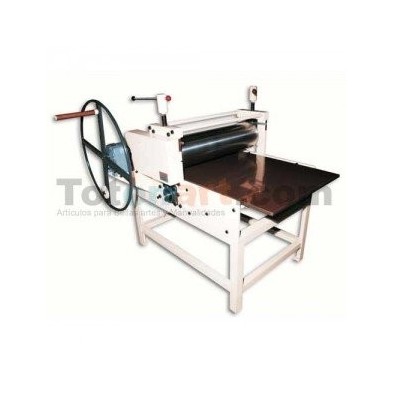
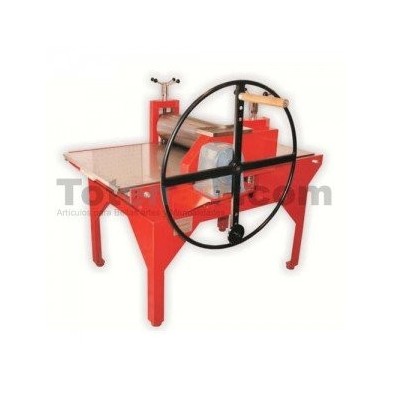
- Drive system: transfers the force applied by the operator to the roller system. It's the mechanism that turns the rollers to operate the press. The main drive systems are direct drive (via star wheel, handwheel or crank) and electric drive. Depending on the size of the press, it may or may not include a reduction gear to make it easier to operate.
- Felt blankets: a thick fabric used during printing, placed between the rollers and on top of the paper and plate. Its main function is to distribute the pressure and protect (by separating) the rollers, the plate and the paper. Depending on the artist, one or two felts of different thicknesses (3 and 5 mm) may be used.
- Registration acetate: although not strictly part of the press itself, this is very important, as it's placed over the bed to protect it from stains. It prevents marks and stains on the bed (since you don't work directly on it) and is also very handy for making registration marks — either drawn directly onto it with a marker, or marked on a sheet of paper placed between the bed and the acetate. It makes it easier to clean off ink residue without damaging the bed underneath.
Types of etching press
Among intaglio presses, also known as etching presses, there's a wide range of types and sizes. Based on several factors, you'll decide which press suits you best: the bed capacity you need, the space where you'll use it, the techniques you'll work with, and/or how much you want (or are able) to spend.
Types of etching press by drive mechanism
Based on the method the artist uses to operate the press, there are several types. The main ones are:
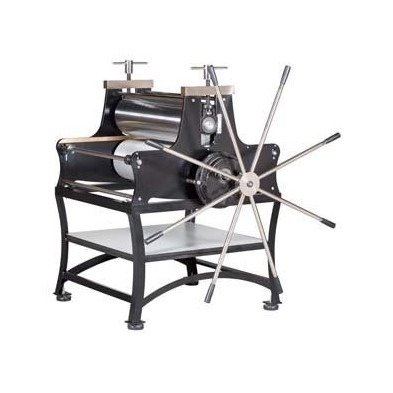
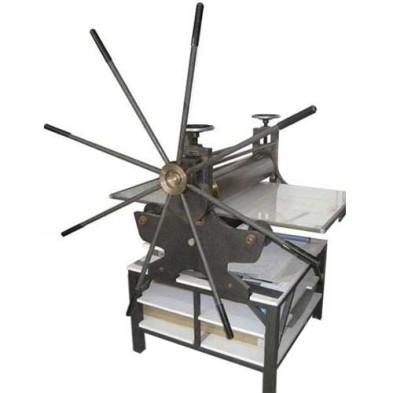
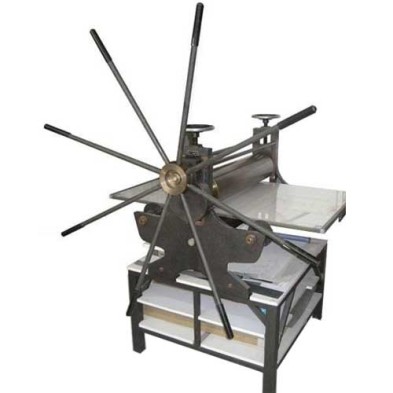
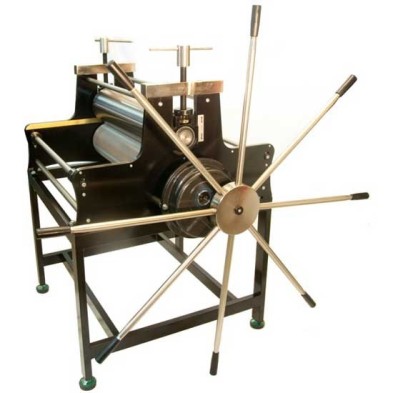
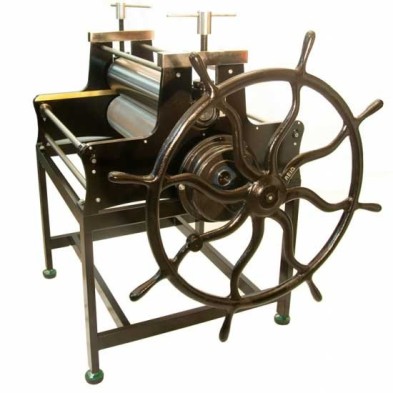
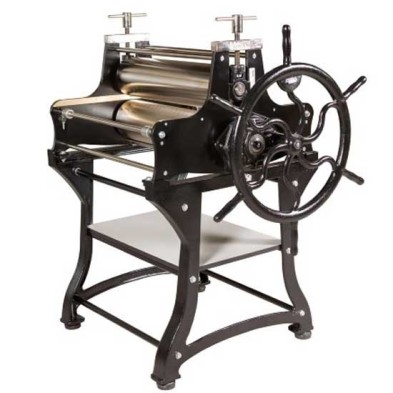
Star-wheel press · Handwheel press · Crank press · Electric press
Besides the type of drive, it's important to consider how much force you'll need to apply to operate the press. Medium and large models typically include a reduction gear to multiply the artist's force, making it possible to run the rollers through with barely any effort.
Types of etching press by how force is applied
It's worth noting that a reduction gear isn't always necessary. Depending on the maximum bed width the press can take, the roller diameter, and other factors, some press models require a reduction gear, while smaller models don't need one — and adding one would be an unnecessary expense.
Direct-drive press: this type covers all presses where the printmaker supplies all the force needed to operate the press. Presses without a reduction gear are more affordable, but require more effort to use.
Geared press: depending on how much force the printmaker needs to apply, some presses are described as "geared." The reduction gear is a system of gears that slows down the speed at which the bed moves. For example, on a press with a 1:4 reduction gear, you'd need 4 turns of the handwheel for every 1 turn of the upper roller — the printmaker needs to apply less force, making the press much easier and more comfortable to use. (Different gear ratios are available: the higher the ratio, the less force required, but the more turns needed to complete a print.)
When choosing a press, keep in mind that the higher the gear ratio, the less force you'll need but the slower it will run. So it's worth weighing up whether the press you need really requires a reduction gear — if it's small and the rollers aren't very wide, you likely won't need one.
Types of etching press by pressure roller
Etching presses are made up of two rollers. As they turn, the upper roller presses down on the plate while the lower roller supports the weight of the bed. There are two types of press depending on which roller drives the mechanism — so what's the difference between upper-drive and lower-drive presses?
Upper drive: the upper roller connects directly to the drive system, so it turns directly. The upper roller itself moves the bed and, as a result, the lower roller too.
Lower drive: the drive system connects to the lower roller, which is what moves the bed and upper roller together.
Types of etching press by use
Another factor to consider when choosing a press is how you'll use it: the size of the prints you usually make, and where you'll be working with it. There are two different types:
Studio press: designed for workshop installation; it includes its own stand (legs) and doesn't rely on another surface to be set up. These machines are heavier than tabletop models and are typically used for medium and large prints.
Tabletop press: much smaller; as the name suggests, it's designed to sit on a table and has no legs. That makes it ideal for schools and hobbyists, since it's intended for proofing. Thanks to its size, it's also easy to transport and store, so you can take it along comfortably to exhibitions or workshops.
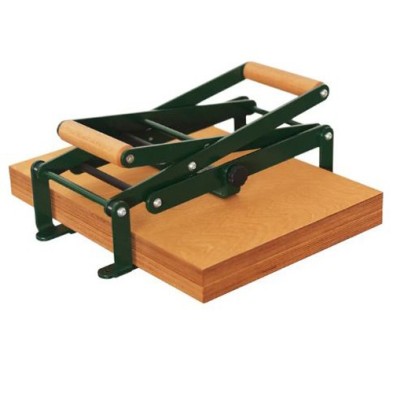
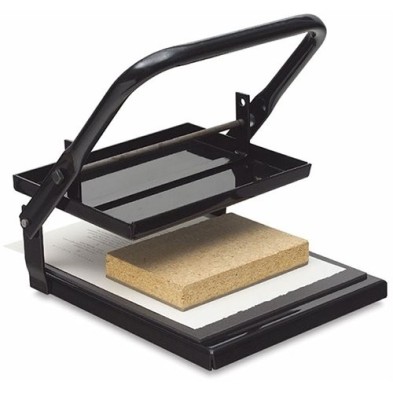
Printing press for woodcut and linocut
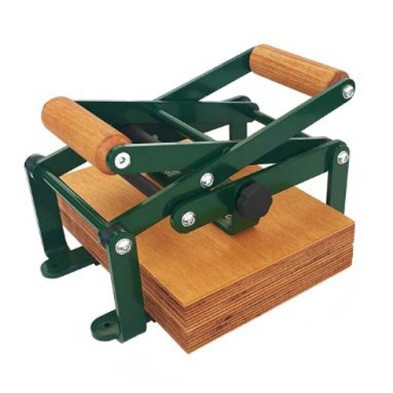
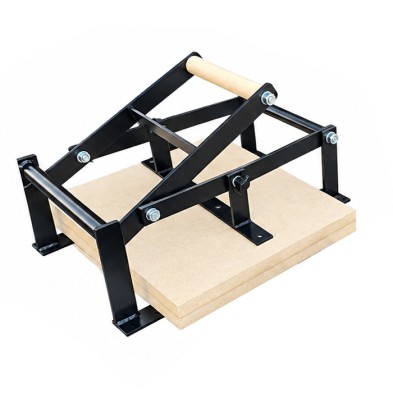
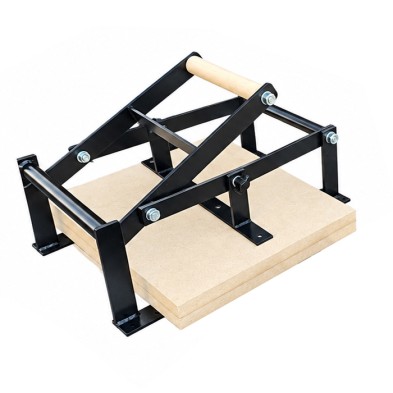
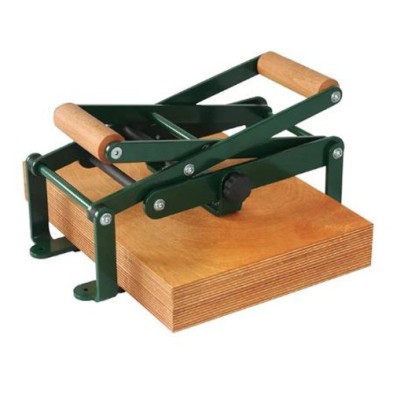
If you work in woodcut or linocut, there's a press that's perfect for you. If you're still getting started in printmaking and a full etching press is more than you need, there are other options. Nowadays there are small presses that are very convenient for working at home, considerably more affordable than etching presses and easy to transport.
Second-hand etching presses
You need to be very careful if you decide to buy a second-hand etching press. You may well find an interesting one with good value for money, but it's essential to check that the roller isn't marked or bent, and that the press's moving parts and pressure system work properly. Keep all of this in mind when choosing a press that fits your needs! If you don't need a professional press, think carefully about which option really suits you best.
Frequently asked questions about etching presses
What is an etching press?
An etching press is the machine printmakers use to transfer their plates —metal, wood or linoleum— onto paper. Two rollers press down on the bed, where the inked plate, the paper and the felts are placed, transferring the image through pressure. It's also known as an intaglio press or printing press.
What's the difference between a tabletop press and a professional floor-standing press?
A tabletop press clamps onto a table, is lightweight and prints small formats (up to around 40x80 cm bed size). A professional floor-standing press is a freestanding structure with a reduction gear and micrometric pressure control, and can take beds up to 1,300x1,800 mm for large-format printmaking.
Which etching press should I choose if I'm just starting out?
A tabletop etching press or a small printing press such as the Ritualispress A4/A5: they take up little space, can be carried by hand, and are enough to learn etching, drypoint or linocut in small formats before moving up to a professional press.
Is it a good idea to buy a second-hand etching press?
It depends on the condition of the rollers and the bed, which are expensive to replace and hard to assess without seeing them in person. If budget is the main constraint, a new tabletop press from less than 300E with a warranty and 24h delivery is usually better value than a used one with no guarantees.
Reig, Ribes or Azañón: which is the best etching press brand?
All three are professional Spanish manufacturers. Reig builds in chrome-plated steel with millimetre scales to control pressure; Ribes (including its Cameron line) uses rolled steel profiles with micrometric-head spindles; Azañón/Matorc builds in cast iron and solid steel, the most heavy-duty option. The difference lies in construction, not print quality.
What is the bed of an etching press, and what size do I need?
The bed is the flat surface that passes between the rollers, on which the plate and paper are placed; its size determines the maximum format you can print. It ranges from A5 on the most compact tabletop presses up to 1,300x1,800 mm on the largest professional models.
Star wheel, handwheel or crank: which drive system should I choose?
The star wheel is the most manual, affordable option. A handwheel with a reduction gear (for example, 1:20 or 1:28) greatly reduces the effort needed for large beds or high pressures. A geared crank sits in between. For occasional use with small formats, a star wheel is enough; for daily use or large beds, a geared handwheel is the better choice.
What does it mean when an etching press has a reduction gear?
The reduction gear is a gearbox that multiplies the force you apply when turning the handwheel or crank, with common ratios of 1:8, 1:20 or 1:28. The higher the ratio, the less effort you need for the same pressure — essential for large or large-format beds.
Can you print without an etching press?
For small formats and techniques such as drypoint, you can print by hand using a spoon or a burnisher, pressing the paper against the plate, though the result is less even than with a press. For woodcut and linocut, there are also lighter manual presses available than a traditional etching press.
Can an etching press be used to print linoleum?
Yes. Tabletop presses such as the SUPRA, with a PVC bed and star-wheel drive, are designed specifically for woodcut and linocut, as well as intaglio proofing. You don't need a professional floor-standing press if you're only working with linoleum in small or medium formats.
What maintenance does an etching press need?
The felt wears out the most and should be replaced when it loses thickness or marks unevenly; it's worth always keeping a spare. The rollers should be kept free of ink and, on geared models, lubricated periodically so the mechanism doesn't seize up.
How much does an etching press cost?
At Totenart, prices start from less than 300E for a tabletop press or a small printing press, up to over €5,600 for professional Reig geared models with the highest capacity. Larger-bed, higher-spec presses (Ribes, large-format Azañón) are usually quoted on request due to their weight and shipping requirements.
What's included when you buy an etching press?
Most of our etching presses come with one or two free felts (3 and 5 mm) and, on several models, a registration acetate to align the paper with the plate. Check each product page: the exact felt included depends on the bed size.